
Looking to add some carbs to your Whole30? Check out these 15 Whole30 Carb Sources that we can’t do without!
Hey Whole30’ers! If you’re reading this post, the chances are good that either 1) you’re stumped about which carbs to eat on Whole30 now that bread and pasta are off the menu, or 2) you’ve inadvertently found yourself going too low carb on your Whole30 (even though that wasn’t your intention).
During my first round of Whole30 in March 2013 I found myself in camp #2 – too low carb. I never planned to ‘go low carb’ it just kind of snuck up on me after I’d removed all grains from my diet. It wasn’t until the third week of my Whole30 that I realized what was happening. I felt exhausted when I should have had ‘Tiger Blood’ and I still wasn’t sleeping well. I felt cold all of the time, I had a nearly constant headache, my legs felt like lead on every run and I wasn’t recovering very quickly.
Curious as to what was going on, I tracked what I ate for three days and plugged it into MyFitnessPal only to find that I was eating really low carb. Like, only 50-75 grams of carbs per day (and I’m a very active human being). I was filling up on non-starchy vegetables, proteins and healthy fats and eating only 1 small serving of berries in the morning and 2-3 sweet potatoes per week. For some reason, I’d neglected to add rich sources of complex carbs to my diet. To my credit though, this was ‘back in the day’ before white potatoes were considered to be Whole30-compliant. But still, I was wrong to avoid the carbs. Once I added 1-2 servings of starchy vegetables per day and increased my intake of fruit I felt like a new person.
In just a matter of a couple days I started sleeping better, I ran farther (and faster) and recovered quicker, I wasn’t crabby all the time and I finally felt warm. It was awesome.
I know Stacie shares a similar experience with carbs and you can read more about that in this post. So for all of you inadvertent low-carb Whole30’ers or those who are just looking for ways to change up their carbs (read: you can’t possibly eat one more sweet potato), this post is for you!
Looking to add carbs to your Whole30? Check out these 15 @Whole30 Carb Sources! Share on XAdd more carbs!
Give your body time to adjust to the Whole30 but then after the first few weeks, which is the time you should start feeling positive changes (aka: Tiger Blood), really start to recognize how you feel and take note of what your body is telling you. This is especially important if you’re trying to maintain a certain level of athleticism during your Whole30, you don’t need to lose weight (or maybe trying to gain weight) or you’re a breast feeding mama. And yes, you can do a Whole30 safely when you’re breast feeding with the help of the Whole30 Happy Mama Happy Baby program.
Here are 5 unpleasant body signals that may be resolved with consuming more carbs.
- You’re tired and ‘crabby’ all of the time.
- You’re fatigued and feel weak in your workouts.
- You sleep poorly or you can’t stop sleeping.
- You’re extremely irritable.
- You feel sad or depressed.
The Whole30 is not intended to be a very low carb diet. So if you sense that you’re not eating enough carbs, track your intake for just one day and see where you end up. We recommend between 100-175 g of carbs per day for MOST individuals and even more if you have have performance goals or you are highly-active. This range varies depending on your activity level, gender, goals and season of life.
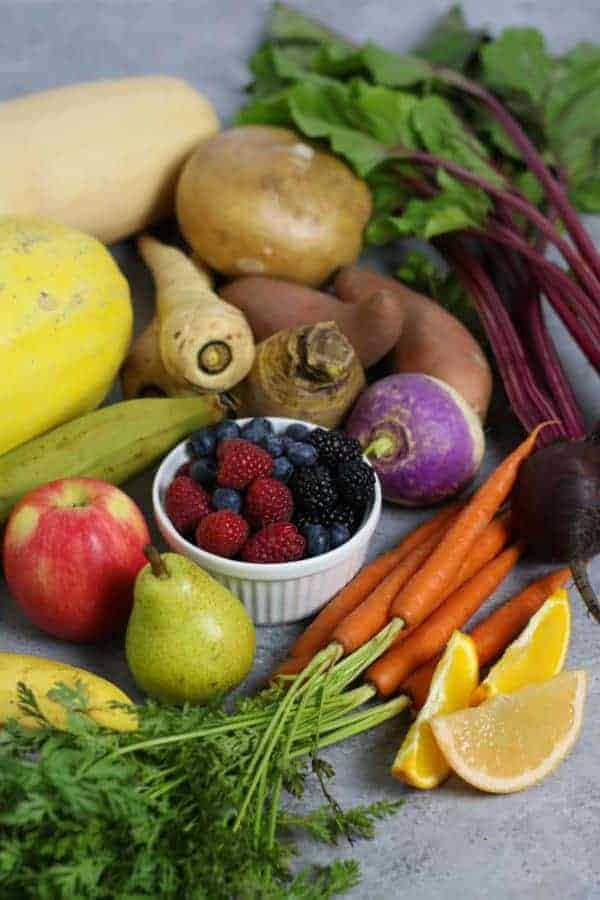
15 Whole30 Carb Sources we can’t do without
1. Plantains
Plantains are a bigger, starchier and thicker-skinned member of the banana family and are sometimes referred to as ‘cooking bananas’ in countries that produce several different types of banana cultivars. Plantains change from green to yellow to black on the outside as they ripen while their starchy flesh gets sweeter on the inside. Green plantains are often fried then flattened and fried again to make tostones. We like our Fried Plantains just a bit more ripe (yellow with black spots) and fried in ghee for an easy, carb-rich side dish that’s perfect alongside roasted meats or with a hearty chili, soup or stew.
A word about plantain chips: Though technically compliant, commercially prepared plantain chips are not allowed on the Whole30. They’re a food without brakes for most people thus you’ll have to forgo them until life after Whole30.

Nutrition bonus: Plantains are rich in potassium just like bananas (though lower in sugar).
2. Sweet Potatoes
Ah, the humble sweet potato. If you’ve ever searched ‘Whole30 recipes’ on Pinterest chances are good you found yourself scrolling through pages upon pages of recipes featuring sweet potatoes. That’s because they’re delicious. And versatile. And packed with fiber and beta carotene (an antioxidant). You can see why it’s become the sweetheart of the Whole30!
We’re pretty smitten with the sweet potato too – we love them baked, in hashes (here, here and here), as ‘buns’ for sliders of both the Buffalo chicken and Sloppy Joe persuasion, in a hearty curry, in potato salad (both warm and cold), stuffed with Buffalo chicken and drizzled with Ranch dressing and even as a stand in for toast.
For the record, sweet potatoes and yams here in the U.S. (and Canada) are the same thing according to the North Carolina Sweet Potato Commission. Who knew?!

Nutrition bonus: They’re an excellent source of vitamin A (in the form of beta-carotene). They are also a very good source of vitamin C, manganese, copper and vitamin B6. They’re also a good source of potassium, dietary fiber and phosphorus.
3. Winter squash
This includes butternut, acorn, hubbard, delicata, spaghetti, pumpkin, kabocha, sweet dumpling, turban, buttercup and more. Winter squash are characterized by their thick outer skin and dense, starchy flesh. We love squash as a seasonal stand-in for sweet potatoes in hashes, homefries, and as ‘noodles’.
Winter squash are economical and keep well in a dark pantry so you can always keep a couple on hand to add to any dish.
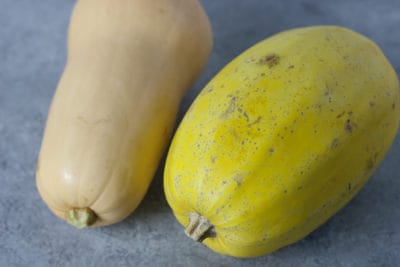
Nutrition bonus: They’re a great source of fiber and several antioxidants that are important for good health.
4. Potatoes
It wasn’t long ago that potatoes weren’t allowed on the Whole30 but that’s changed. Potatoes are back on the menu and rightfully so – they’re a budget-friendly starch option that can be prepared in countless ways. We like ours roasted with garlic and herbs or mashed with bacon and ranch dressing. However, we do want to point out that potatoes are NOT allowed when they’re commercially fried as in French fries or potato chips. These foods (and others that you may have a hard time not overdoing) are considered ‘foods without brakes’ and they’ll have to wait until life after Whole30.
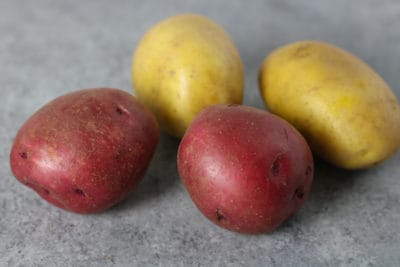
Nutrition bonus: Choosing deeply colored potatoes (like purple, red and gold) will give you more antioxidants than white-fleshed potatoes.
5. Beets
Beets are so much more than the sickly sweet, cinnamon-scented pickled version that often appear on holiday relish trays! They’re great for roasting in a little avocado oil with salt and pepper and tossing onto a salt, combined with other root vegetables in these Garlic Roasted Root Vegetable Fries or making into ‘noodles’ using a spiral cutter. As with potatoes and sweet potatoes, commercially-prepared beet chips are off the menu during a Whole30 (yes, even the dehydrated ones because once you start it’s often hard to stop!)
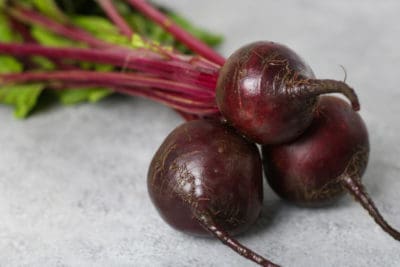
Nutrition bonus: Beets are an excellent source of a class of phytonutrients called ‘betalins’ which have antioxidant, anti-inflammatory and natural detoxifying properties. They’re also a great source of folate, iron, manganese, copper, magnesium, and potassium.
6. Carrots
You may have never thought of carrots as a carb source because they’re not particularly starchy – but they are sweet and carb-rich. We love carrots because they’re great for snacking on the go and dipping in our favorite Whole30-friendly Cauliflower Hummus (try our Curry Hummus). They’re also perfect for roasting and sprinkling with your favorite herbs and spices. Try tossing carrots sticks with avocado oil and a pinch of cinnamon, cumin and salt then roasting them at 350°F for 15-20 minutes or until tender and lightly browned on the edges. Squeeze fresh lemon juice over the top and serve – they’re great both hot and cold.
One of our favorite ways to enjoy carrots while naturally boosting our digestive health is to make these Fermented Carrots with Dill. They’re simple to make and are packed with gut-friendly bacteria.
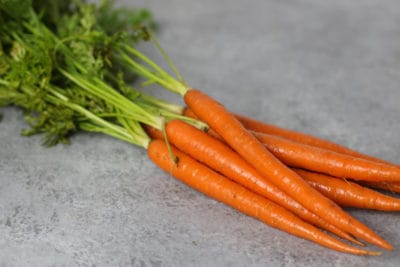
Nutrition bonus: Carrots are an excellent source of the vitamin A precursor, beta-carotene and they’re a good source of vitamin K, fiber and potassium.
7. Parsnips
Parsnips are very similar to carrots in that they’re a sweet, carb-rich taproot that’s budget-friendly and stores well in the fridge. We love substituting parsnips for potatoes in our Slow Cooker Beef Stew and roasting them with beets and carrots to change up our starchy side dish game.

Nutrition bonus: Parsnips contain high levels of potassium, manganese, magnesium, phosphorous, zinc, and iron. They’re also a good source of vitamin C, vitamin B, vitamin E, and vitamin K, as well as high levels of fiber.
8. Turnips
Turnips are a round, apple-sized root vegetable from the Brassicaceae family (which also includes cauliflower, broccoli, kale, cabbage, etc.) It’s white at the bottom with a light purple blush around the top and is like a bland cross between a carrot and a potato. It stores well and is a good stand-in for potatoes in soups (like our Creamy Ham and Potato Soup), hashes or even mashed with a dig dollop of grass-fed ghee and salt.
Try sauteeing the turnip greens in your favorite fat or adding them to a hash or soup for added fiber, vitamins and minerals (while reducing your food waste!)

Nutrition bonus: Turnips are great sources of minerals, antioxidants, and dietary fiber and offer more than 1/3 of the recommended daily allowance of vitamin C in a 1/2 cup serving.
9. Yuca
Yuca, also known as manioc or cassava, is a starchy tuber native to South America that has recently become more popular in the paleo and grain-free community. Yuca can be processed to make cassava flour or the starchy liquid can be extracted and dried to make tapioca starch. For the sake of the Whole30 though, we’re talking about the whole, unprocessed yuca root. Yuca is slightly chewier and milder tasting than potato making it great for soups, stews, braises and hashes.
Nutrition bonus: Yuca is a good source of vitamin C, folate and potassium.
10. Rutabagas
Rutabagas are often confused with turnips because they’re both round with purple at the top. The difference is that the bottom of rutabagas a creamy white or orange color whereas turnips are white. Rutabagas are also a bit sweeter. Like turnips, they’re a great substitute for potatoes in soups and stews also delicious roasted, in hashes or steamed and mashed with ghee and salt.

Nutrition bonus: Like turnips, rutabagas are great sources of minerals, antioxidants, and dietary fiber and offer more than 1/3 of the recommended daily allowance of vitamin C in a 1/2 cup serving.
11. Jicama
Though not as starchy as the other root vegetables we’re going to toss jicama into the mix here because it’s a very versatile vegetable that can be eaten cooked or raw. One cup of cubed or sliced jicama provides 11g of carbs which is roughly half of what you’d find in a similar serving of cubed, cooked white potato.
We love adding sliced jicama to a veggie tray for dipping into Paleo Ranch Dressing or Curry Cauliflower Hummus. It’s also amazing sprinkled with fresh lime juice, chili powder and sea salt or tossed into a salad for some serious crunch. Sliced into thin rounds and warmed briefly in a hot cast iron skillet, jicama makes a great substitute for tortillas on taco night when you’re doing a Whole30.
Speaking of taco night…don’t miss our Whole30 Taco Seasoning Mix recipe. It’s easy to make, budget-friendly and free of any fillers or sugar.
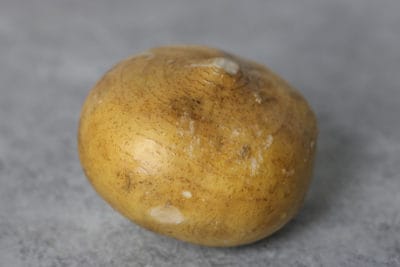
Nutrition bonus: Jicama is high in the indigestible fiber inulin. Inulin is a prebiotic that feeds gut bacteria thereby boosting gut health (unless, of course, you’re on a low-FODMAP diet in which case you’d want to avoid jicama). Inulin also supports bone health by enhancing the absorption of calcium from other foods.
12. Bananas
Bananas make our list of 15 Whole30 carb sources because they’re really portable and great for pre-workout fueling and post-workout recovery. We recommend looking for bananas on the small side when shopping as they can be very carb dense. Because they are so sweet, avoid using them as a way to prop up a sugar craving or as ‘dessert’.

Nutrition bonus: Bananas are a good source of potassium, fiber, vitamin C and vitamin B6.
13. Apples and Pears
Like bananas, apples and pears are very portable though they’re less sweet (and always best when in season!) Apples and pears make a great snack when spread with a bit of nut butter or baked in our Cinnamon Sweet Potato and Apple Bake (this probably goes without saying, but topping this dish with whipped coconut cream or otherwise enjoying it as dessert is not in the spirit of the Whole30 and is not allowed on the program. There, we said it. #sorrynotsorry)
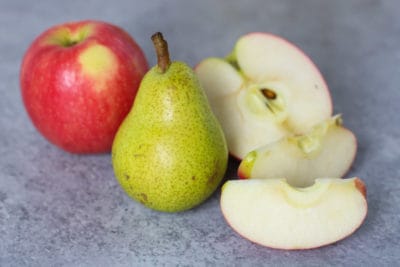
Nutrition bonus: Apples and pears are good sources of fiber, vitamin C and various phytonutrients.
14. Berries
Fresh or frozen, berries are our go-to when it comes to fruit on a Whole30 because they’re lower in sugar than other fruits. They’re great for adding to a salad like this Strawberry Chicken Poppy Seed Salad to add a little color and sweetness. Tired of plain water? Drop a few berries into your sparkling water and top it off with a splash of kombucha and a sprig of mint for a Whole30-friendly ‘mocktail’.

Nutrition bonus: Berries are a rich source of fiber, antioxidants and various other phytonutrients. They’re also lower in sugar which can be beneficial for those with diabetes or other blood sugar issues.
15. Citrus fruits
Clementines or ‘cuties’ are a super convenient and portable carb source. If you can’t fathom eating a grapefruit without sweetener, try adding slices to a salad with creamy avocado, peppery arugula or sweet spinach and a dressing it with our Citrus Vinaigrette with Thyme and a few sliced almonds or chopped pecans. That ought to change your mind about this delightfully sweet-tart fruit!

Nutrition bonus: In addition to being an excellent source of vitamin C, citrus fruits also supply a good deal of fiber, calcium, potassium, folate and vitamin A (as beta-carotene).
There you have it! Our list of 15 Whole30 Carb Sources that you need in your life.
We’d love to hear from you: What’s are your favorite Whole30 carb(s) and how do you like to prepare them? Leave a comment below.
Pin it for later!



This is awesome and very helpful! Especially love the recipes included with each carb!
Hey Kris!
I’m so happy to hear you found this list and the recipes helpful!
Hi! How do you get complex carbs while on the Whole30? Is consuming all of the mentioned above enough?
Hi Paola,
Great question! Generally, you can consume adequate amounts of complex carbs while on the Whole30 from the addition of 1-2 servings of starchy vegetables per day to your diet. If you are very active, pregnant or otherwise have a need for a high number of calories then you may need to add more to allow for adequate recovery or fueling.
how do you know how much is a serving? I’m about to start my second round of the whole30 but I want to do this right, please help !
Hi Ross! The Whole30 website has an entire library of resources. You can finds those here: https://whole30.com/pdf-downloads/ Hope that helps!
What is your rough % breakdown of all macronutrients and total caloric intake on average?
I am aiming for roughly 20% protein, 40% fats, 40% carbs lately. Constantly tweaking and finding out what seems to be the right mix. I find for me personally, with fats too low my mood tanks, and with carbs too low my workout recovery tanks (one of the points you had mentioned here).
Hey Jeremy,
This is the million dollar question for sure (and one I wish I had a be-all-end-all answer for). I’m currently not tracking any macros or aiming for any particular breakdown but rather eat intuitively in a style that is lower carb earlier in the day with more carbs toward the end of the day – like starchy vegetables for dinner. If I had to guess I’d say I’m probably closer to 45% fat, 20% protein, 35% carbs on most days. I don’t specifically refuel after workouts but rather focus on having a meal shortly after and if it’s a hard workout or my 4th day in a row then I’ll be sure to add some fruit or even starchier veggies to that meal. Hope that helps!
Hope you can answer this question for me.
Male 55 yrs old. Just completed first week of Whole 30. I am a gym rate. My normal sat work out is 30 min swim, than 30 to 40 min interval bike session finishing with 75min hot yoga. I had to step out of class due fatigue light headedness, dizzy. First time this has ever happend. Any suggestions?
Thanks
Hi Mike! Definitely would recommend that you add additional carbs to your meals with that amount of exercise. Depending on when you workout, you could add a portion of carbs to your pre-workout meal and definitely with your meal post-workout. I would make sure you having a serving of starchy carb with all meals. Hope that helps!
In the Whole 30 diet, the approved foods have no sugar in the ingredients, but there are still plenty of carb sugars. Does it end up being too heavy in carb sugars? Do we need to pay attention to those amounts?
Hi Susan,
The Whole30 specifically excludes all ADDED sugars and sweeteners, not carbohydrates (and the sugars from these naturally occurring carbs). Unless you have diabetes or another reason to limit your carbohydrates, you would not have to worry about consuming excessive amounts of carbs from whole foods like vegetables and fruits (dried fruits are, however, another story).