
There’s one big mystery that seems to surround grilling salmon: how to get it perfectly cooked without having it stick to the grill. Almost everyone has a nightmare story about a salmon fillet completely ripping apart or leaving half of itself behind on the grates. I certainly understand the hesitation. The good news is that once I learned a few simple tricks, grilled salmon became one of the easiest proteins I make.
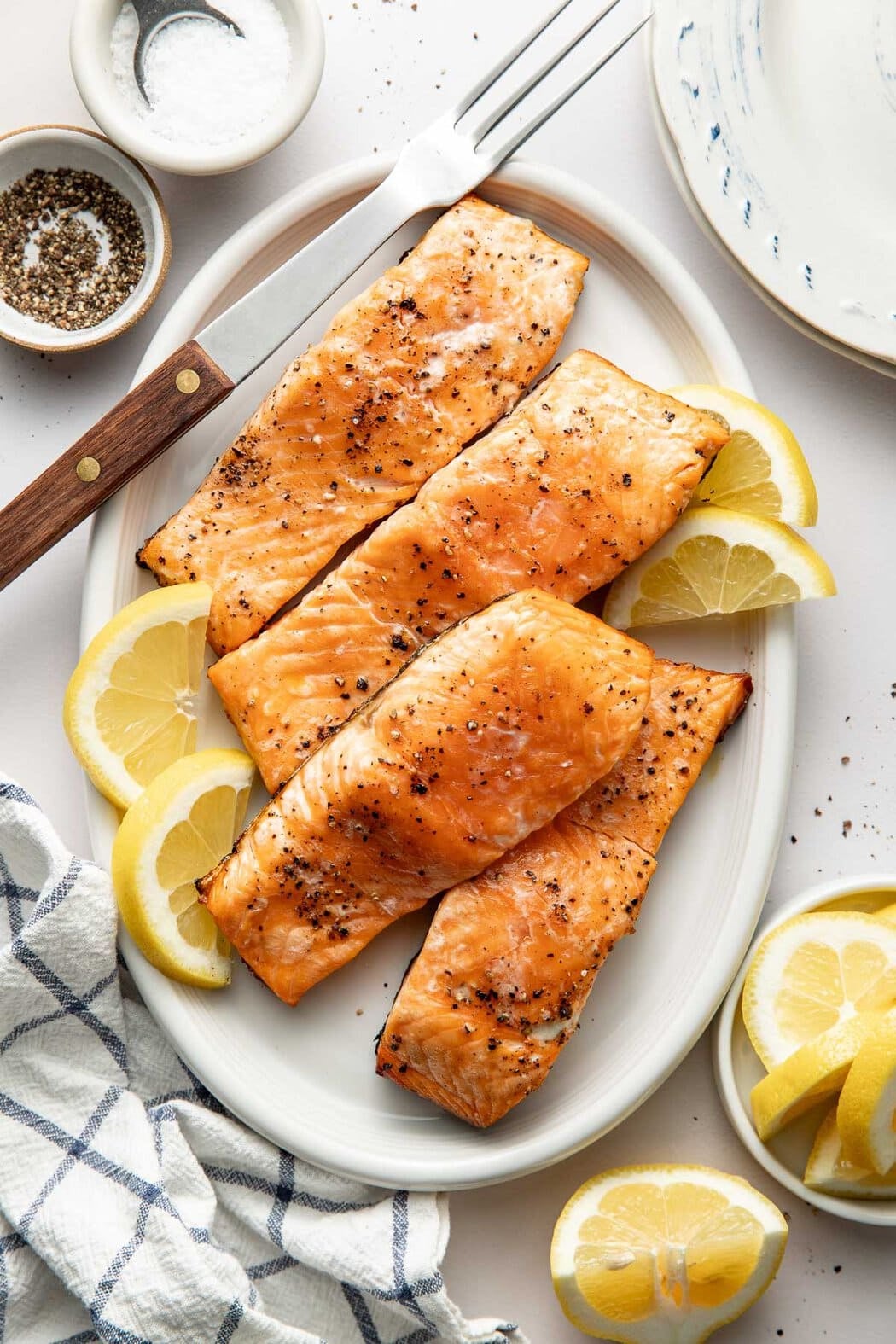
One thing that sets my recipe apart is my preference for the no-flip method. It seems like every chef has a different opinion on whether salmon should be flipped. I’ve referenced cookbook after cookbook, and the opinions are almost evenly split. The internet seems to favor flipping, but I keep coming back to the no-flip approach because it’s simple, reliable, and produces wonderfully crispy skin. The only downside, in my opinion, is missing out on grill marks. For me, the ease and consistency of my grilled salmon method are well worth the tradeoff.
Recipe Highlights
No-flip grilling method: My technique is simple, beginner-friendly, and less stressful than the more traditional flip-over grilling method
Fast and easy protein: Get a high-quality protein source that can be enjoyed for several days with very little hands-on work. Leftover cold grilled salmon is one of my favorite additions to rice bowls and salads, and makes meal prep incredibly easy
Only 4 ingredients: Nothing fancy required – just salmon fillets, oil, salt, and black pepper
Salmon: A High-Quality Protein
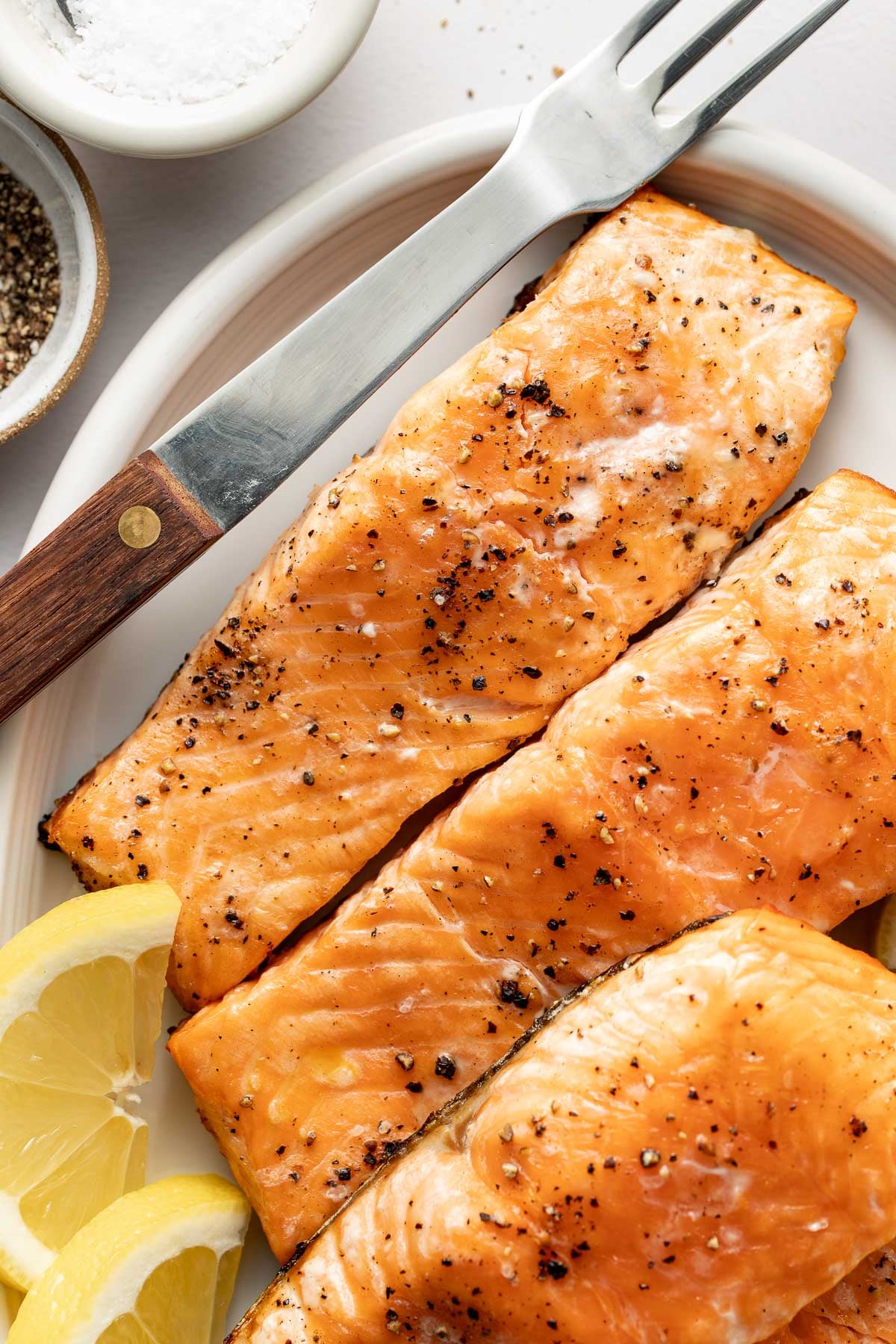
As a registered dietitian, I love salmon recipes because they’re nutritious, versatile, and relatively quick to prepare. On busy weeknights, I can have a healthy dinner on the table with very little effort. During the warmer months, it’s one of my favorite things to throw on the grill.
Salmon is high in protein, providing nearly 30 grams per 5-ounce serving. It’s also well known for its omega-3 fatty acids. These heart-healthy fats play important roles in supporting cardiovascular health and may help reduce inflammation throughout the body. Salmon is also a good source of vitamin D, vitamin B12, selenium, and potassium.
Less Than 5 Ingredients
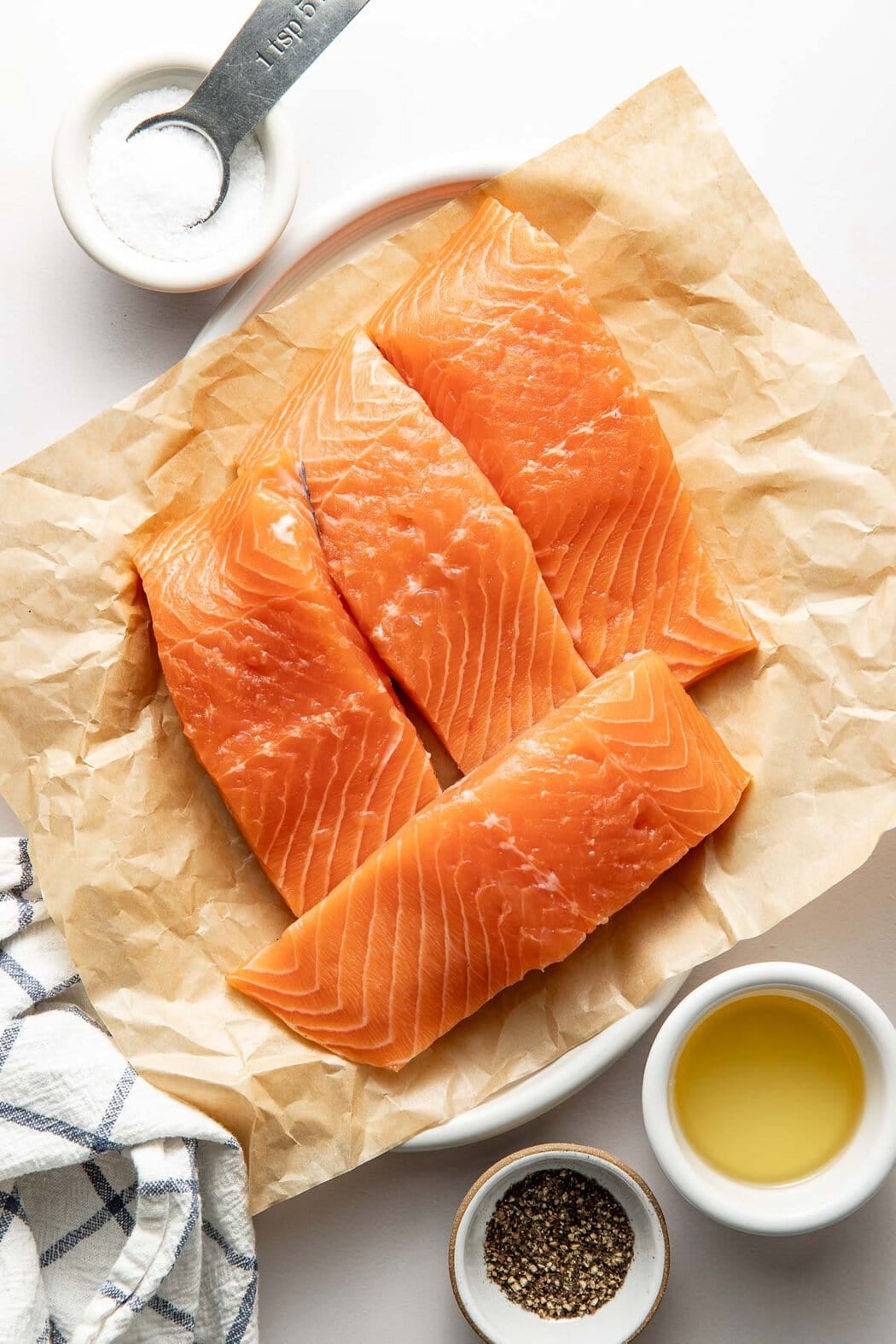
One of the things I appreciate most about this recipe is how little it requires.
- Salmon: Skin-on salmon fillets work best for this recipe. The skin helps protect the delicate flesh from direct heat and becomes deliciously crisp on the grill. Fresh or previously frozen salmon both work well. Any favorite type of salmon will work, such as sockeye or king salmon. This method also works for other types of sturdy fish fillets, such as halibut, tuna, or mahi-mahi.
- Avocado oil: A small amount of oil helps prevent sticking and promotes browning. Avocado oil is my preference because of its high smoke point, but other high-heat oils such as canola oil or grapeseed oil can also be used. Regular olive oil can work, too, but I avoid extra-virgin olive oil because of its lower smoke point.
- Coarse salt: Salt enhances the natural flavor of the salmon and helps create a well-seasoned finished product. The amount can be adjusted based on personal preference.
- Fresh ground black pepper: Adds subtle warmth and balances the richness of the fish. Freshly ground pepper tends to provide the best flavor.
Find the ingredient list with exact measurements in the recipe card below.
Try A Marinade
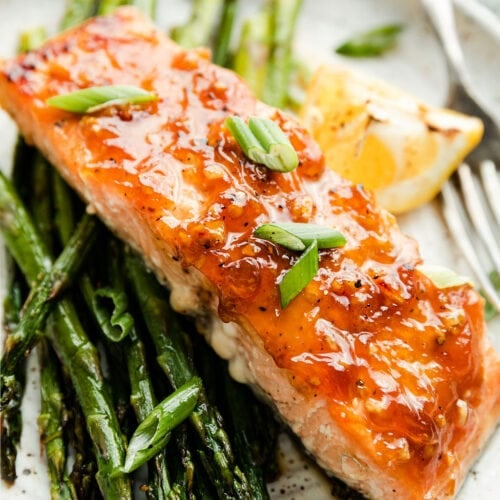
Though grilled salmon doesn’t need a marinade (I think it tastes delicious with just salt and pepper seasoning alone), marinating can provide different flavor profiles. One of my favorites is this miso-glazed salmon that calls for marinating the fillets in a mixture of white miso, honey, vinegar or lemon juice, avocado oil, and soy sauce. The salmon can then be broiled or grilled.
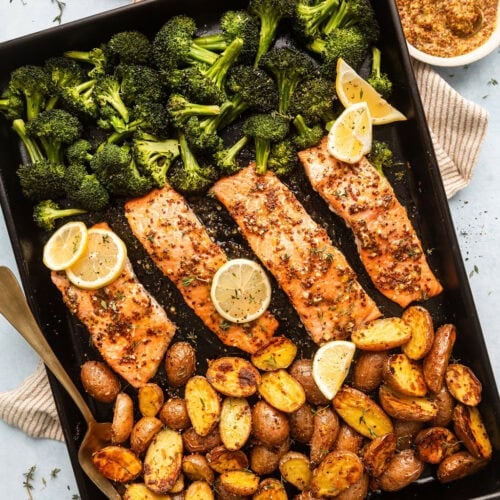
Another favorite salmon marinade is this simple lemon-herb salmon made from fresh lemon juice and lemon zest, minced garlic or garlic powder, and dill or other fresh herbs.
Time To Get Grilling
One of the biggest misconceptions about how to grill salmon (and other grill recipes, for that matter) is that it requires constant attention. In reality, the fish cooks nicely, and especially well when it’s left alone for the most part. Here are the basic steps:
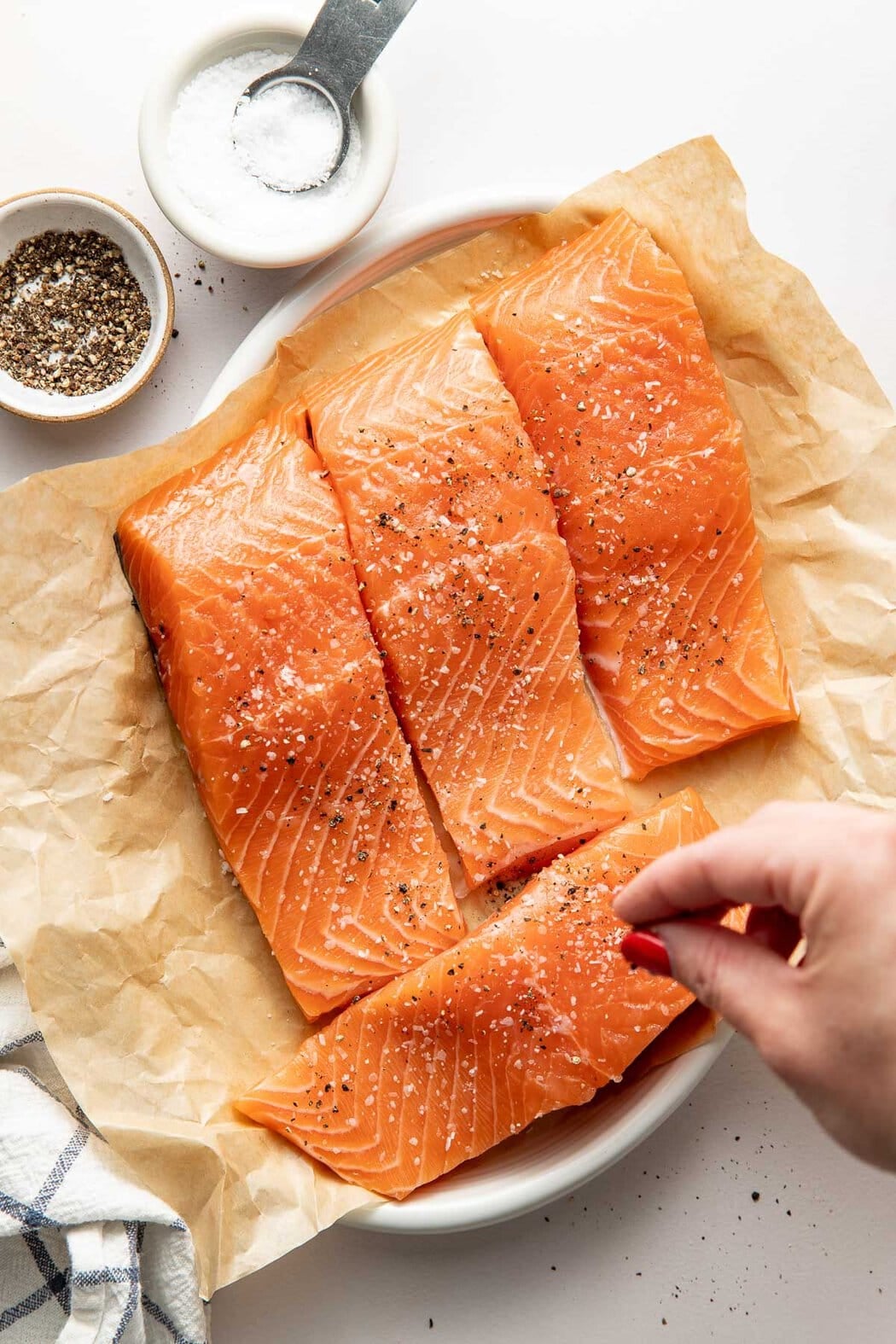
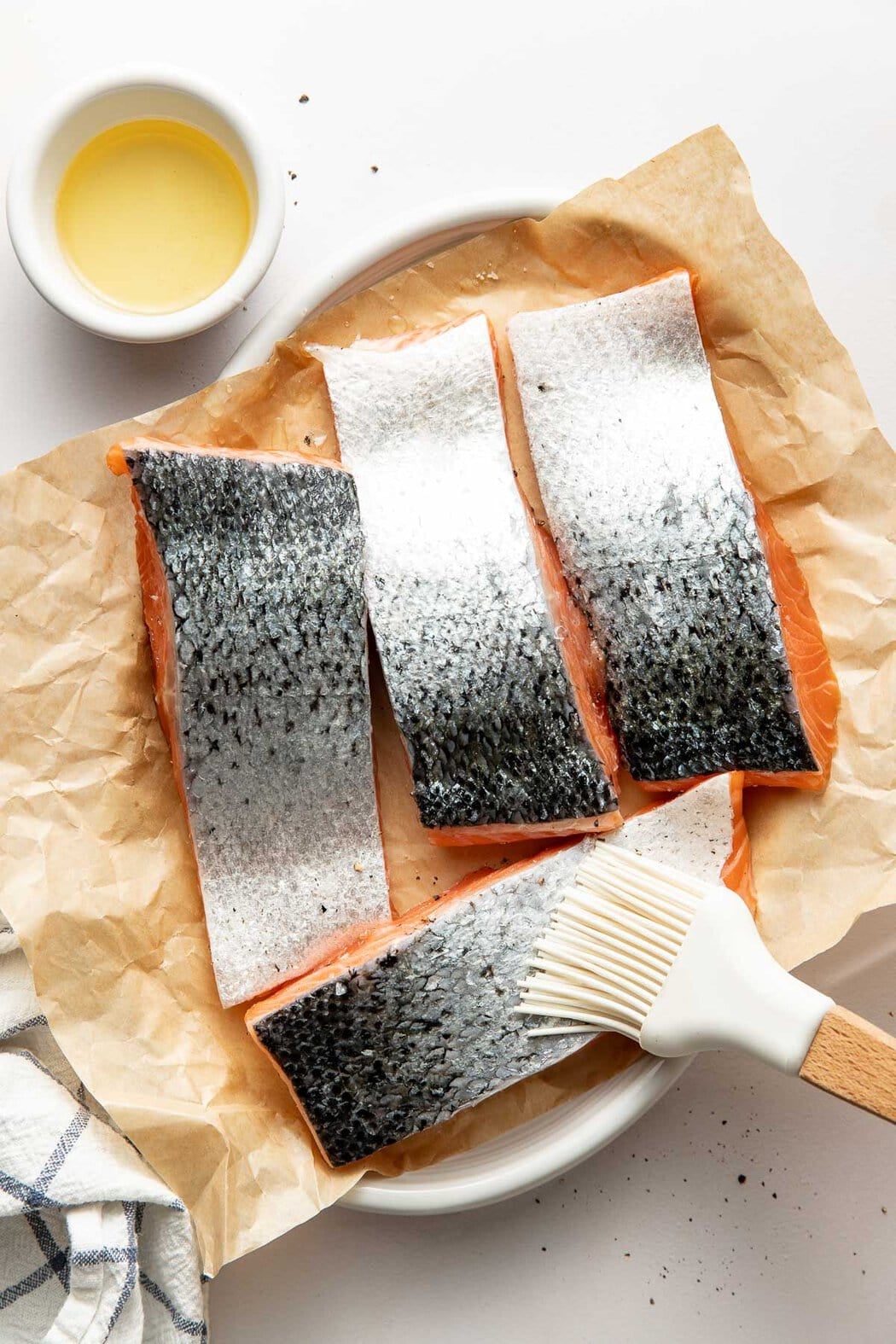
- Preheat the grill: A hot grill is one of the keys to success because it helps prevent sticking and promotes even cooking. While the charcoal grill or gas grill is preheating, I rub my fingers over the salmon to feel for any tiny pin bones that I can pull out. Then I season the salmon generously with kosher salt and pepper, and brush a light coating of oil onto the skin side.
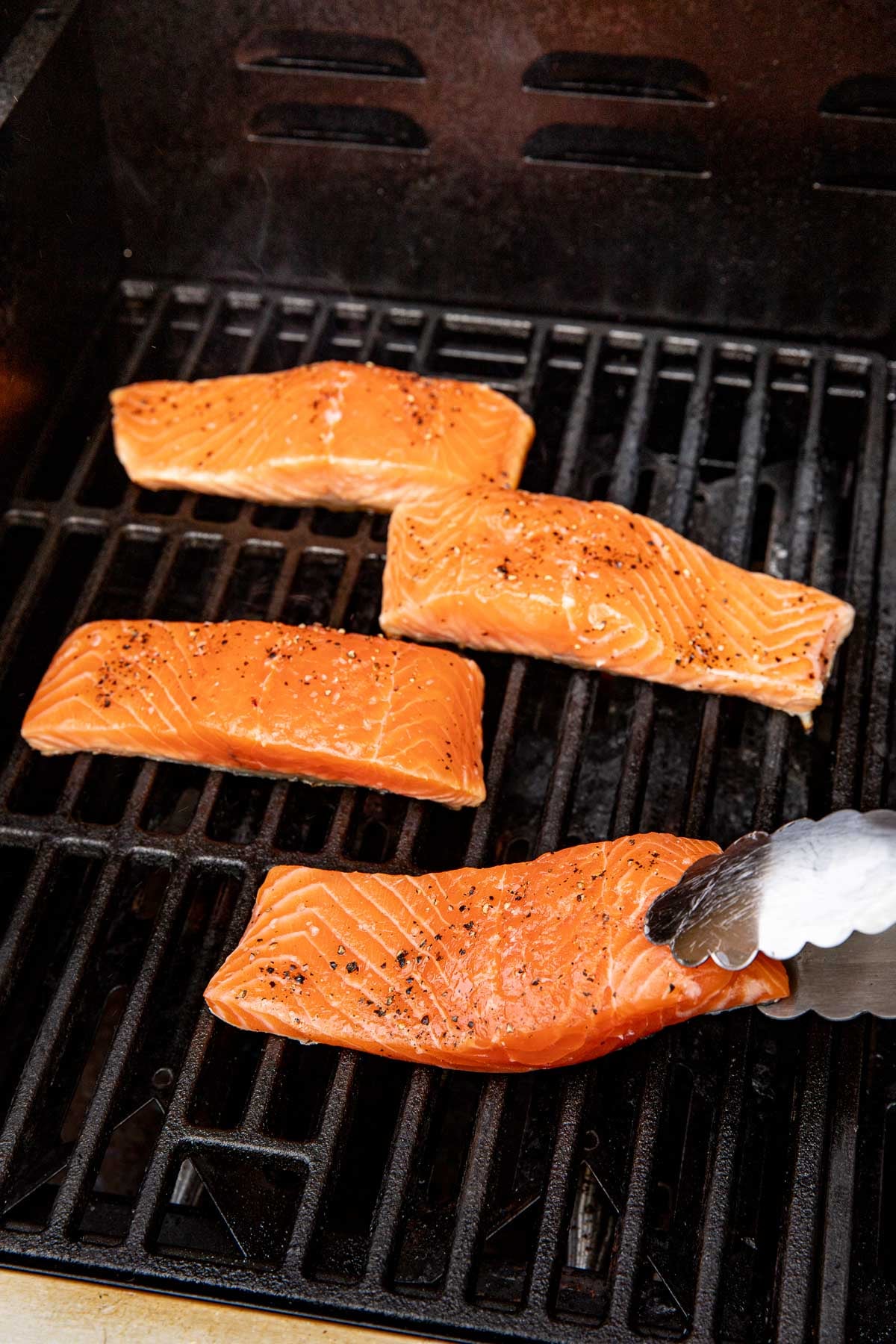
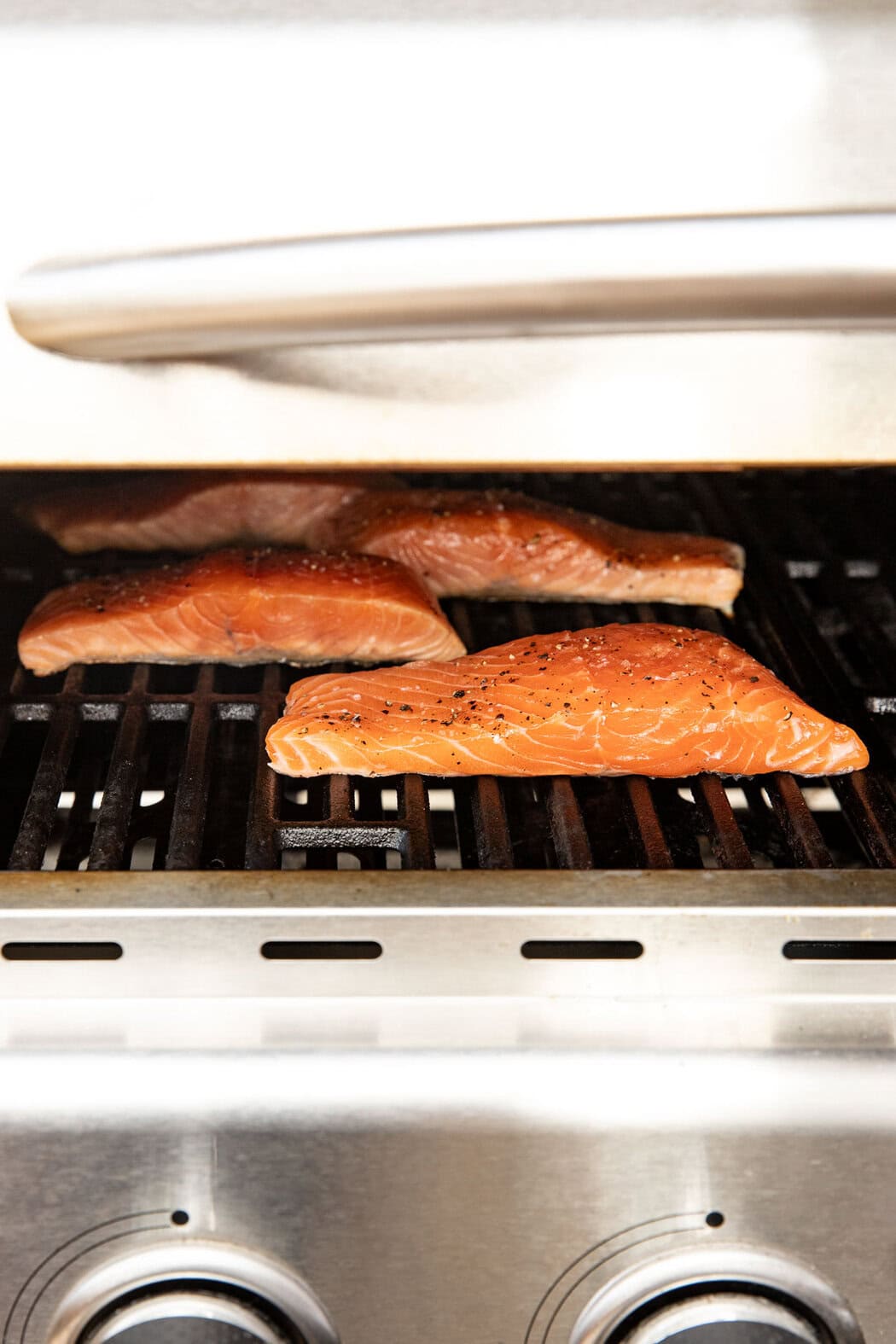
- Grill the salmon: The salmon steaks go directly onto the grill skin-side down. The most important part of this recipe is resisting the temptation to move it. I leave the fillets exactly where they are and keep the grill closed while they cook.
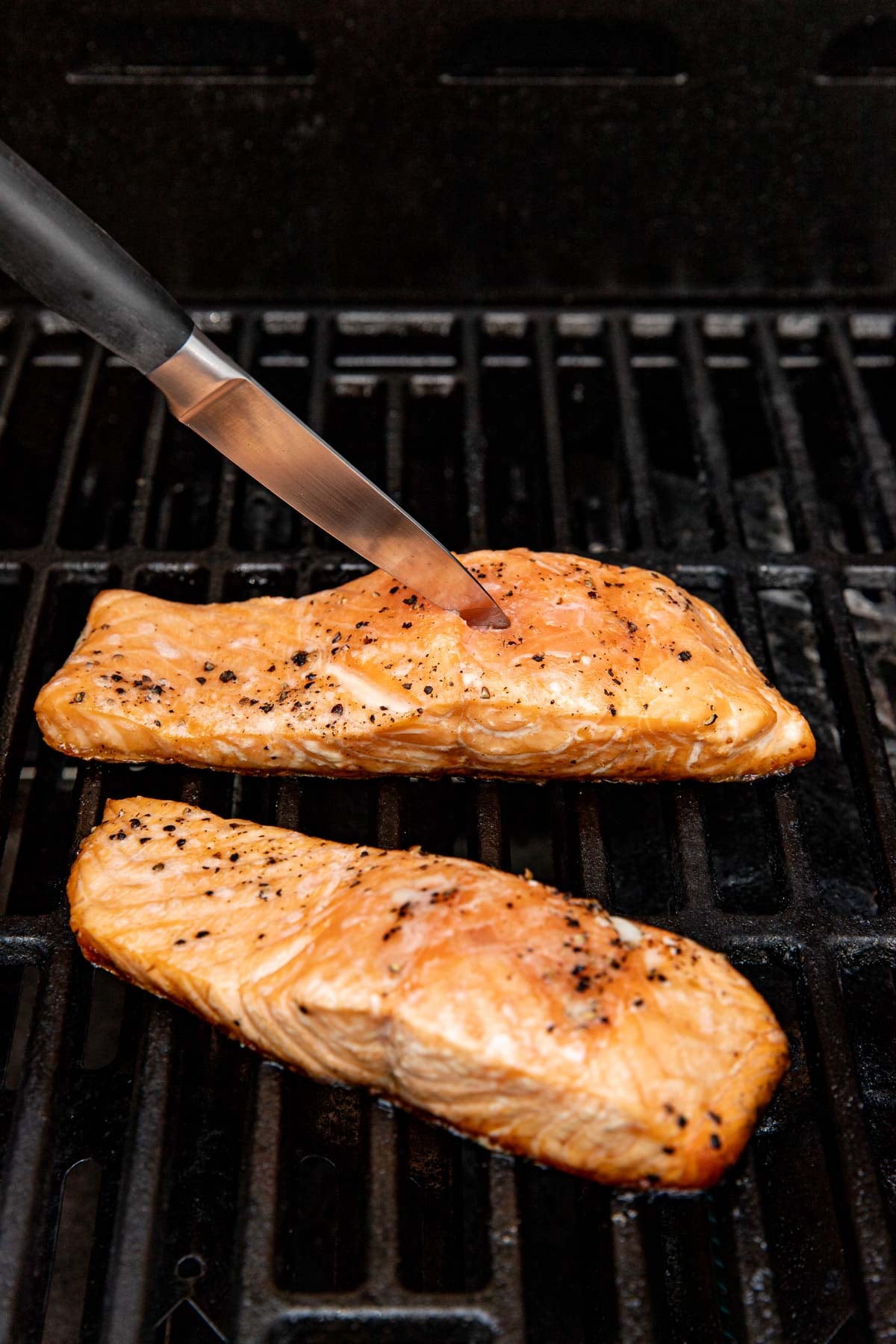
- Test for doneness: Cooking time varies depending on the thickness of the fillets. Rather than relying solely on time, I prefer checking for doneness by feeling the salmon with my fingers, poking into it with the tip of a knife, or using a food thermometer to check the internal temperature. Sometimes I use a combination of these doneness methods. Salmon can be enjoyed at varying levels of doneness, much like a steak. While I prefer a softer, more medium texture, others enjoy it fully cooked and firmer.
- Lift salmon off grill: One thing I love about my no-flip method is that the salmon practically tells me when it’s ready. Once cooked, the fillets will release from the grill easily and lift away without sticking.
For serving size and the complete directions and ingredient amounts, scroll down to the recipe card below. All of our recipes include the nutrition analysis, listing calories (kcals), protein, carbohydrates/carb, fiber, sugar, sodium, cholesterol, and more per serving.
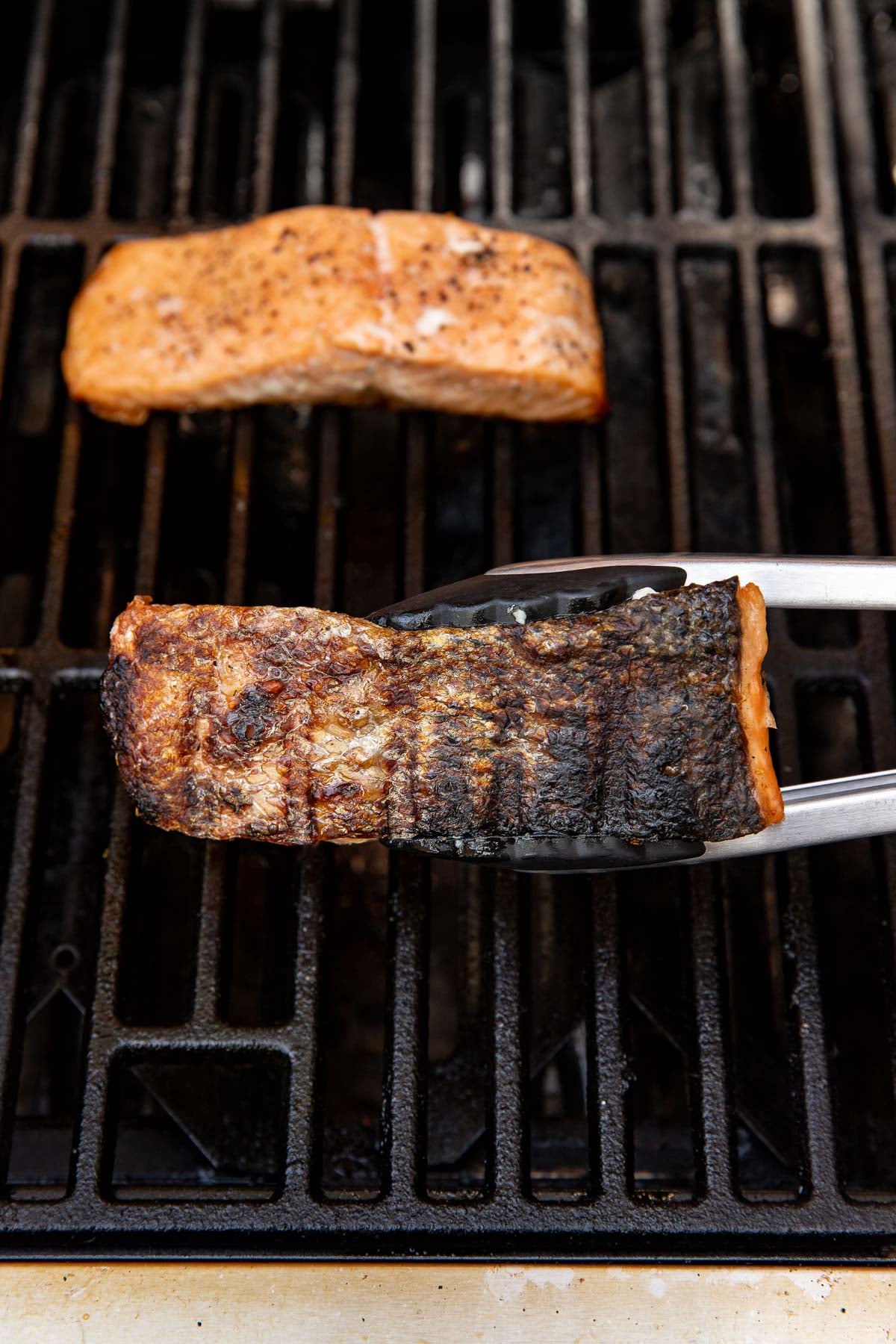
Prevent It From Sticking
The fear of salmon sticking to the grill is understandable, but a few simple steps dramatically reduce the risk.
- Start with clean grill grates. Scrub away any left-behind burnt-on bits or residue before cooking.
- Preheat the grill fully before adding the fish.
- Brush oil directly onto the salmon skin rather than onto the grill grates.
- Place the salmon on the grill and leave it alone. Avoid trying to lift or move the fish too early.
- Wait until the salmon has cooked long enough to naturally release from the grates.
In my experience, most sticking problems happen because the salmon is moved before it’s ready. Patience is often the best solution.
Serve And Pair With Sides
This method produces grilled salmon that has the best crispy skin. The skin is completely edible and so tasty, in my opinion, but whether or not to eat it comes down to personal preference.
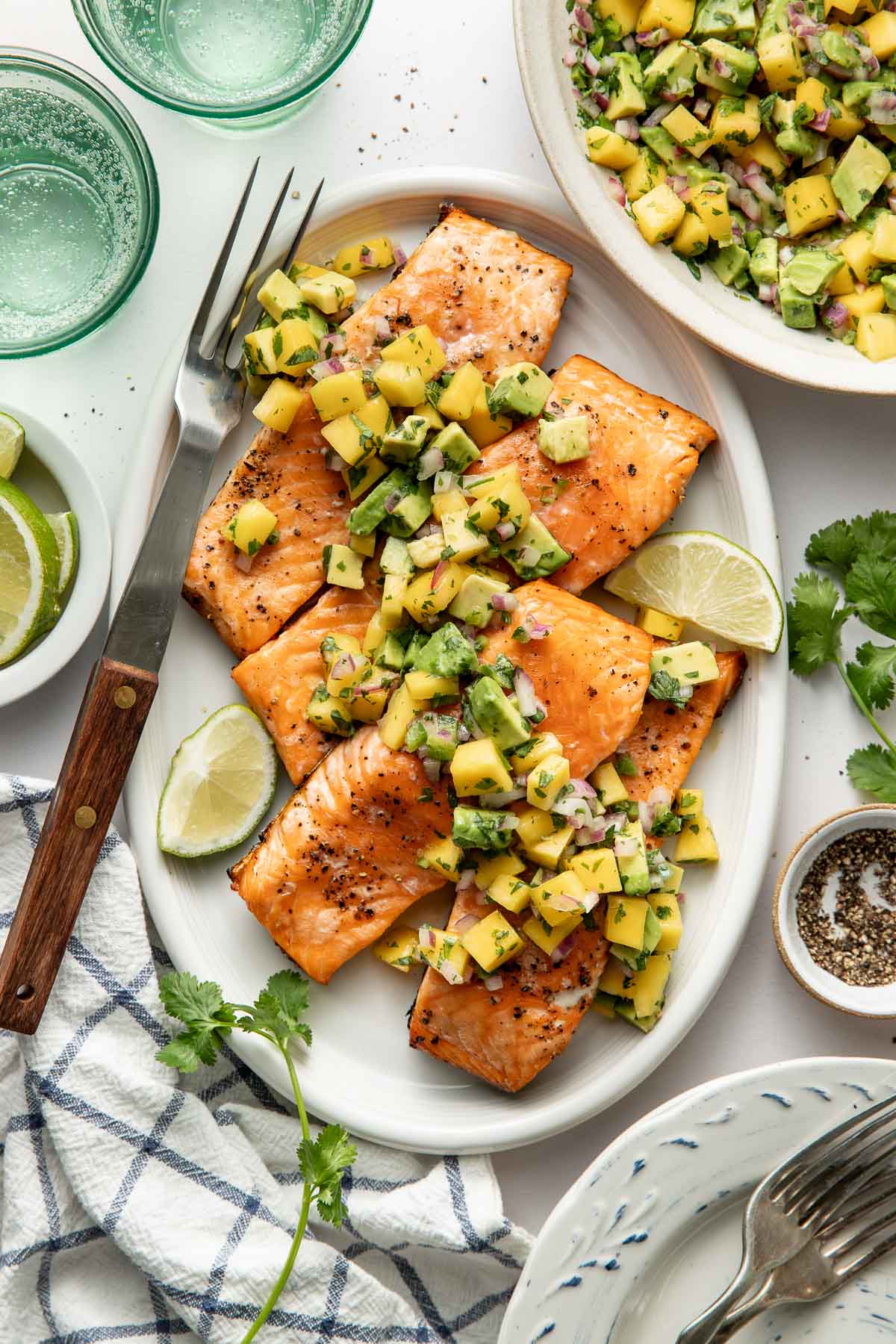
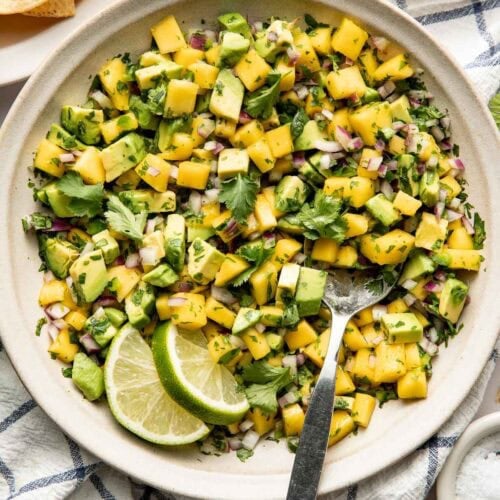
One of my favorite pairings for grilled salmon is fresh mango salsa. The sweetness of the mango pairs beautifully with the rich salmon, and the bright flavors make the meal feel especially right for a summer dinner. To class up the presentation, I sometimes sprinkle the salmon with chopped fresh chives from my garden and some lemon wedges.
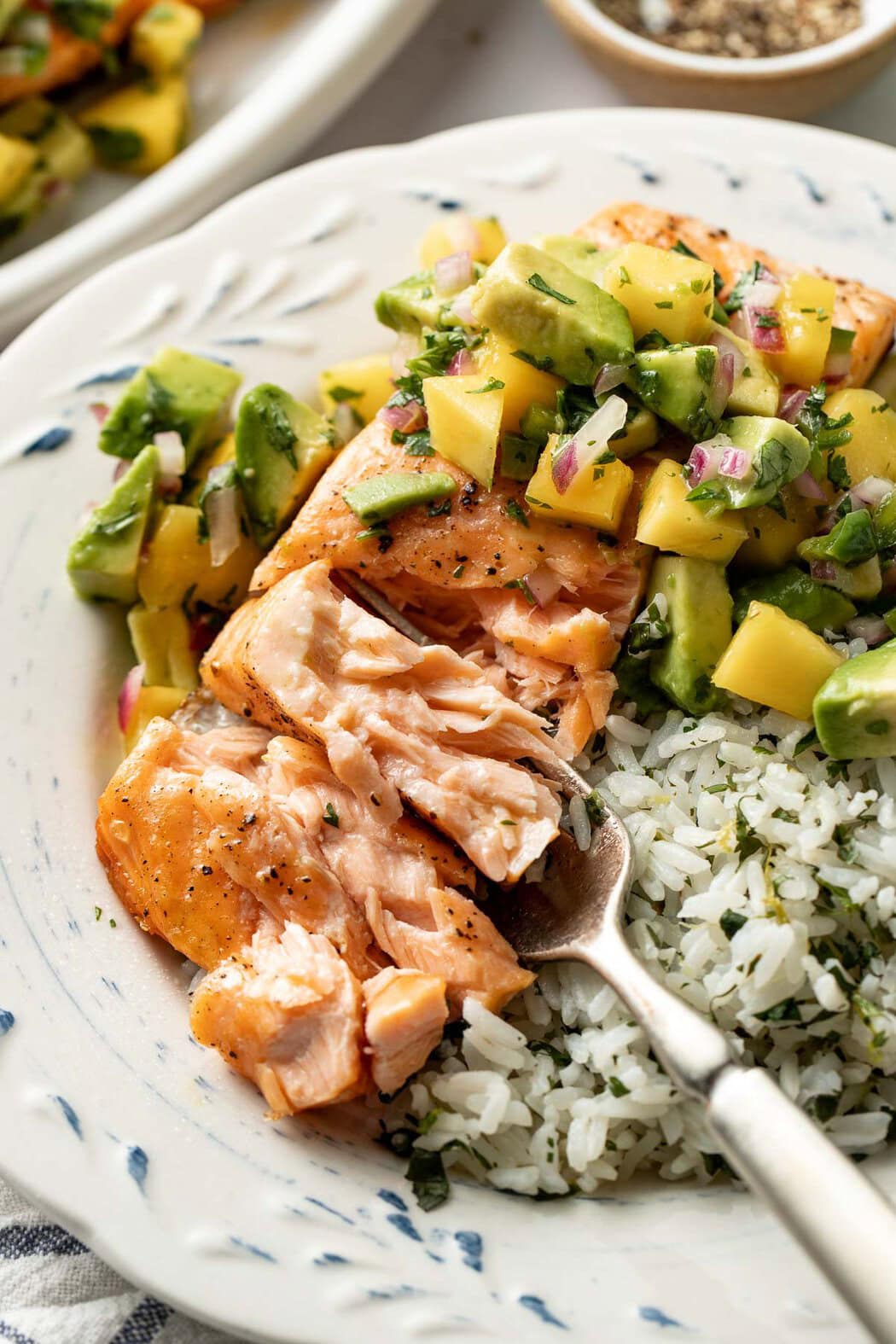
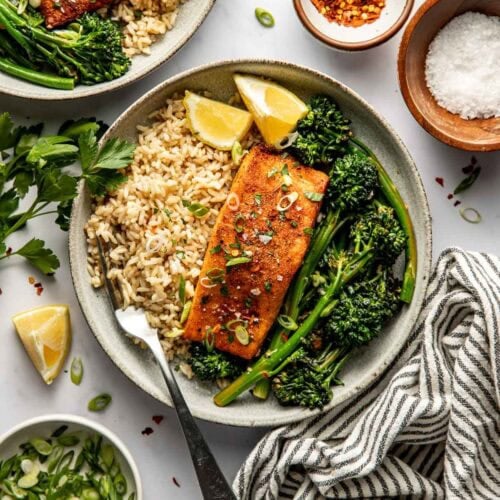
The simplicity of the salmon allows it to work with almost any side dish. I often recommend serving it with cilantro lime rice, cooked quinoa or jasmine rice, corn on the cob, a fresh summer salad, potato salad, or homemade coleslaw.
How To Store And Ways To Use Leftovers
Store leftover grilled salmon in an airtight container in the refrigerator for up to 4 days.
To reheat, warm the salmon gently in a skillet over low heat until heated through. I often enjoy leftovers cold, which helps preserve the texture and prevents overcooking.
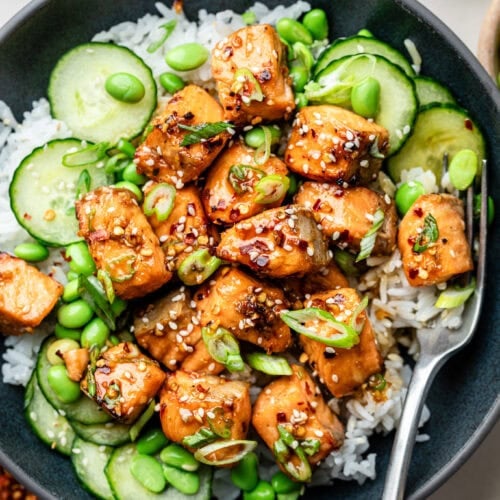
Cold grilled salmon is excellent served over salads, grain bowls, rice bowls, or tucked into wraps. In fact, I frequently grill extra fillets specifically for leftovers because they make lunches incredibly easy throughout the week. It’s also great when flaked and used to make this easy salmon salad.
Want to save this recipe?
Enter your email below & we’ll send it straight to your inbox. Plus you’ll get great new recipes from us every week!
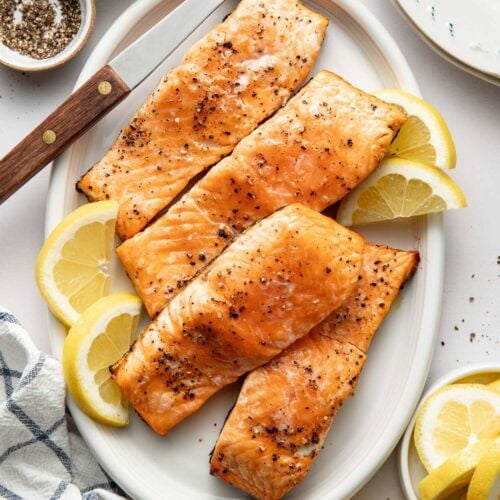
Grilled Salmon Recipe
This simple grilled salmon recipe uses a no-flip method for perfectly cooked fish every time that has delicious crispy skin. This method requires little hand-ons time and is a favorite healthy protein that can be enjoyed hot off the grill or chilled and served over salads and bowls.
Ingredients
- 1 to 1½ lbs skin-on salmon fillets (4 to 6 fillets)
- ½ to 1 teaspoon coarse salt
- ½ teaspoon fresh ground black pepper
- 1 tablespoon avocado oil
Instructions
- Preheat a grill to high heat (400-450℉) and scrub the grates with a metal brush. Close the lid while the grill preheats.
- Place the salmon fillets, skin side down, on a plate. Sprinkle the salt and pepper generously over the flesh side of each fillet, then flip them over.
- Brush the oil over the skin side of each fillet.
- When the grill is hot, place the fillets, skin side down on the grill. Do not move or flip the salmon once it’s placed on the grill. Close the grill.
- Start to test the salmon for doneness around 10 minutes by inserting a food thermometer into the thickest part of the salmon fillet. It will be done to medium at 125-130℉, or well done at 135-140℉. Other ways to check for doneness are to feel the thickest part of the salmon with your fingertips, checking that it is firm and not squishy soft. Or, use the sharp tip of a thin knife to insert into the thickest part of the salmon fillet. If you see raw pink, it’s not done yet. But if you see lighter pink or peach color, it is done. Continue to grill, up to 20 minutes total, until salmon reaches desired doneness. The doneness of salmon is a matter of preference, similar to a steak, so take it off before 20 minutes if you prefer less firm salmon.
- When the salmon is done, it will lift off the grill easily with a pair of tongs or thin fish spatula. Place the grilled salmon fillets on a clean platter and serve. The crispy skin is edible, but again, it’s a matter of preference whether or not to eat it. The salmon flesh will release easily from the skin.
- Store leftovers in an airtight container in the refrigerator for up to 4 days. Reheat salmon or serve the grilled salmon chilled over salads or rice bowls.
Last Step! Please leave a review and rating letting us know how you liked this recipe! This helps our business thrive so we can continue providing free recipes and high-quality content for you.
Nutrition Information
- Serving Size: about 5 oz grilled salmon
- Calories: 216
- Fat: 8 g
- (Sat Fat: 1 g)
- Sodium: 312 mg
- Carbohydrate: 0 g
- (Fiber: 0 g
- Sugar: 0 g)
- Protein: 35 g
- Cholesterol: 78 mg
Dietary
Recipe Changelog
- June 2026: We previously published a version of grilled salmon that was served with elote style grilled vegetables, including zucchini and corn, and topped with Cotija cheese, cilantro, and lime juice. Download the previous version here.
The photos in this post were taken by Megan McKeehan.
For ultimate success, we highly recommend reading the tips in the full blog post above. All photos and content are copyright protected. Please do not use our photos without prior written permission. If you wish to republish a recipe, please rewrite the recipe in your own unique words. Link back to the source recipe here on The Real Food Dietitians. Thank you!

do you eat the “salmon ” skin??
Whether or not you eat it seems to be a preference for most. I do when I’m eating wild caught salmon provided it’s not burnt. But you can easily remove the skin by sliding a thin spatula or knife under between the flesh and the skin. The skin should easily slip off.
This grilled salmon with mango salsa and cilantro lime rice was so delicious, I was sad when I ran out of leftovers for work lunches! All the flavors compliment one another, and my taste buds were jumping for joy! The whole family loved it.
Always a victory when the whole family approves!
I have struggled for years to find a method for cooking salmon that satisfies my partner’s prejudice against frozen fish. We were given some frozen Kenai River filets and I decided to give this method a try. We cooked it on a propane grill fitted with a griddle, and carefully followed the instructions. Wow! It’s the best home-prepared salmon I have ever eaten, rivaling the best restaurant preparations I’ve ever enjoyed. Crispy on the outside, tender and moist flakes on the inside. 100% successful! Thank you for de-mystifying how to prepare this delicious, nutritious fish.
Great, Miriam! We are so happy to hear it.