
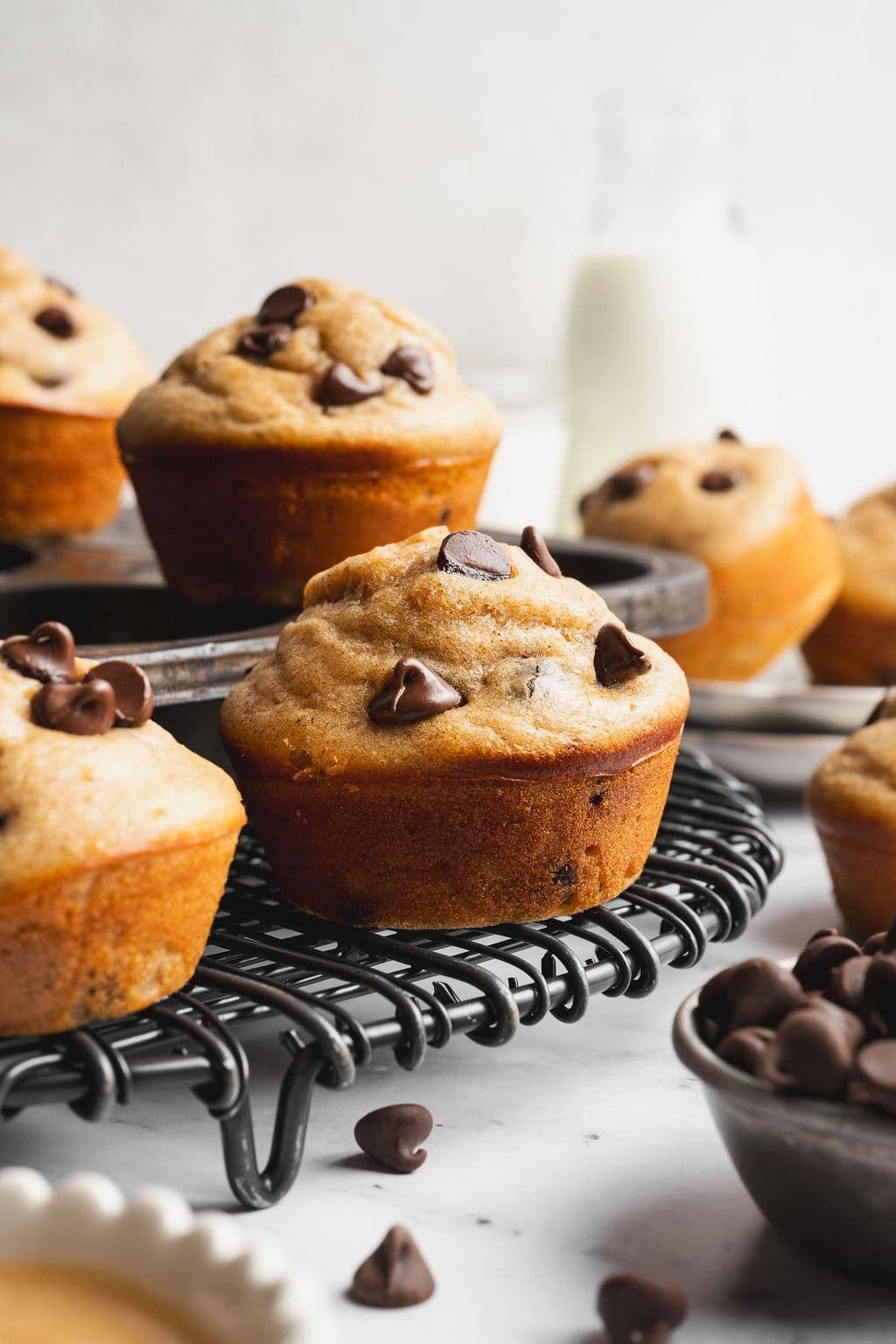
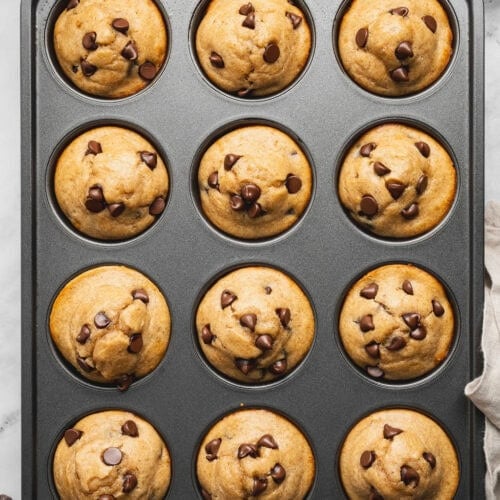
A good muffin recipe is one of my favorite things to have on hand for busy mornings, afternoon snacks, and everything in between. These high-protein peanut butter muffins have become a regular part of my meal-prep routine because they’re easy to make, store well, and offer a little more staying power. Made with peanut butter, Greek yogurt, and vanilla whey protein powder, they bake up soft, fluffy, and perfectly moist while providing 10 grams of protein per serving. Best of all, they’re ready in under 30 minutes and freeze well for later.
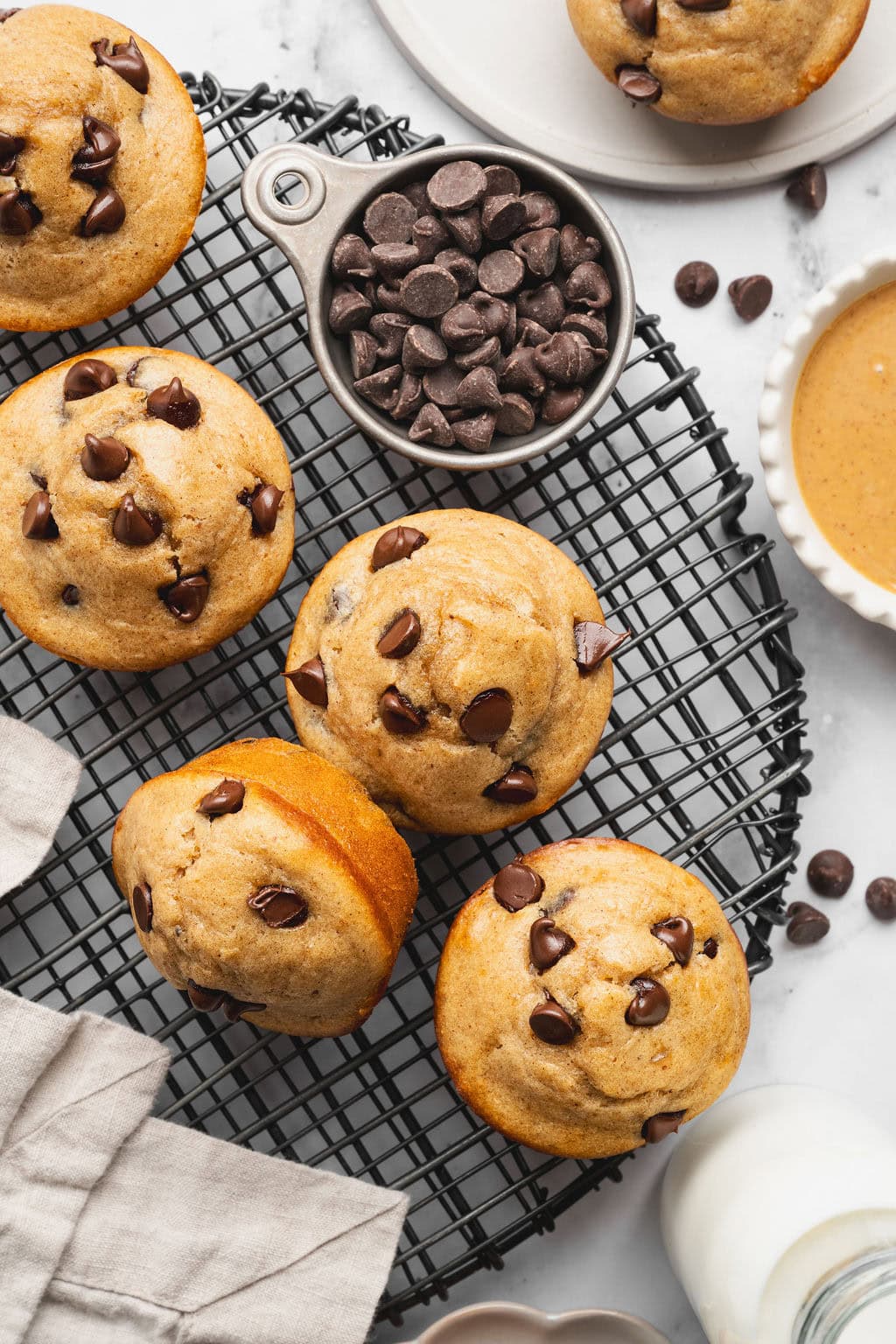
Recipe Highlights
Easy to make ahead: I often bake a batch at the beginning of the week and keep them on hand for quick breakfasts and snacks. They store well in the refrigerator and freeze nicely for longer storage.
Satisfying protein boost: Between the peanut butter, Greek yogurt, and protein powder, these muffins provide lasting staying power compared to traditional muffins. I find that they help keep me full throughout the morning.
Simple ingredients: The batter comes together in one bowl with ingredients I commonly keep in my kitchen. The result is a soft, tender muffin with very little hands-on effort.
What Are The Benefits Of Protein?
Protein is one thing I try to include at every meal and snack when I’m thinking about my macros because it plays an important role in overall health. Getting enough protein can help support muscle growth, promote bone health, and contribute to feelings of fullness after eating.
I really enjoy baking with protein powder because it makes it easy to boost the protein content of foods that don’t naturally provide much on their own. In these high-protein muffins, the combination of whey protein powder, Greek yogurt, and peanut butter creates a more balanced snack or breakfast that keeps me energized throughout the day.
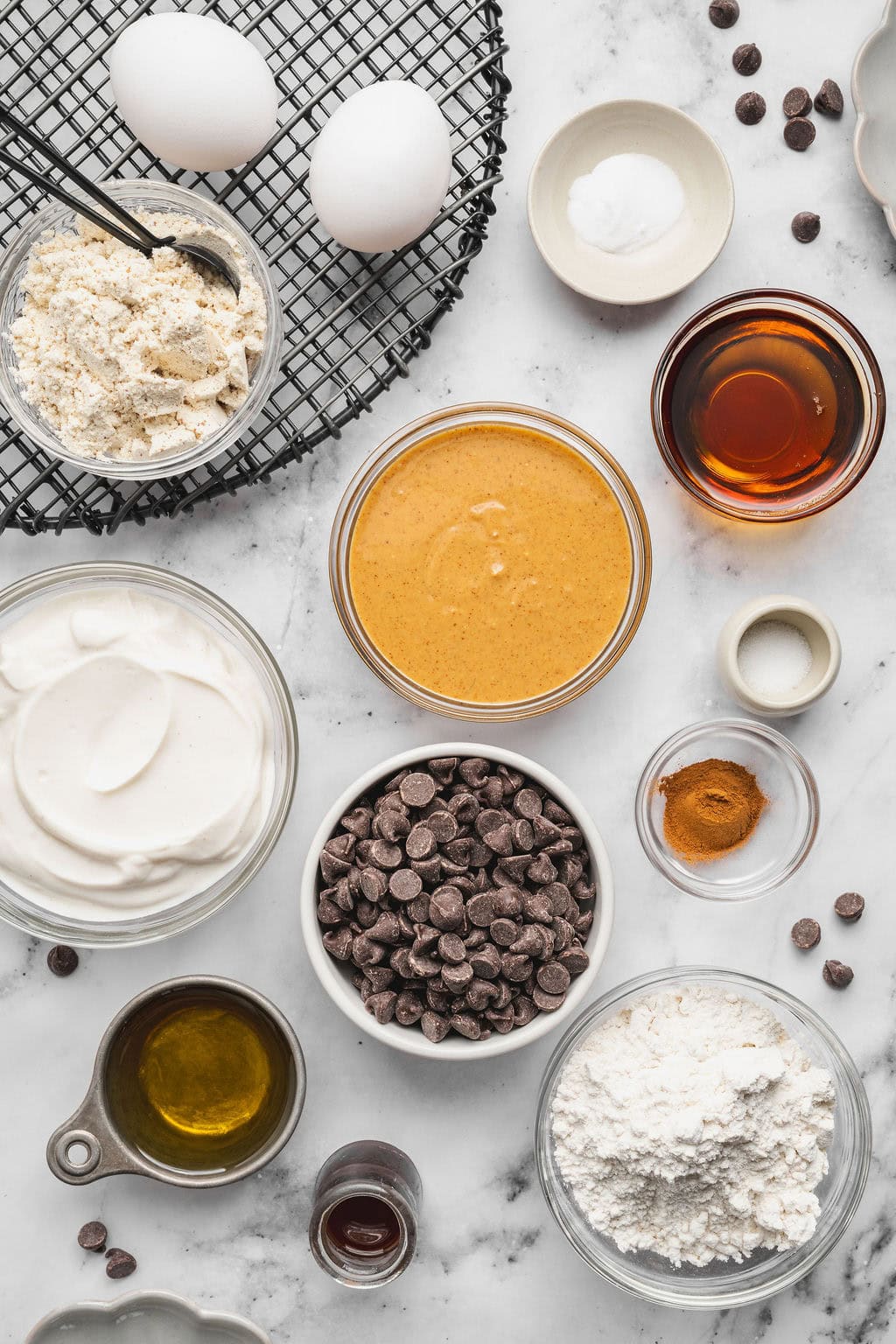
Ingredient Notes And Substitutions
Unlike many protein muffin recipes, these protein muffins without banana rely on Greek yogurt and peanut butter for moisture and texture. Here’s a closer look at the key ingredients that make these muffins soft, flavorful, and satisfying:
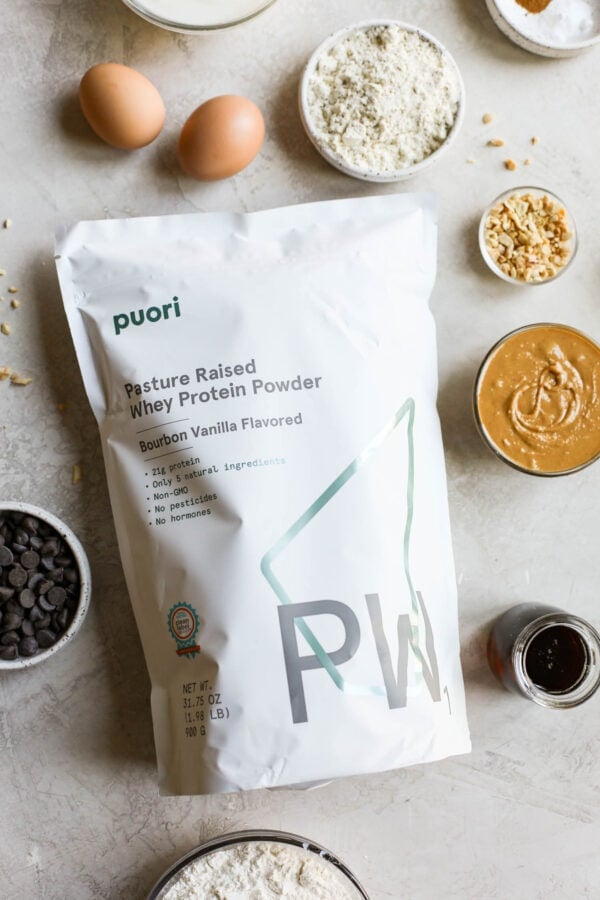
- Vanilla whey protein powder: Protein powder adds a boost of high-quality protein for a more balanced breakfast or snack. I love Puori whey protein powder for its short ingredient list and lack of artificial sweeteners. A vanilla protein powder works best in this recipe, but chocolate protein powder can be substituted for a richer chocolate flavor.
- All-purpose flour: Flour provides structure and helps create a tender muffin crumb. Unbleached all-purpose flour works best, but you can substitute a gluten-free flour blend if you’re baking for someone with celiac disease.
- Natural peanut butter: Peanut butter adds healthy fats, protein, and rich peanut flavor. I like using a natural creamy peanut butter made with just peanuts and salt. If the peanut butter has separated, give it a good stir before measuring. Almond butter is tasty, too.
- Greek yogurt: Greek yogurt adds moisture, protein, and calcium while adding a soft, fluffy texture. For the best results, use plain Greek yogurt or vanilla 2% or full-fat.
- Pure maple syrup: Maple syrup naturally sweetens the muffins while adding subtle flavor. I like pure maple syrup over pancake syrup, which often contains artificial flavors. Honey is an easy substitute. Brown sugar or coconut sugar can also be used, though both will slightly reduce moisture.
- Eggs: Room-temperature quality eggs blend more easily into the batter for more even baking. I haven’t tested this recipe with egg substitutes, such as flax eggs, so I can’t guarantee the results.
- Chocolate chips: Chocolate chips add pockets of sweetness throughout the muffins. Semi-sweet or dark chocolate chips both work well, depending on personal preference.
- Pantry staples: Ground cinnamon adds warm flavor, vanilla extract enhances sweetness, baking soda (not baking powder) helps the muffins rise, and a small amount of salt balances the overall flavor. Avocado oil or olive oil keeps the muffins moist and tender while contributing heart-healthy unsaturated fats.
Find the ingredient list with exact measurements in the recipe card below.
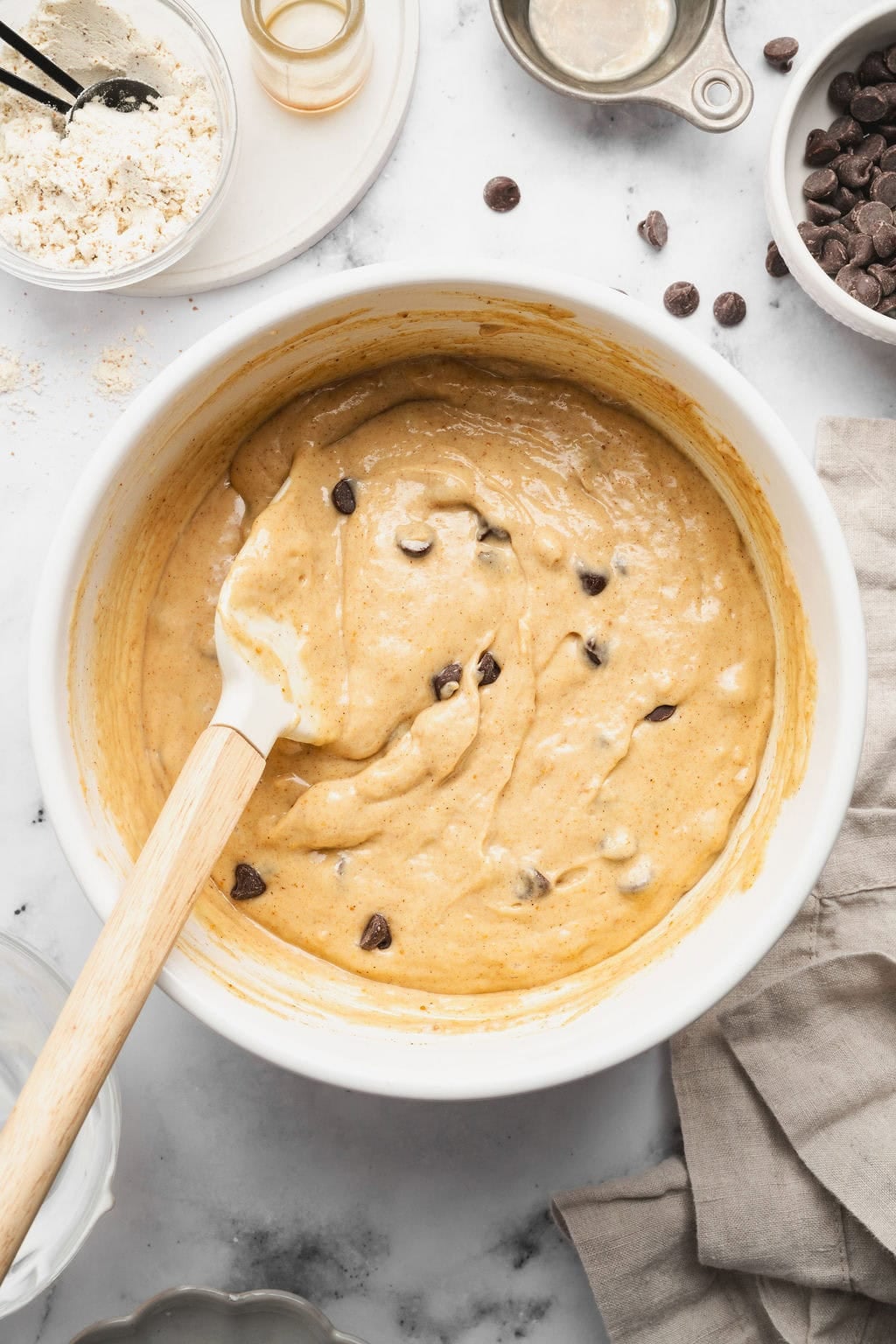
How To Make These Protein-Packed Muffins
Once assembled, this muffin batter comes together quickly with just a few simple steps and minimal hands-on time. Here’s how I make these muffins for the best texture and rise:
- Prepare: I start by preheating the oven and preparing a standard muffin tin with muffin liners or a light coating of cooking spray. Silicone pans are left ungreased.
- Mix dry ingredients: I combine all dry ingredients in a large bowl, stirring until evenly distributed to prevent clumps, especially from the protein powder.
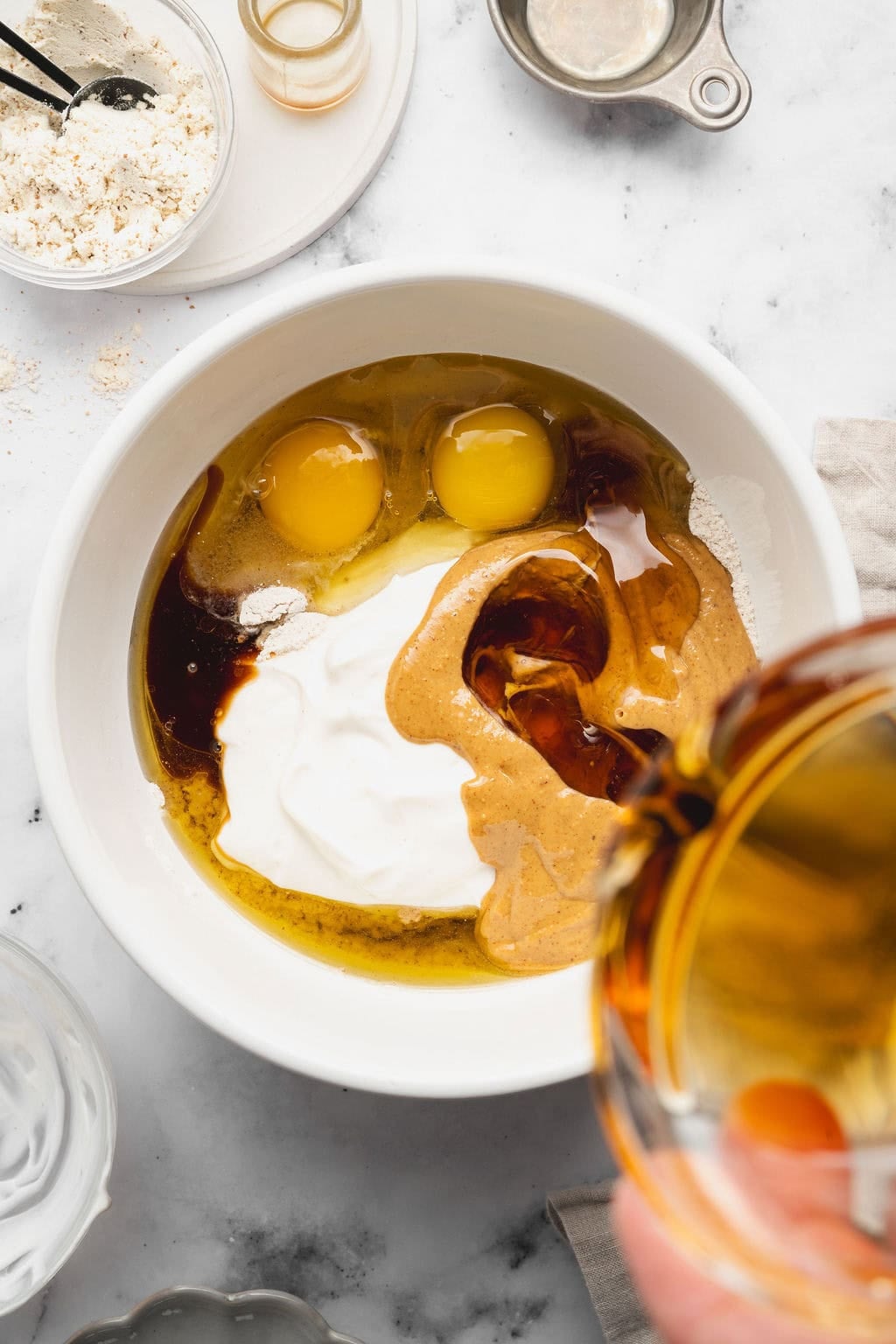
- Mix wet ingredients: In a separate bowl, I whisk together the peanut butter, yogurt, maple syrup, eggs, oil, and vanilla until smooth and fully blended.
- Combine: I add the wet mixture to the dry ingredients, stirring just until no dry streaks remain. I avoid overmixing here since it can lead to dense muffins. Chocolate chips are folded in at the end.
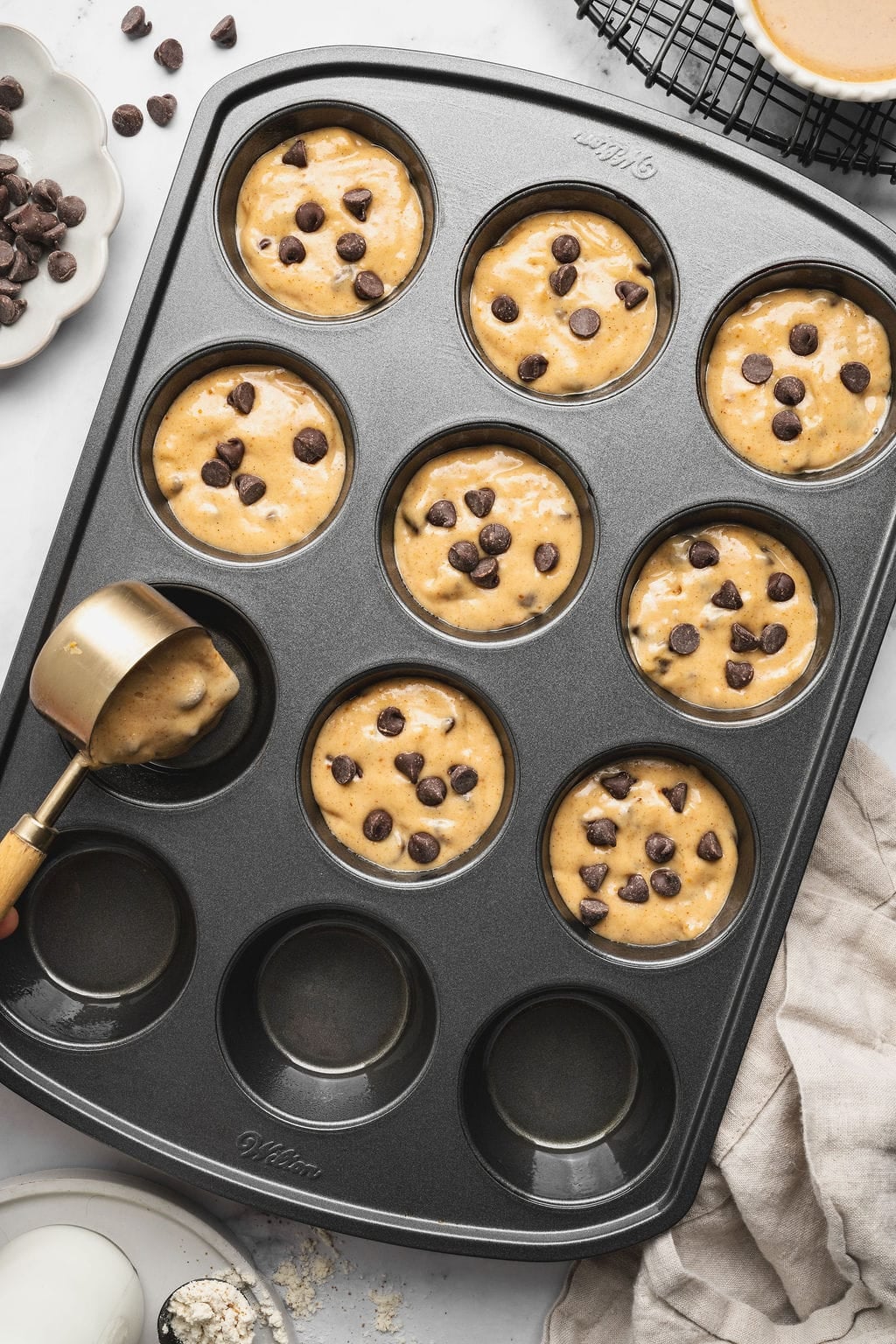
- Portion the batter: I divide the batter evenly among the muffin cups, filling each about three-quarters full. The tops are gently smoothed, then finished with extra chocolate chips for texture, if desired. Chopped peanuts work well here, too.
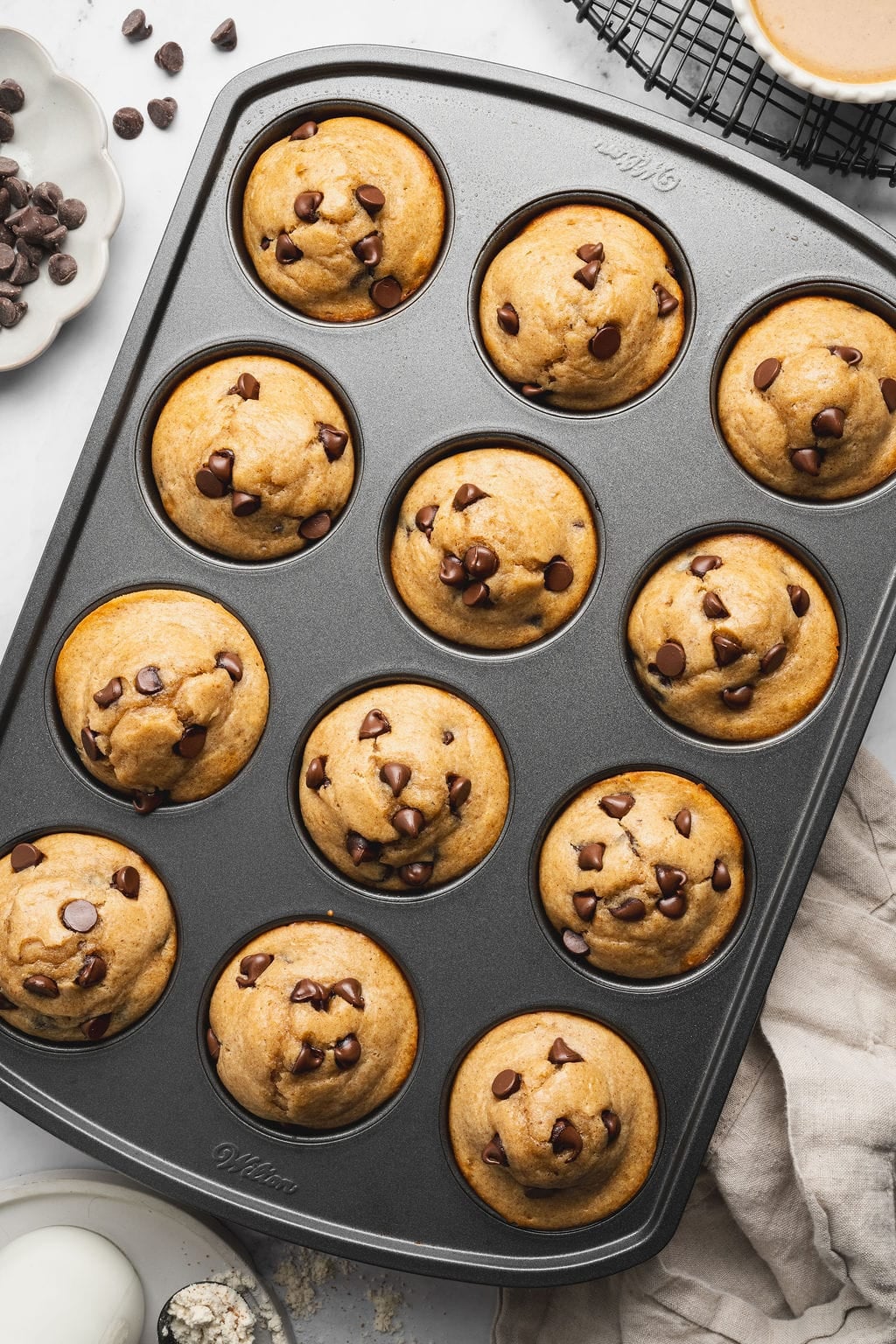
- Bake: The muffins are baked until the centers are set and a toothpick comes out clean or with a few moist crumbs.
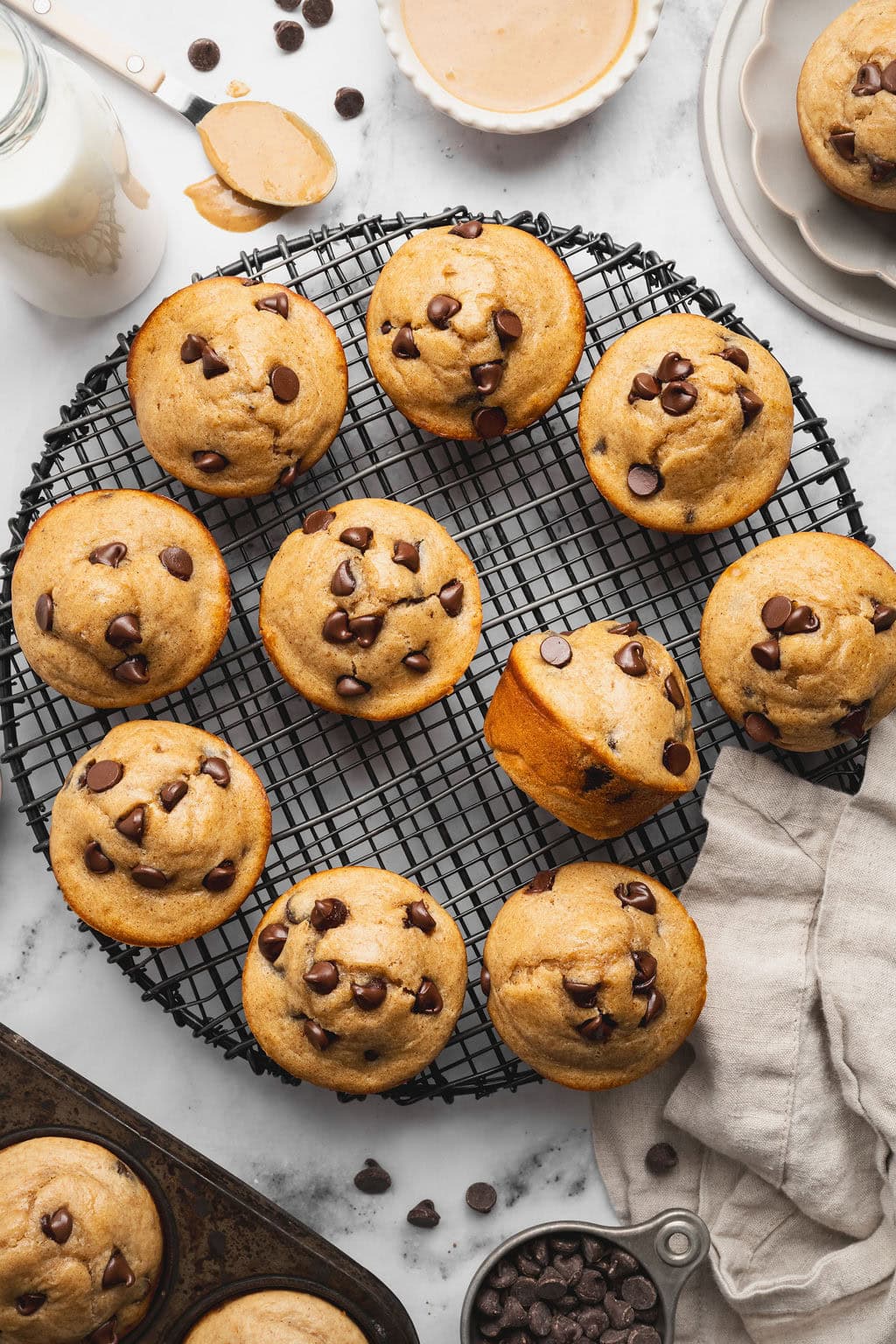
- Cool: I let the muffins rest briefly in the pan before transferring to a wire rack to cool completely so the texture sets properly without becoming soggy.
For serving size and the complete directions and ingredient amounts, scroll down to the recipe card below. All of our recipes include the nutrition analysis, listing calories (kcals), protein, carbohydrates/carb, fiber, sugar, sodium, cholesterol, and more per serving.
Make These Gluten-Free
I’ve made these muffins gluten-free by swapping the all-purpose flour 1:1 for a gluten-free flour blend. For the best texture and structure, I recommend using either Bob’s Red Mill Gluten Free 1-to-1 Baking Flour or King Arthur Gluten Free Measure for Measure Flour.
Both blends are designed to replace regular flour cup-for-cup, so no other recipe adjustments are needed. The muffins still bake up soft, moist, and tender with plenty of peanut butter flavor and protein in every bite.
Important note: When baking for someone with celiac disease or a gluten sensitivity, I make sure to check that all ingredients, including the protein powder and chocolate chips, are certified gluten-free.
Make Ahead And Freeze
Protein muffins work especially well for meal prep since they retain their texture and flavor well after baking. I like keeping a batch in the freezer for quick, ready-to-go breakfasts during busy weeks.
Once fully cooled, muffins can be stored in a freezer-safe bag or container for up to 6 months. To enjoy, I let a muffin thaw at room temperature or overnight in the refrigerator, then warm it briefly in the microwave for about 15 seconds to restore that soft, fresh-baked texture.
Quick note: Protein powder may change structure when heated, but the nutritional benefits remain largely intact after baking.
⭐⭐⭐⭐⭐
“These muffins were a hit with my family. Perfect to grab as a snack before practice or after an outdoor adventure.” ~ Amy
How To Store
Once fully cooled, I transfer leftover muffins to an airtight container and store them in the refrigerator for up to a week. This helps maintain moisture and keeps them from drying out too quickly. To serve, I warm a muffin in the microwave for a few seconds to restore that soft, freshly baked texture.
Frequently Asked Questions
In my experience, the most common cause of dry protein muffins is using too much protein powder. Protein powder absorbs moisture differently from flour, and adding extra to your dry ingredients can result in a dense or dry texture.
I haven’t tested a dairy-free version, but it should work with a dairy-free yogurt and a plant-based protein powder. Since ingredients can vary significantly between brands, the texture may be slightly different than the original recipe.
I haven’t tested it, but unsweetened applesauce or mashed bananas can usually be substituted for yogurt. For potassium-rich banana protein muffins, use ripe bananas to eliminate the need for added sugar.
Cottage cheese can work as a substitute for yogurt and add extra protein, but it changes the texture a bit more than applesauce or banana. I usually blend it first until completely smooth, so it behaves more like yogurt in the batter.
Sure! I simply swap the vanilla protein powder for chocolate protein powder when the chocolate cravings hit. For even richer chocolate muffins, I sometimes add a few extra chocolate chips to the batter.
My fudgy paleo brownies or gluten-free banana bread with chocolate chips also make for great chocolate treats!
Whey protein powder can be stirred into most boxed muffin mixes, but I recommend starting with a small amount since protein powder absorbs moisture differently than flour. To maintain a soft texture, I like adding a little extra peanut butter, Greek yogurt, or another moisture-rich ingredient to balance the batter. Adding too much protein powder can result in muffins that are dense or dry.
It’s also possible to make higher-protein muffins without protein powder by relying on naturally protein-rich ingredients such as Greek yogurt, cottage cheese, eggs, or nut butters. The total protein content will typically be lower than a recipe made with protein powder, but the muffins can still be a satisfying, protein-rich breakfast or snack.
More High-Protein Recipes To Try
Want to save this recipe?
Enter your email below & we’ll send it straight to your inbox. Plus you’ll get great new recipes from us every week!
Protein Muffins Recipe
Each of these delicious muffins provides about 10 grams of high-quality protein from a combination of Greek yogurt, peanut butter, and whey protein powder. They’re soft, satisfying, and offer a more balanced, protein-rich option than traditional muffins.
Ingredients
- ⅔ cup all-purpose flour (~90 g) (use gluten-free, if needed)
- ½ cup Puori vanilla whey protein powder (40 g)
- ½ teaspoon ground cinnamon
- ½ teaspoon baking soda
- ¼ teaspoon fine salt
- ½ cup natural peanut butter (120 g)
- 1 cup 2% or full-fat plain or vanilla Greek yogurt (225 g)
- ¼ cup pure maple syrup
- 2 large eggs
- ¼ cup avocado oil
- 1 teaspoon pure vanilla extract
- ½ cup semi-sweet chocolate chips
Instructions
- Preheat the oven to 350℉. Mist the wells of a standard or silicone 12-cup muffin pan with cooking spray.
- In a large mixing bowl, combine the flour, protein powder, cinnamon, baking soda, and salt. Stir well to combine.
- To the same bowl, add the peanut butter, yogurt, maple syrup, eggs, oil, and vanilla. Mix just until combined.
- Fold in the chocolate chips.
- Divide the muffin batter among the 12 muffin cups in the tin, placing about 1/4 cup batter in each one. Sprinkle with additional chocolate chips on top, if desired.
- Bake until the centers are just slightly firm to the touch, about 14 to 16 minutes.
- Remove from the oven and let the muffins cool for 10-15 minutes in the muffin tin before transferring them to a wire rack to cool completely.
- Store in a covered container in the refrigerator for up to 1 week. (Tip: To reheat a muffin, microwave it for 10 seconds and enjoy it warm.)
Last Step! Please leave a review and rating letting us know how you liked this recipe! This helps our business thrive so we can continue providing free recipes and high-quality content for you.
Notes
To make these muffins gluten-free, I swap the regular flour for a 1:1 gluten-free baking flour blend. I also like to double-check that the protein powder and mix-ins are certified gluten-free, since those can sometimes contain hidden gluten sources.
Mini muffins work well with this batter and bake much faster. I reduce the bake time and watch closely for doneness since they can overbake quickly.
Mix-ins are easy to customize. I often switch between chocolate chips, chopped nuts, or even dried fruit, depending on what is on hand.
I haven’t tested almond flour as a substitute. It tends to make baked goods a bit more delicate, so I’d avoid overmixing when using it.
RECIPE CHANGELOG
- May 2026: We previously published a version of these muffins that contained less peanut butter and salt, and it called for both butter and oil instead of just oil. Download the previous version here.
Nutrition Information
- Serving Size: 1 muffin
- Calories: 227
- Fat: 13 g
- (Sat Fat: 3 g)
- Sodium: 141 mg
- Carbohydrate: 18 g
- (Fiber: 2 g
- Sugar: 10 g)
- Protein: 10 g
- Cholesterol: 33 mg
Dietary
For ultimate success, we highly recommend reading the tips in the full blog post above. All photos and content are copyright protected. Please do not use our photos without prior written permission. If you wish to republish a recipe, please rewrite the recipe in your own unique words. Link back to the source recipe here on The Real Food Dietitians. Thank you!


I don’t have avocado oil. Can I substitute for a different neutral-tasting oil or perhaps melted butter? Same quantity?
Yes, Amy! Should work fine!
These muffins are amazing everyone loves them
Excellent, Janet!
I used part plain non-fat and part vanilla no sugar (allulose)/non fat yogurt as that what what I had, and they turned out beautifully. I also used maple syrup and chocolate chips that are sweetened only with monk fruit.
Thanks for the feedback and 5-star review, Cindy! We appreciate it!