
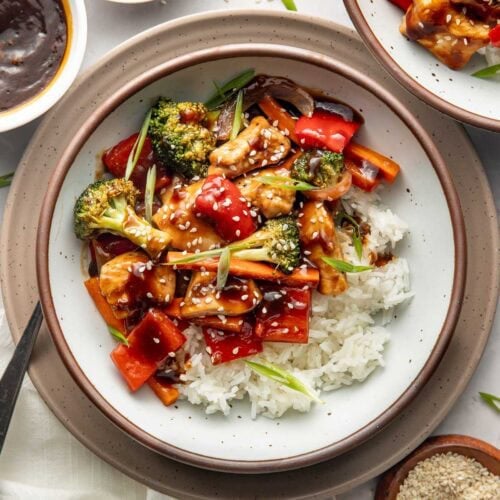
My family loves this sheet pan teriyaki chicken recipe because it delivers big flavors with very little time commitment. It has become one of those dependable chicken dinners that makes my busy weeknights feel just a little easier and it’s always in rotation during the school year.
The biggest surprise? My middle child, Henry, asks for this recipe almost every week. As the pickiest eater in my house, that says a lot. He absolutely loves the teriyaki flavors. And even though he carefully picks around some of the vegetables, he happily devours the chicken and always asks for extra sauce.
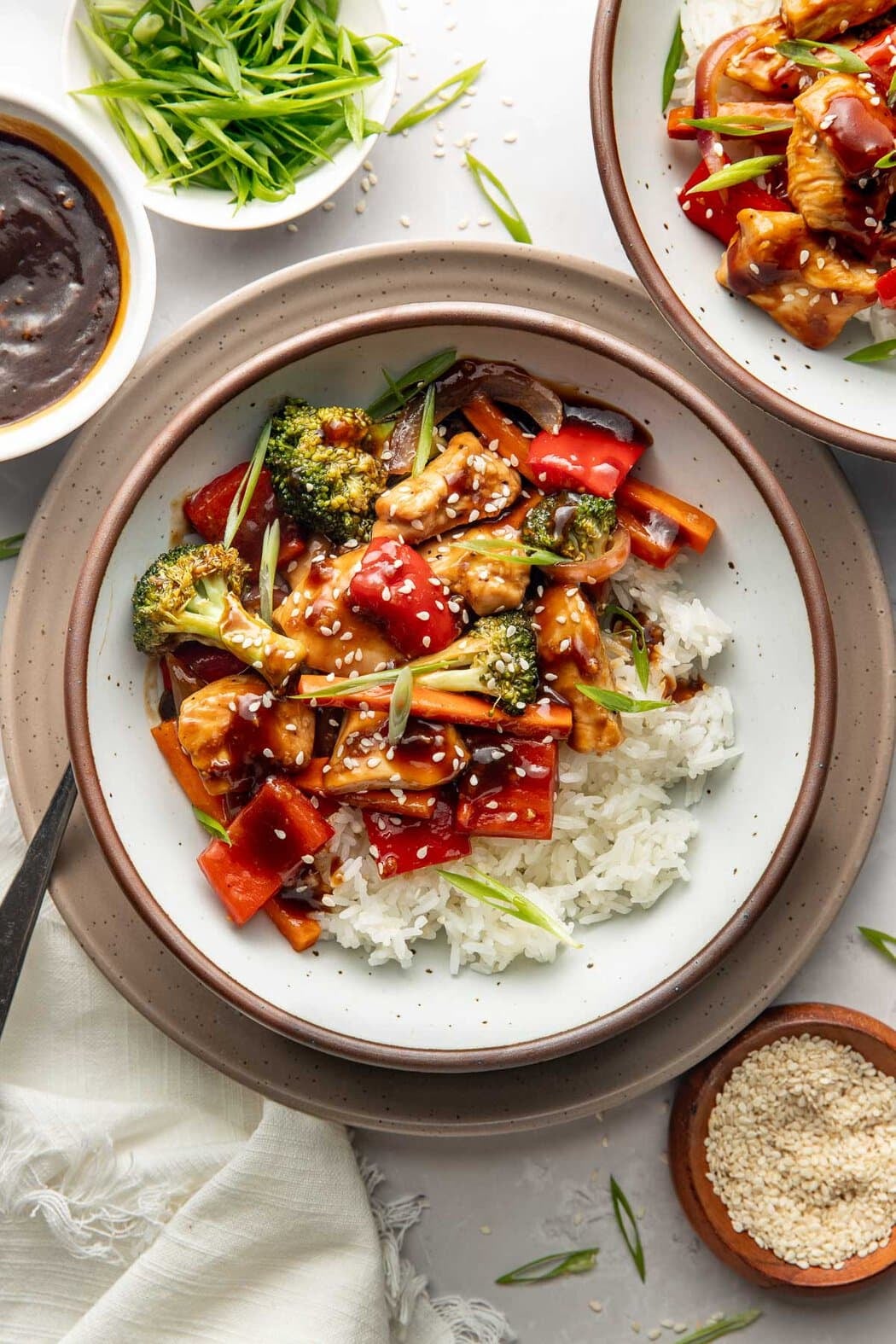
Recipe Highlights
One pan means easy cleanup. Unlike traditional teriyaki chicken that’s often stir-fried, everything cooks together on a single sheet pan.
Homemade teriyaki sauce. The simple sauce comes together in just a few minutes and has the perfect balance of savory, sweet, garlic, and ginger flavors. By making the sauce myself instead of using store-bought sauce, I can control the inputs and reign in sodium and added sugars. It’s also really good over salmon.
Simple, wholesome ingredients. I love that I can get a well-rounded meal out of one recipe. In a serving, I’m getting vegetables, lean chicken, and energy-supplying rice that nourishes my family without everyone asking for more food just an hour later.
Naturally gluten-free. When the sauce is made with coconut aminos (or gluten-free tamari), this recipe is a great option for anyone avoiding gluten.
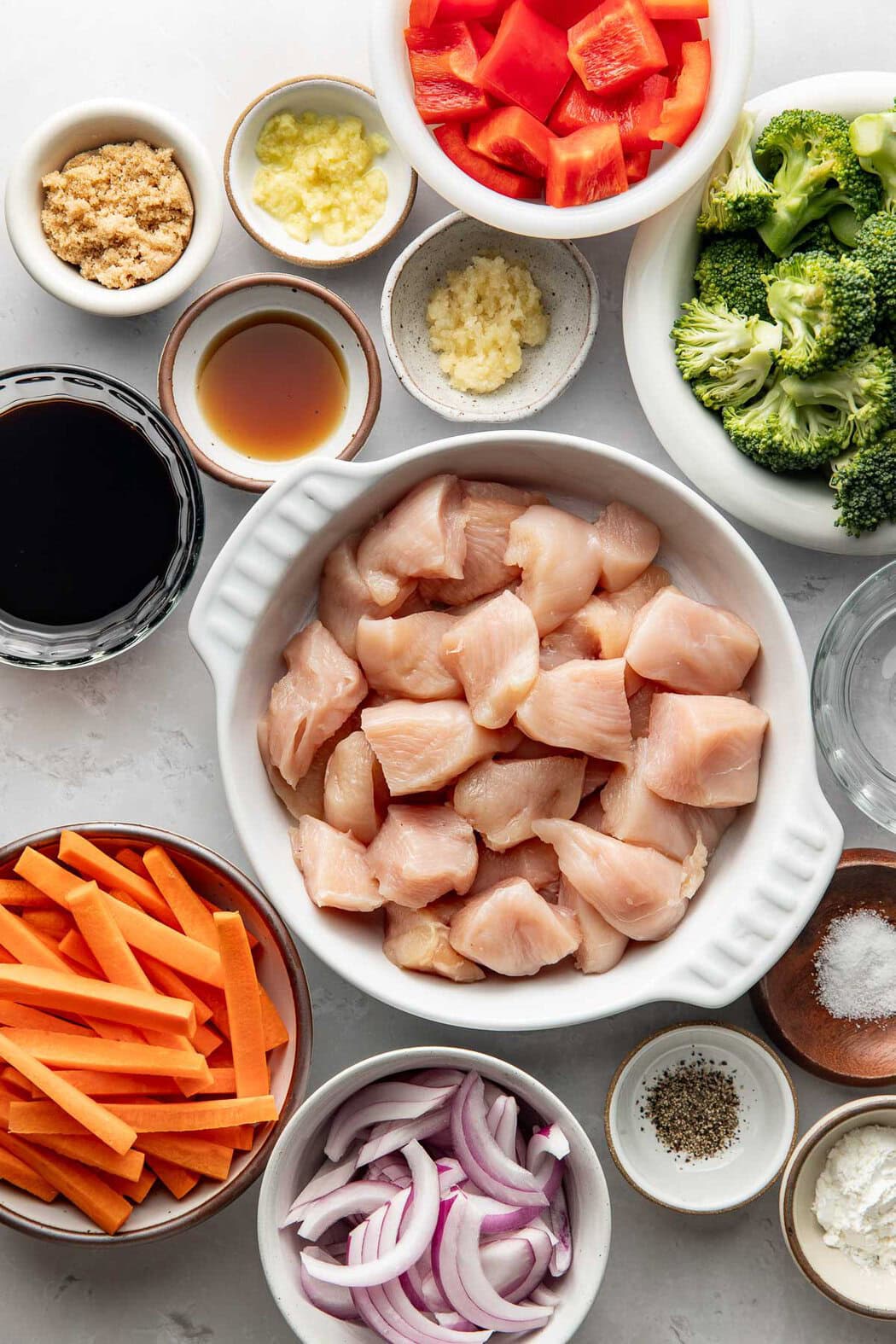
Ingredient Notes And Substitutions
Some chicken breasts, several veggies, and everyday pantry ingredients are what’s needed to make this sheet pan dinner come together. Here are the main ingredients:
- Boneless, skinless chicken breasts: My go-to lean protein that cooks quickly when cut into evenly sized cubes. Boneless skinless chicken thighs are also a great option.
- Broccoli: This sturdy veggies holds up really well during roasting and soaks up the extra sauce. I always try to cut the florets and stems in as similar sizes as possible.
- Red bell pepper: Adds sweetness, color, and a little freshness. I cut this into about 2-inch chunks. The pieces are sweet and crunchy, a nice contrast to the chicken and broccoli.
- Carrots: This everyday veggie provides texture and natural sweetness. I slice it into similar-sized stick pieces for even cooking.
- Red onion: Roasts into tender, slightly sweet pieces that pair perfectly with the sauce.
- Coconut aminos: Creates the savory base of the homemade teriyaki sauce with a slightly sweeter, lower-sodium flavor than traditional soy sauce. Low-sodium soy sauce, tamari, or shoyu all work well, too.
- Toasted sesame oil: Adds rich, nutty flavor that gives the sauce its classic teriyaki taste. Regular sesame oil may also be used if needed.
- Garlic and fresh ginger: Fresh aromatics bring brightness and depth to the sauce. Ground ginger works well if fresh isn’t available.
- Brown sugar: Adds the signature sweetness in teriyaki sauce that balances the savory ingredients. Honey or maple syrup can also be substituted.
- Cornstarch: This helps thicken the sauce into the glossy consistency that coats every bite of the chicken and veggies without sliding off.
Find the ingredient list with exact measurements in the recipe card below.
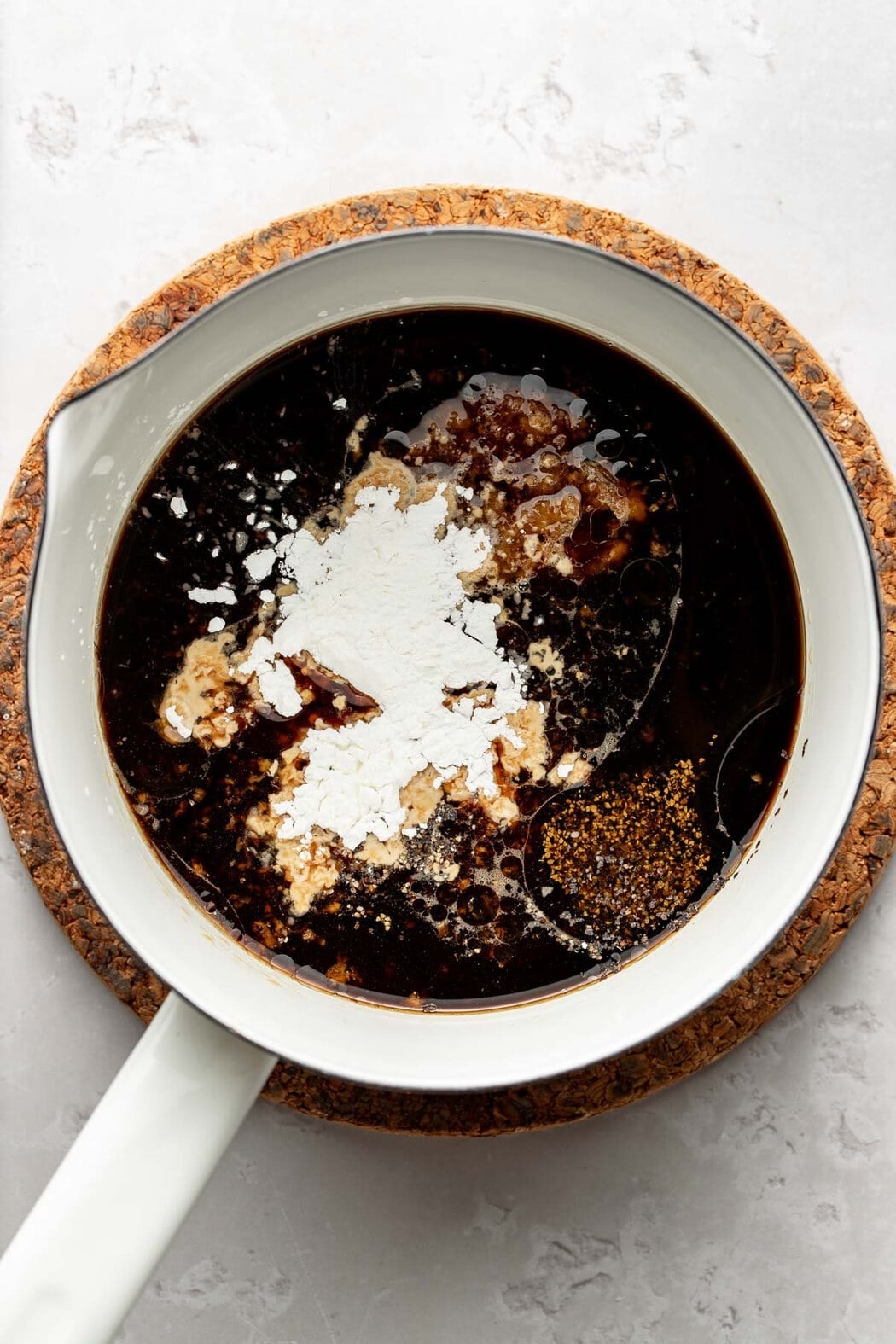
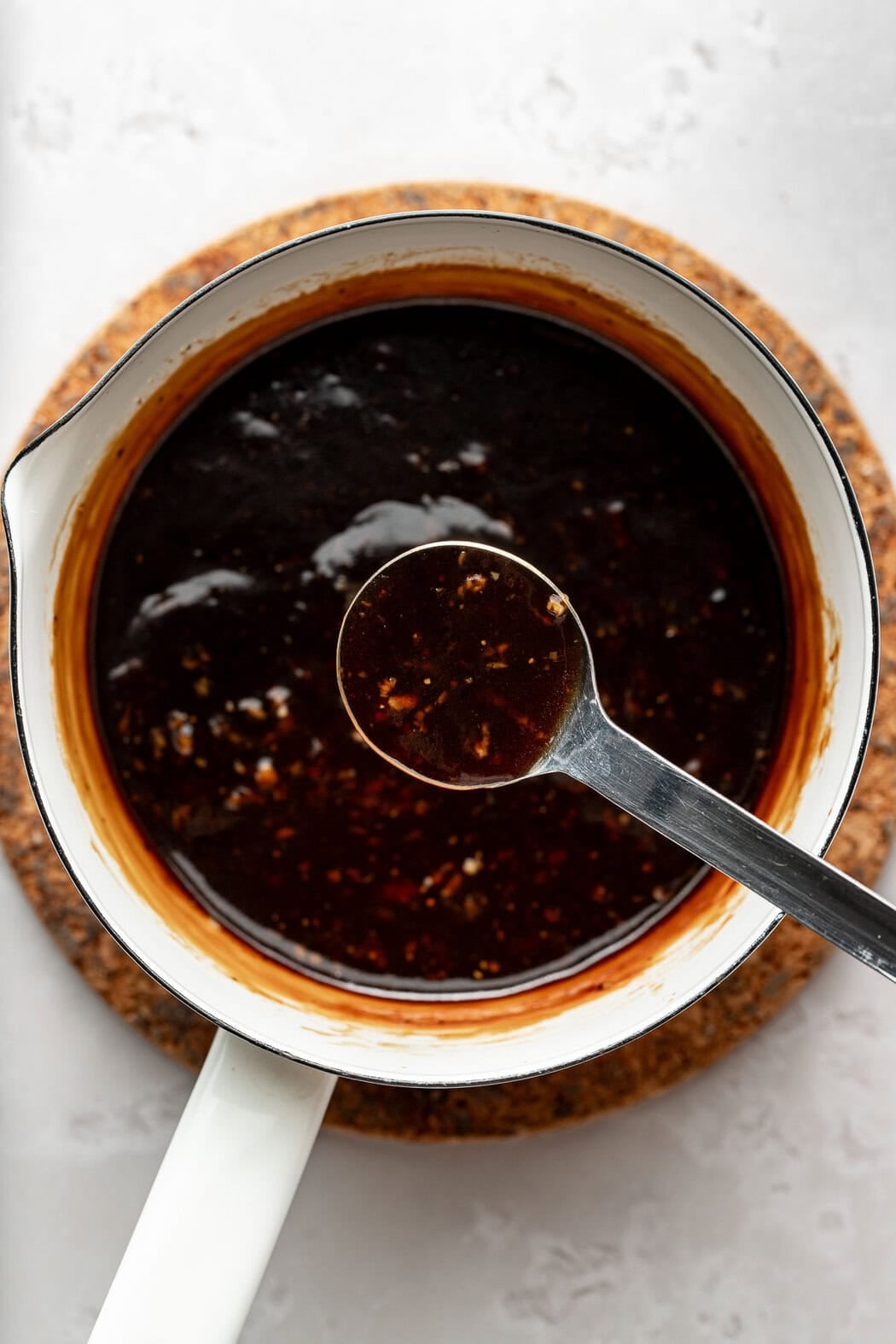
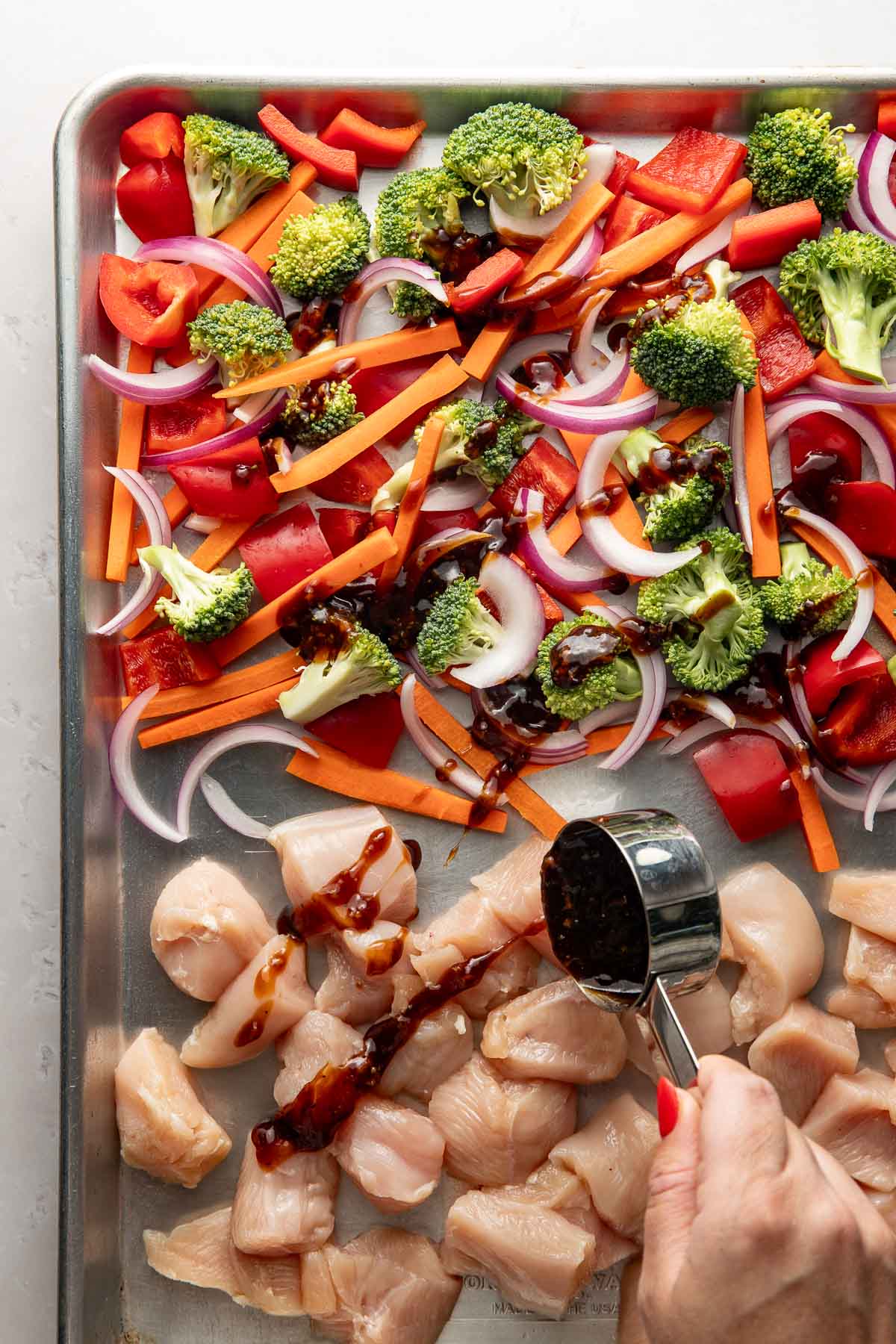
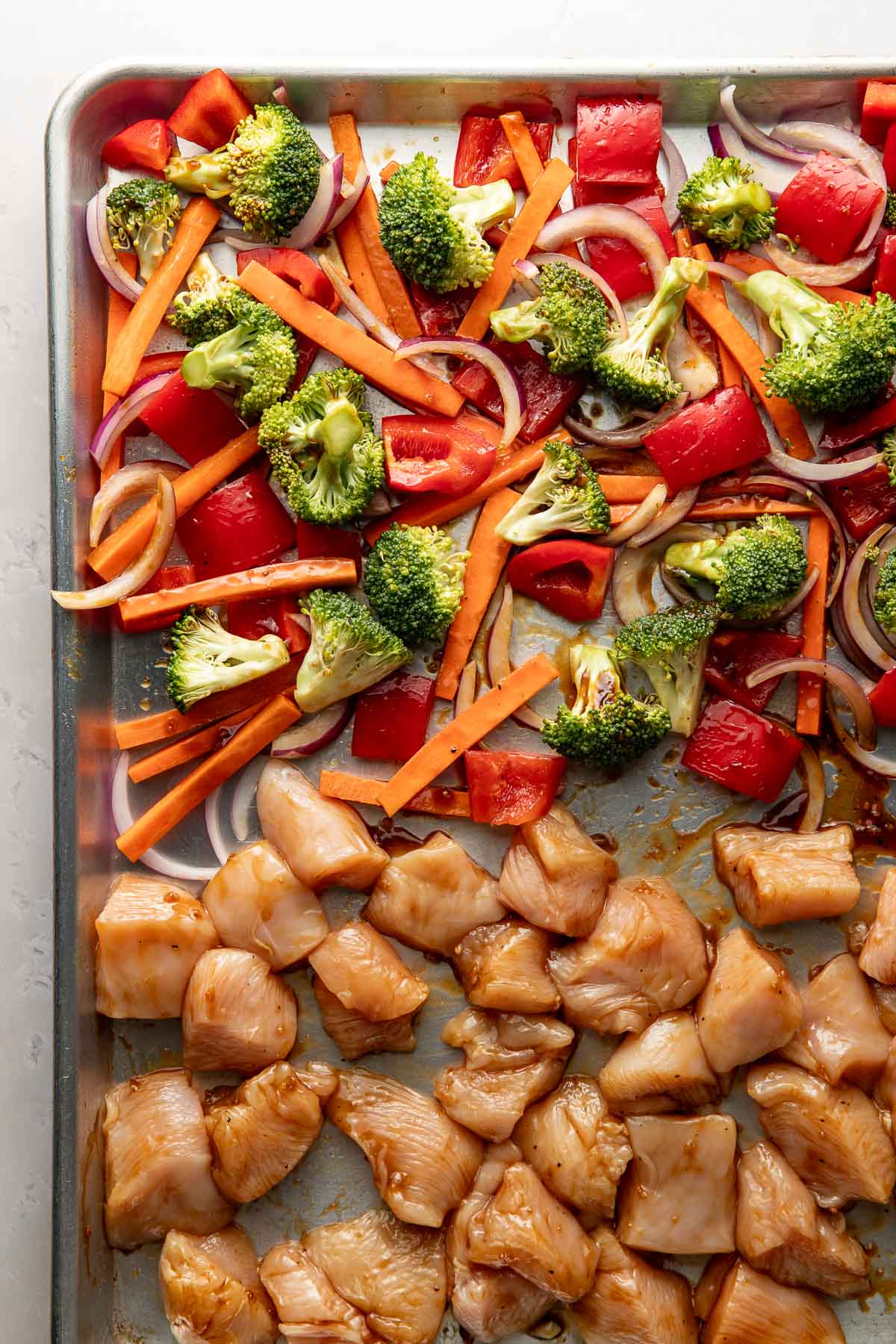
Ready In 3 Main Steps
This is a true weeknight dinner that comes together quickly. If I have a few minutes earlier in the day, I’ll pre-chop the veggies and chicken and store them in separate containers in the fridge. And I’ll whisk the sauce ingredients ahead of time, too. Then it truly comes together in under 30 minutes at dinnertime.
- Make the teriyaki sauce. Whisk the sauce ingredients together in a small saucepan and bring everything to a gentle boil before reducing the heat to simmer. After several minutes, the sauce should become glossy and coat the back of a spoon. It will continue thickening slightly as it cools.
- Arrange on the sheet pan and bake. Spread the vegetables across one half of the sheet pan and the cubed chicken across the other half. Keeping everything in a single layer helps everything roast instead of steam. Drizzle part of the sauce over the chicken and vegetables before baking until the chicken reaches an internal temperature of 165°F. Cutting the vegetables into similarly sized pieces helps everything finish cooking at the same time.
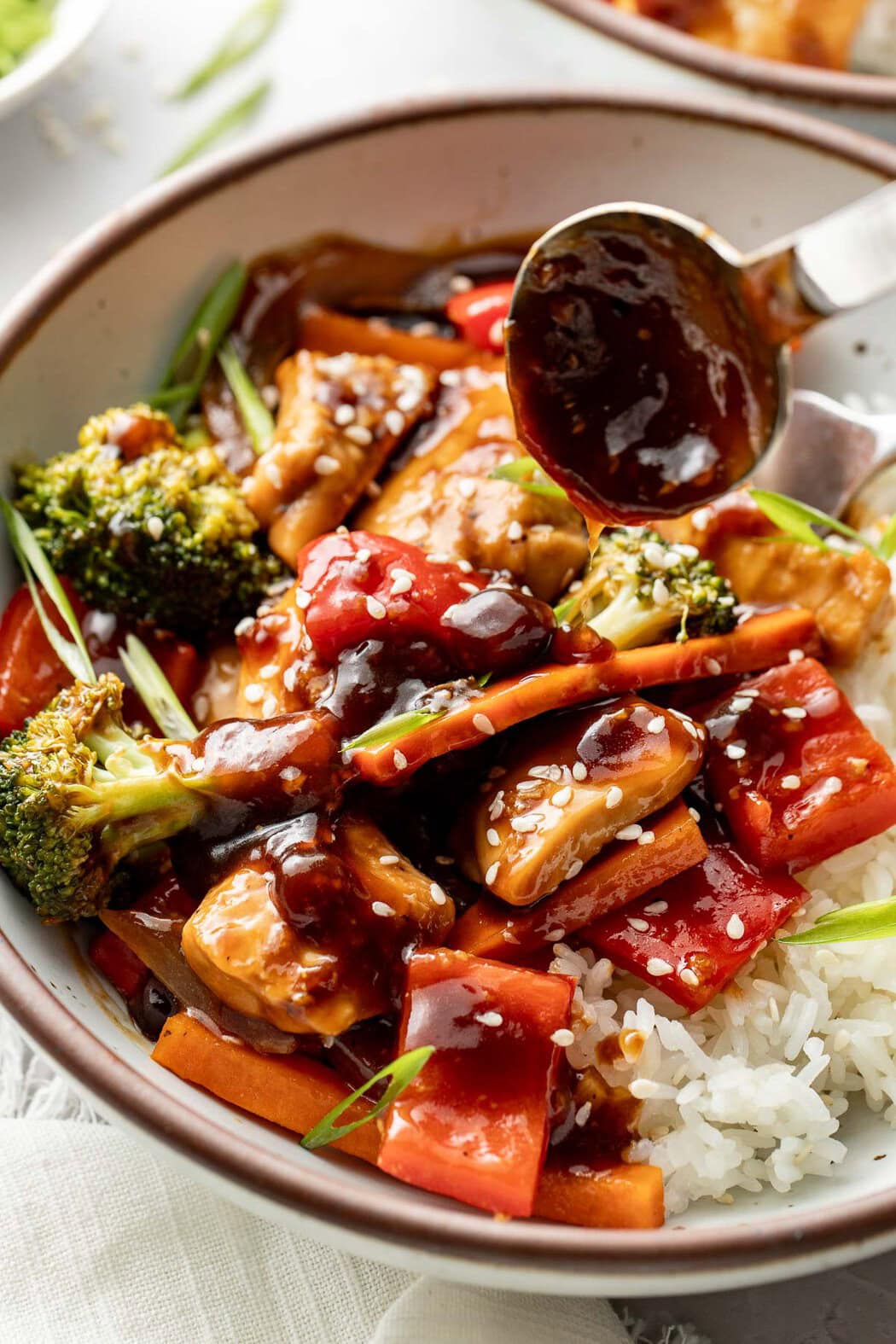
- Toss with the remaining sauce and serve. After baking, transfer everything to a serving bowl and gently toss with the remaining homemade teriyaki sauce. This final coating creates a glossy finish and adds even more flavor to every bite. Serve immediately over cooked rice and garnish with sesame seeds and green onions if desired.
For serving size and the complete directions and ingredient amounts, scroll down to the recipe card below. All of our recipes include the nutrition analysis, listing calories (kcals), protein, carbohydrates/carb, fiber, sugar, sodium, cholesterol, and more per serving.
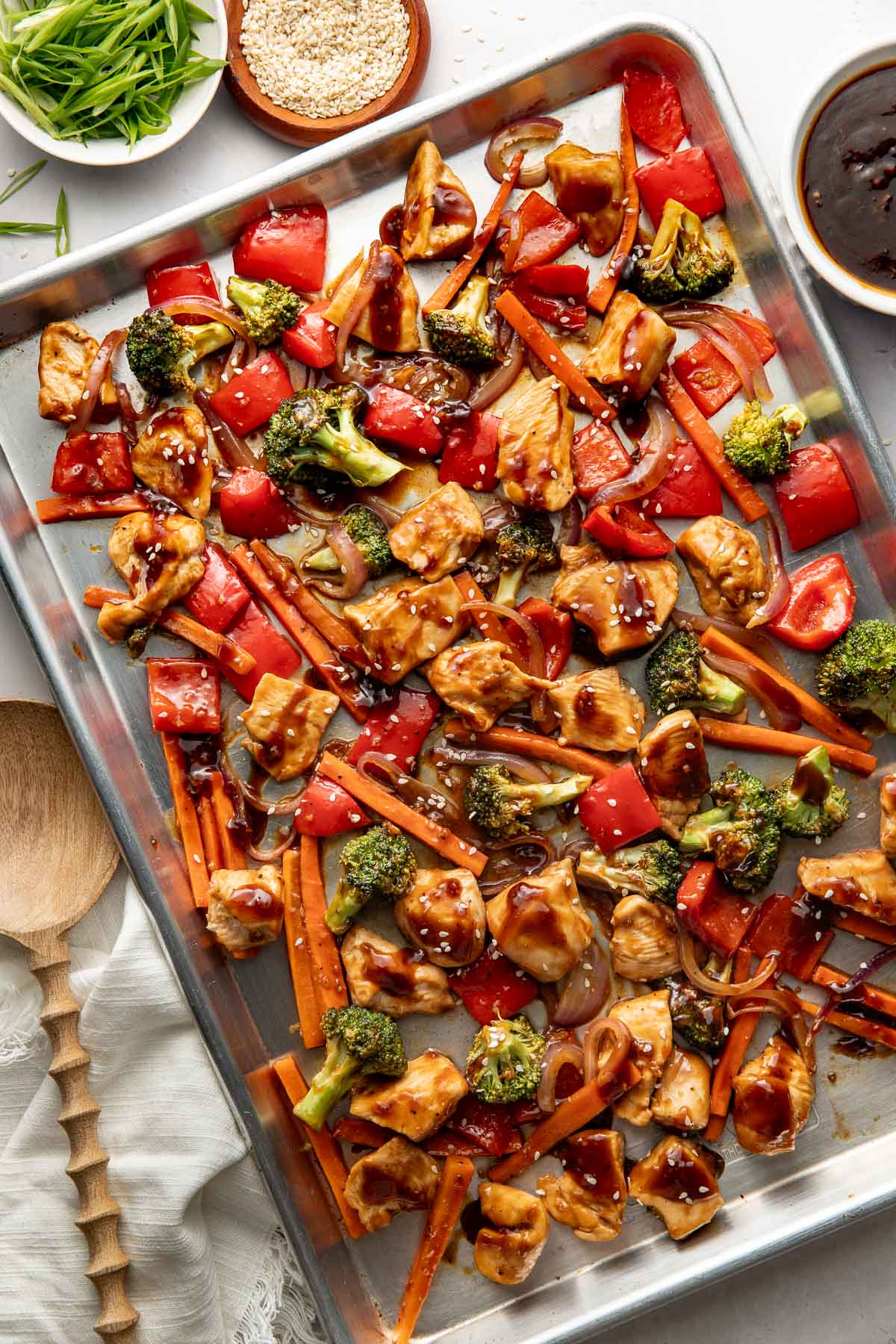
Keep Everything In An Even Layer
One of the biggest tips I’ve learned for sheet pan cooking success is to avoid overcrowding the pan. Giving the chicken and vegetables enough space allows the hot air to circulate so everything roasts instead of steaming. Piling ingredients on top of one another traps moisture, which can leave the vegetables softer and the chicken less caramelized. Using an extra-large sheet pan and spreading the chicken and veggies out into a nice, even layer helps every bite develop better texture and flavor.
How I Like To Serve It
My favorite way to enjoy this meal is spooned over hot cooked jasmine rice because it soaks up every bit of the extra teriyaki sauce. Brown rice is another great option for extra fiber, while cauliflower rice keeps things lighter. Cooked quinoa works as a base, too, and serving it over cooked noodles would make this recipe feel even more like takeout at home.
Double It For Meal Prep
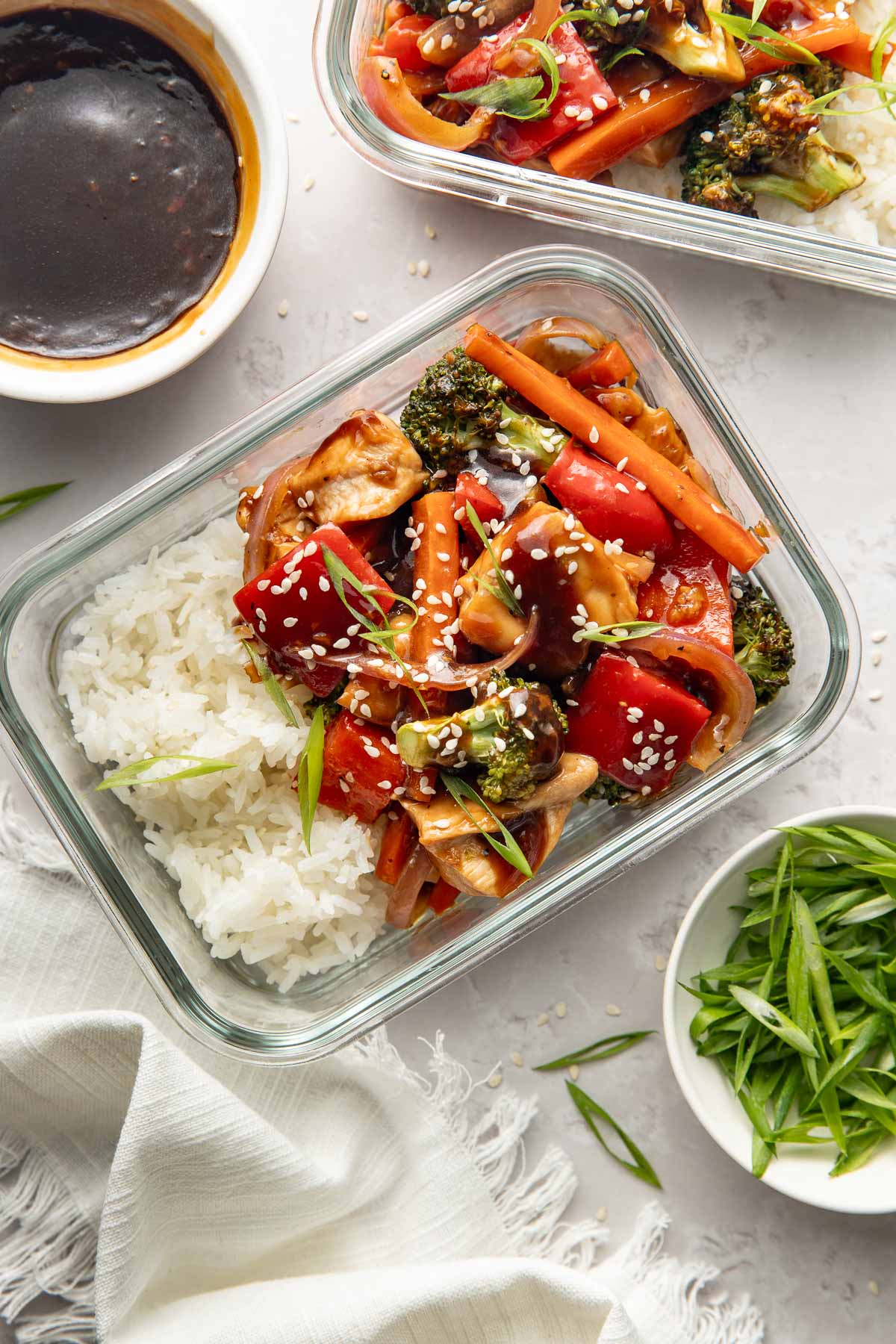
This recipe is incredibly easy to double. I simply divide everything between two sheet pans and bake them at the same time. One pan becomes dinner, and the second turns into several meal-prep lunches for the week.
The chicken, vegetables, rice, and sauce all reheat well together, making my weekly lunches feel almost as good as dinner without any extra cooking later in the week.
⭐⭐⭐⭐⭐
“What an amazing meal. My whole family enjoyed this. My youngest ate the broccoli first and she never eats broccoli! The sauce was great and not overly sweet. This will be a repeat meal. Highly recommend.” ~ Lauren
Storage And Reheating Directions
Store leftover cooled chicken and vegetables in an airtight container in the refrigerator for up to 4 days. For meal prep, everything—including the rice and extra sauce—can be stored together in individual containers for easy grab-and-go lunches.
To reheat, microwave until heated through, 2-3 minutes, stirring once halfway through for even warming. Leftovers also can be reheated gently in a skillet over medium heat with a splash of water to help loosen things up, if needed.
This recipe can also be frozen for up to 3 months. Allow everything to cool completely before transferring to freezer-safe containers. Thaw overnight in the refrigerator before reheating.
Frequently Asked Questions
Absolutely. Boneless, skinless chicken thighs stay especially juicy during roasting and work just as well in this recipe. The cooking time is very similar, but always cook the chicken pieces until they reach an internal temperature of 165°F.
Cornstarch thickens the sauce into the glossy consistency that makes homemade teriyaki so delicious. Without it, the sauce would remain much thinner and wouldn’t cling nearly as well to the chicken and vegetables.
I definitely think so. This sheet pan teriyaki chicken dinner comes together surprisingly quickly, allows complete control over the ingredients, and tastes every bit as satisfying as takeout. The fresh garlic, ginger, and crisp-tender veggies create layers of flavor that are hard to beat.
More Easy Chicken Dinners To Try
Want to save this recipe?
Enter your email below & we’ll send it straight to your inbox. Plus you’ll get great new recipes from us every week!
Sheet Pan Teriyaki Chicken Recipe
Enjoy a simple sheet pan dinner that’s packed with savory-sweet flavor. It’s an easy weeknight meal that comes together in about 40 minutes, is well-rounded and satisfying, and requires minimal cleanup.
Ingredients
- ½ cup coconut aminos
- 2 tablespoons brown sugar
- 1 tablespoon toasted sesame oil
- 2 garlic cloves, grated or finely minced (~2 teaspoons)
- 1 teaspoon fresh grated ginger (or ½ teaspoon ground ginger)
- 1 tablespoon cornstarch
- ¼ cup water
- ¼ teaspoon fine salt
- ¼ teaspoon black pepper
- 2 cups broccoli floret pieces
- 1 medium red bell pepper, cut into large pieces (~1 cup)
- 2 medium carrots, peeled and cut to 1½-inch pieces (~1 cup)
- 1 small red onion, sliced (~1 cup)
- 1 lb boneless, skinless chicken breasts, cubed to 1-inch pieces
- Optional for serving: Cooked rice, sesame seeds, and/or sliced green onions
Instructions
- Preheat the oven to 400°F. Lightly mist a sheet pan with cooking spray; set aside.
- To a small saucepan over medium-high heat, add the coconut aminos, brown sugar, sesame oil, garlic, ginger, cornstarch, water, salt, and pepper. Whisk together and bring to a boil. Reduce the heat to low and let simmer for 5-6 minutes to thicken. Remove from the heat; the sauce will thicken more as it sits.
- Place the broccoli, bell pepper, carrots, and onions on a sheet pan. Spread them out over half of the sheet pan.
- Place the cubed chicken on the other half of the sheet pan and spread out in a single layer.
- Drizzle ⅓ cup of the teriyaki sauce over top of the vegetables and chicken. Gently toss to coat the pieces, then spread out again in an even layer, keeping the vegetables and chicken separated.
- Bake until the chicken reaches an internal temperature of 165°F, 15-17 minutes.
- Remove the sheet pan from the oven. Transfer the chicken and vegetables from the sheet pan to a serving dish. Pour the remaining ½ cup teriyaki sauce over top and gently toss to coat evenly. Alternatively, may pass the remaining sauce to drizzle over top of servings on each plate.
- If desired, serve over cooked rice and garnish with sesame seeds and green onion slices.
Last Step! Please leave a review and rating letting us know how you liked this recipe! This helps our business thrive so we can continue providing free recipes and high-quality content for you.
Notes
May use low-sodium soy sauce, tamari, or shoyu in place of the coconut aminos.
Nutrition Information
- Serving Size: ¼ of the recipe without rice
- Calories: 255
- Fat: 5 g
- (Sat Fat: 1 g)
- Sodium: 763 mg
- Carbohydrate: 25 g
- (Fiber: 3 g
- Sugar: 18 g)
- Protein: 29 g
- Cholesterol: 70 mg
Dietary
Recipe Changelog
- August 2026: We previously published a version of sheet pan teriyaki chicken that had a different cooking method, different vegetables, and did not contain brown sugar or cornstarch. Download the previous version here.
The photos in this post were taken by Kaitlin of Creating Kaitlin.
For ultimate success, we highly recommend reading the tips in the full blog post above. All photos and content are copyright protected. Please do not use our photos without prior written permission. If you wish to republish a recipe, please rewrite the recipe in your own unique words. Link back to the source recipe here on The Real Food Dietitians. Thank you!

My husband is not a fan of chicken but SEVERAL times told me how good this meal was!! Thanks for hitting it out of the park on this recipe!
Great, Lucy! Thanks for the feedback!