
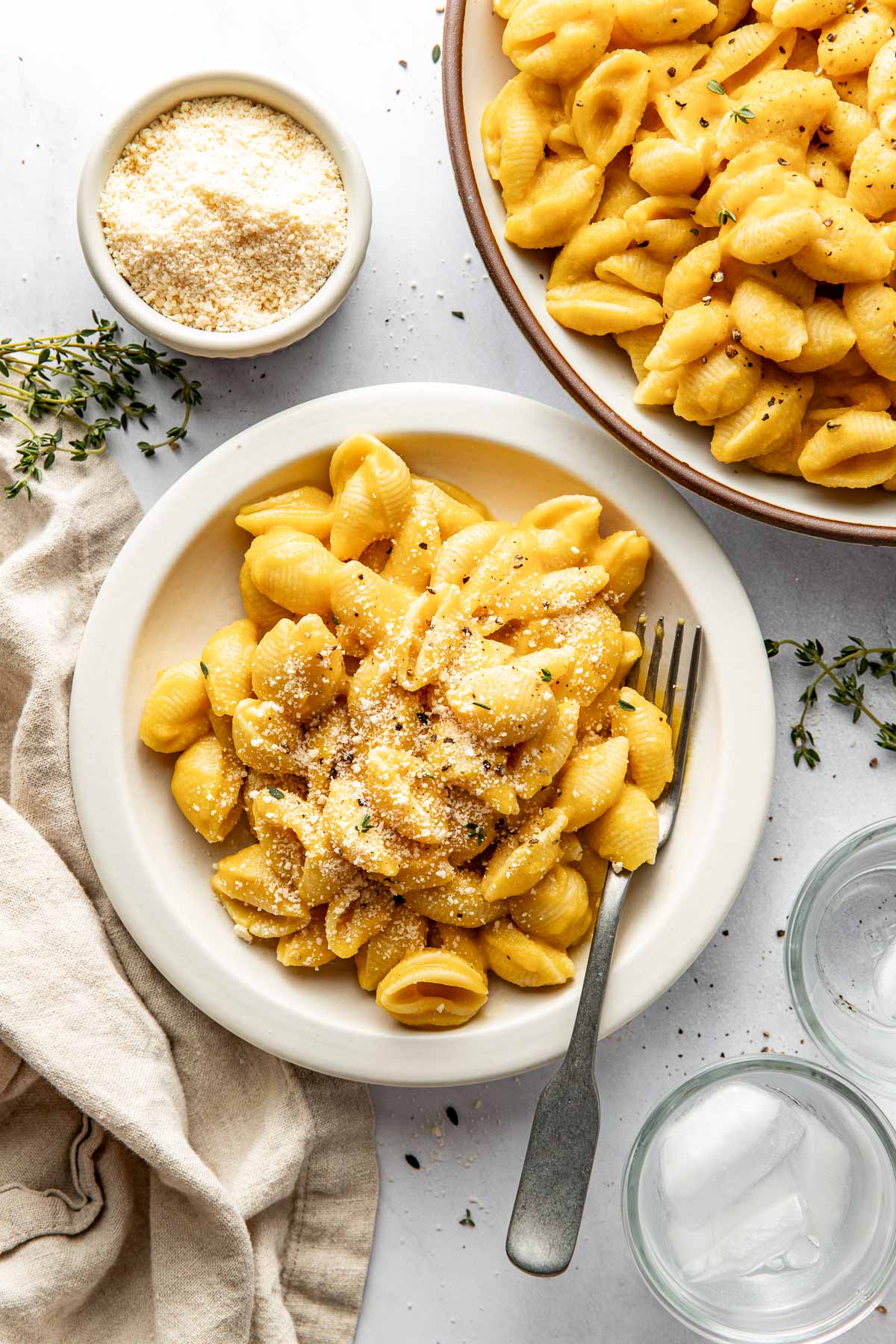
This butternut squash mac and cheese recipe was born out of a need to use up an abundance of squash from my garden last summer. But it quickly turned into one of my family’s favorite comfort foods. Classic mac and cheese has always been a go-to, but this version came from wanting a mac and cheese that incorporated more vegetables.
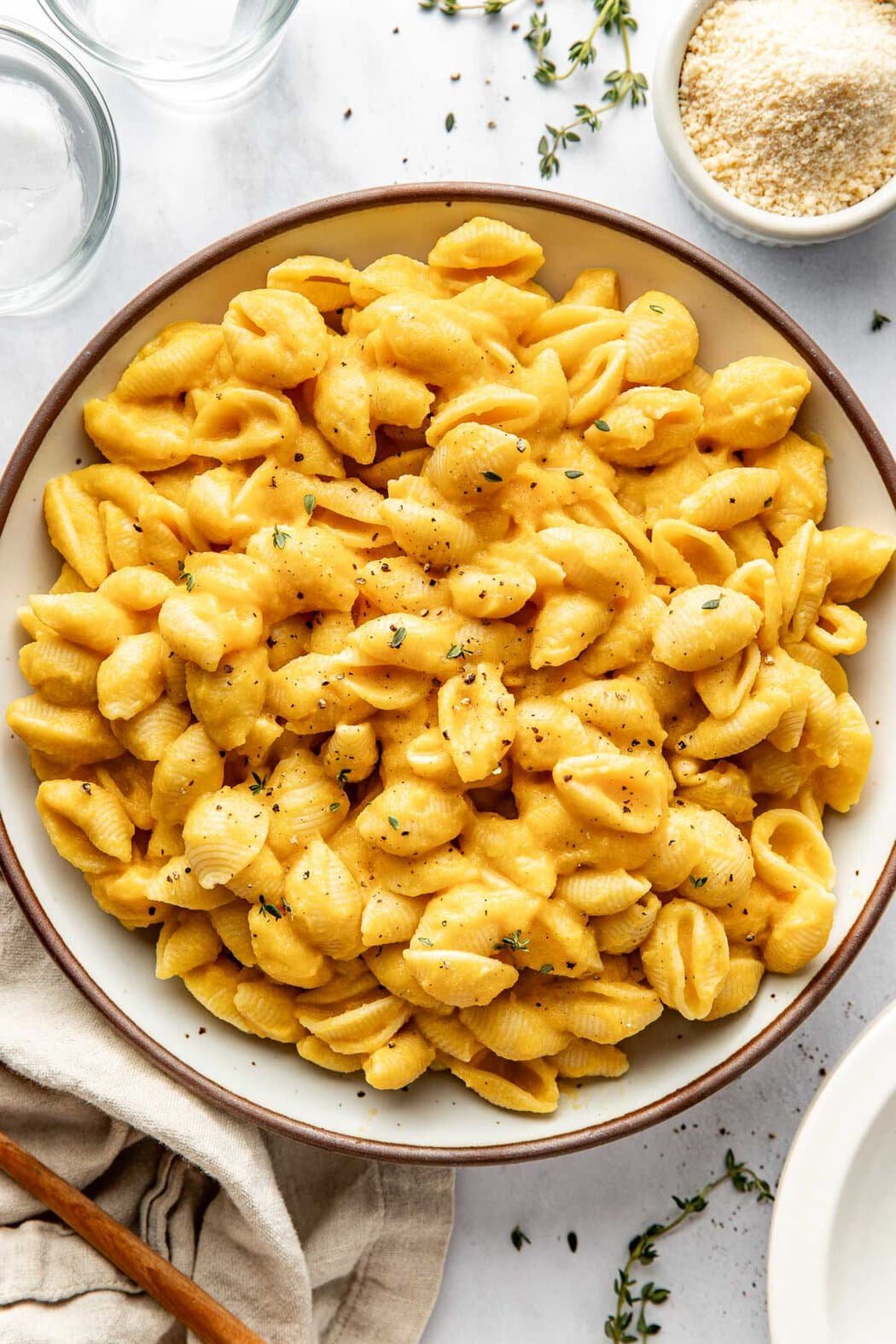
What stands out about this recipe is how closely it mirrors traditional mac and cheese in both flavor and texture, even though it is completely dairy free. The butternut squash and cauliflower blend into a smooth, velvety sauce with a subtle sweetness, while the Dijon mustard, garlic, and nutritional yeast add savory depth and that familiar “cheesy” taste. It’s a reliable recipe that works for busy weeknights and as a potluck side dish that always goes over well.
What I Love About This Recipe
Minimal prep time: The use of veggies doesn’t complicate this recipe. Everything cooks in a pot and blends quickly, keeping prep time to just 15 minutes.
Nutritious: Thanks to my dairy-free cheese sauce, this butternut squash mac and cheese recipe is lower in saturated fat and higher in vitamins, nutrients, and fiber than a standard macaroni dish. It’s a better take on one of my childhood favorites that still offers all the nostalgic tastes and textures I remember.
Great for using leftover produce: I often make roasted butternut squash or cauliflower, but frequently have more than I know what to do with, and this recipe is my favorite way to prevent waste. It also gets my kids to eat more veggies without any complaints.
Essential Ingredients
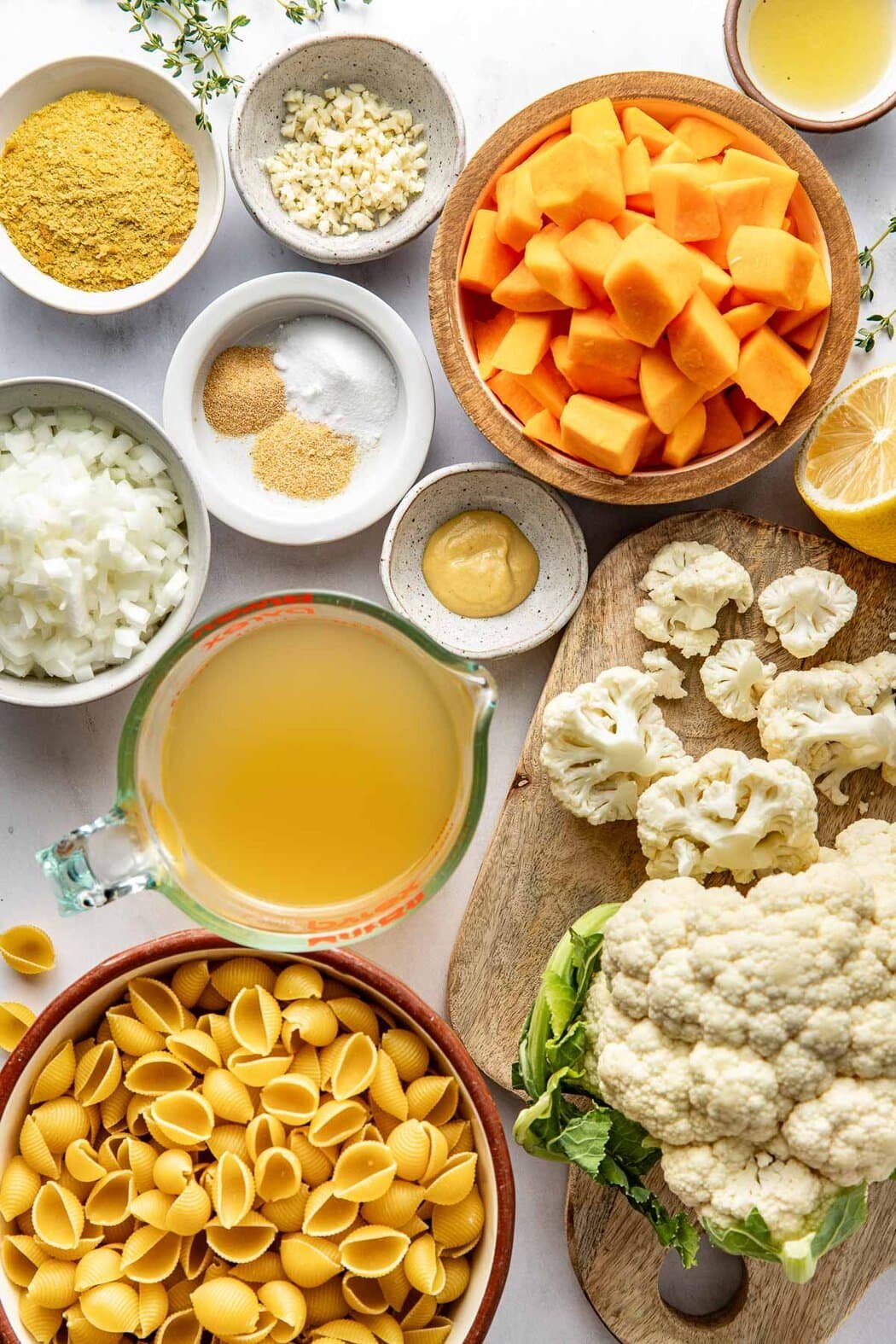
Below are a few notes about the key ingredients for my butternut squash mac and cheese recipe:
- Butternut squash: Fairly mild in flavor, butternut squash lends well to a variety of recipes and provides both soluble and insoluble fiber, vitamin A, vitamin C, and potassium.
- Chicken broth: This helps create a smooth cheese sauce without diluting the flavor. I use my homemade bone broth or stock, but store-bought also works. I always use low-sodium broth, so I have better control over the flavor. For a 100% plant-based vegan mac and cheese, use vegetable broth instead.
- Cauliflower florets: I’ve made this recipe with both fresh and frozen cauliflower. If using frozen, I thaw it first.
- Nutritional yeast: This is what replicates the salty, umami flavor of sharp cheddar cheese, white cheddar cheese, and even Parmesan cheese, keeping the dish dairy-free without the need for using a plant-based cheese.
- Short pasta: I prefer to use macaroni elbows, shells, or penne, but any short pasta shape works well. To help reach my daily fiber goals, I use high-fiber pasta.
Find the ingredient list with exact measurements in the recipe card below.
How To Make This Dairy-Free Mac & Cheese
This non-baked mac comes together on the stovetop without the need to even preheat my oven.
I always start by prepping the veggies, following this method for how to cut butternut squash first. Then I prep the onion, cauliflower, and garlic, and cook the pasta to al dente in a large pot according to the package directions. Here’s how the rest of the dish comes together:
- Sauté: Heat avocado oil or olive oil in a saucepan with a lid over medium heat, and sauté the onions until they begin to soften. Then, add the garlic and cook until fragrant.
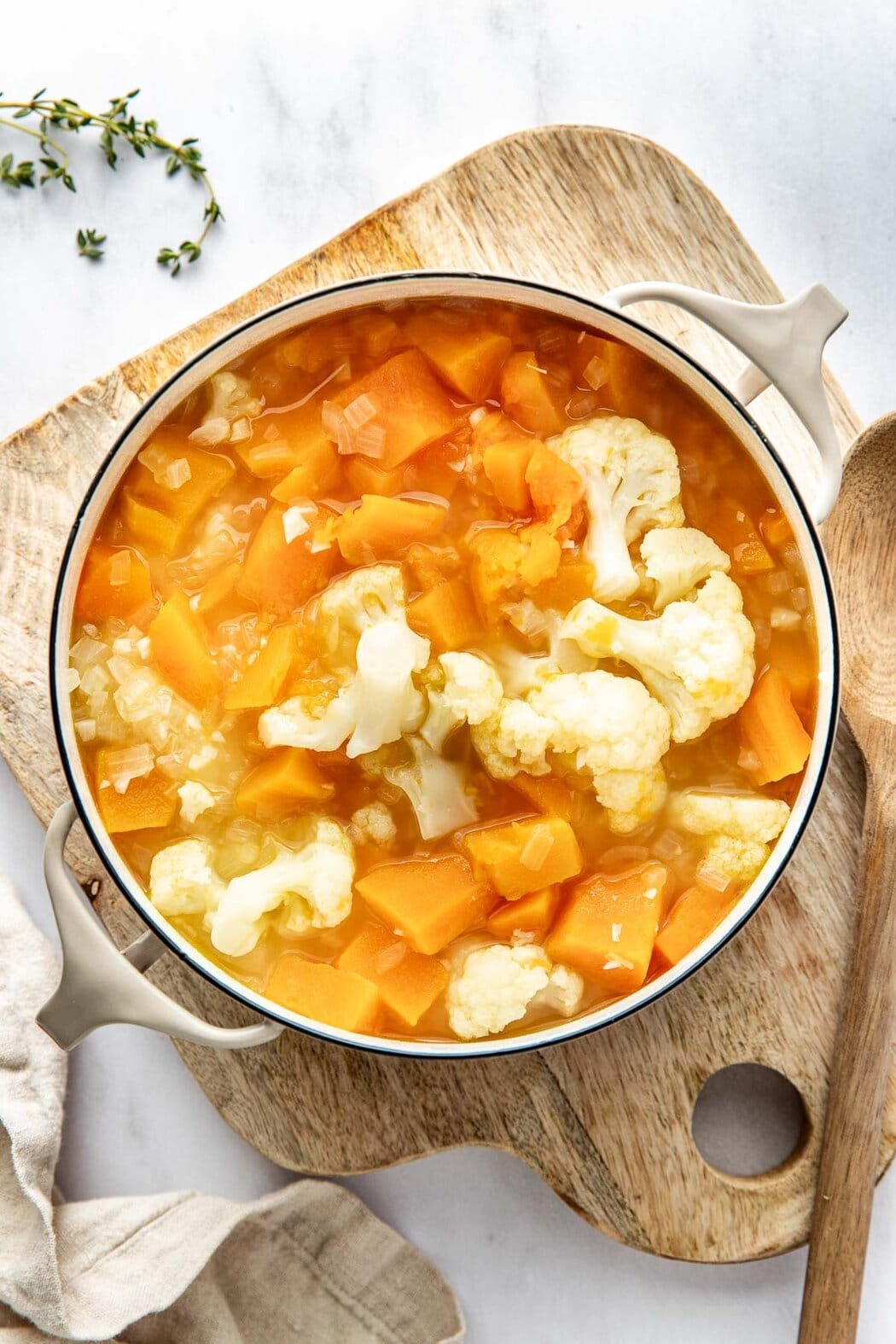
- Simmer: Stir in the squash, cauliflower, and broth, and bring the mixture to a simmer.
- Cook: Cover with a lid and cook until the veggies are very tender. I find I typically need to reduce the heat slightly to prevent boiling and maintain a steady simmer.
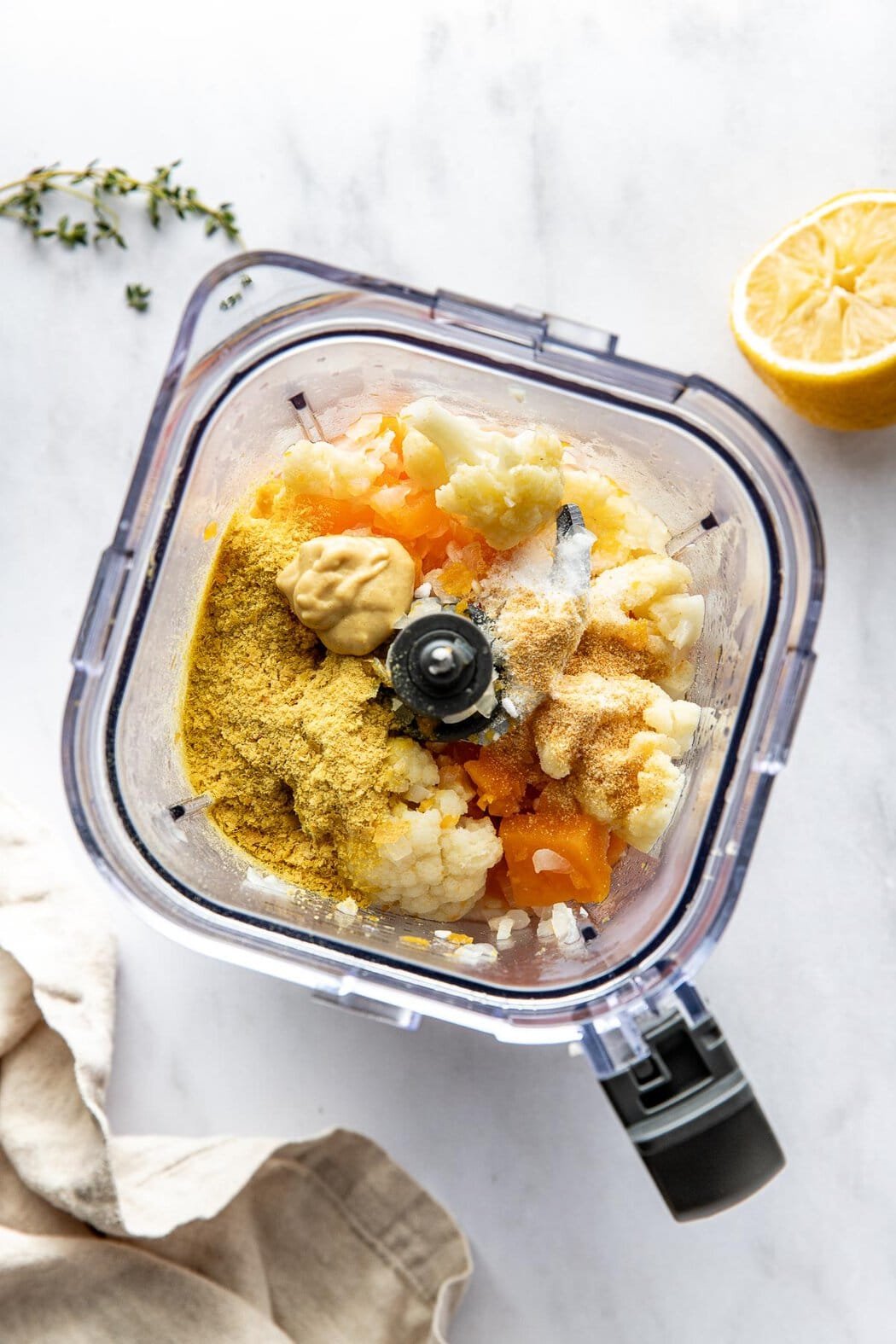
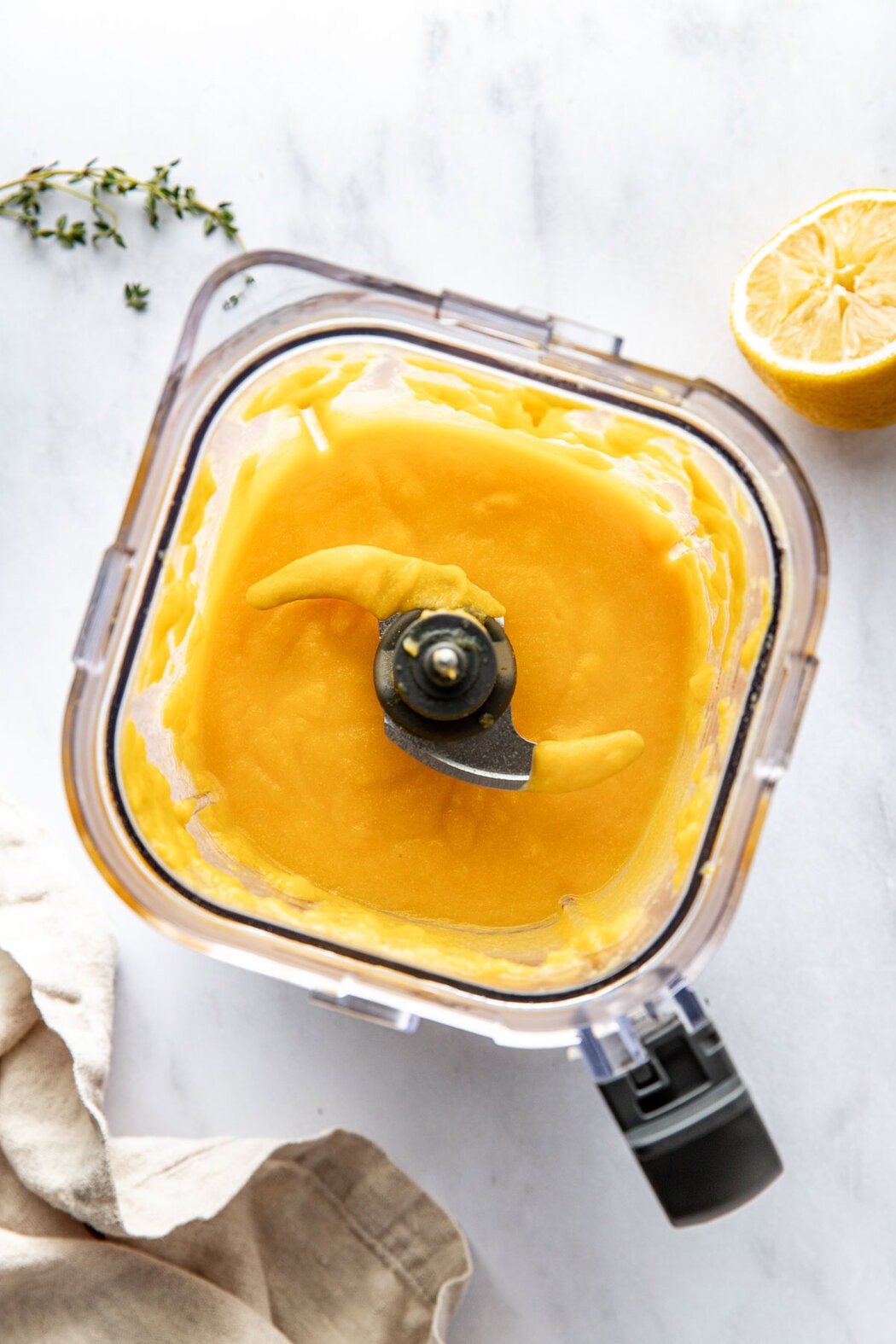
- Blend: Transfer the tender veggies to a blender. Then, add lemon juice, Dijon mustard, salt, onion powder, garlic powder, and nutritional yeast, and blend until smooth, creating a purée.
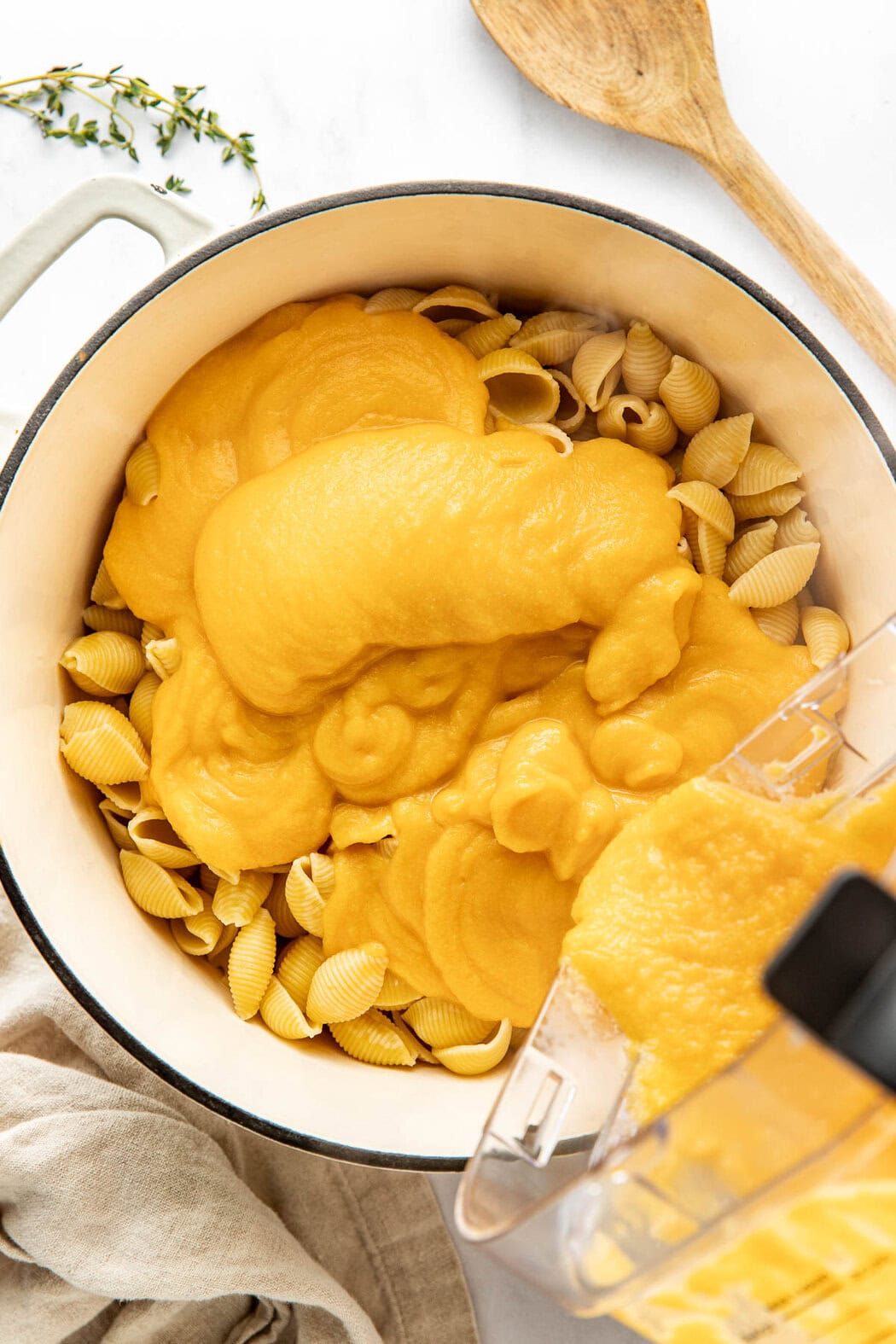
- Serve: Season the squash purée sauce to taste. Then, toss it with cooked pasta, garnish with fresh herbs and black pepper, and enjoy warm.
For serving size and the complete directions and ingredient amounts, scroll down to the recipe card below. All of our recipes include the nutrition analysis, listing calories (kcals), protein, carbohydrates/carb, fiber, sugar, sodium, cholesterol, and more per serving.
Make It Vegan
Since there is no whole milk, unsalted butter, or cream in this butternut squash mac and cheese recipe, it can be made 100% plant-based with one simple swap. Simple use vegetable broth in place of the chicken broth.
Make It Gluten Free
This recipe can be made gluten-free but substituting the regular pasta with any short gluten-free noodles.
Garnish And Serve
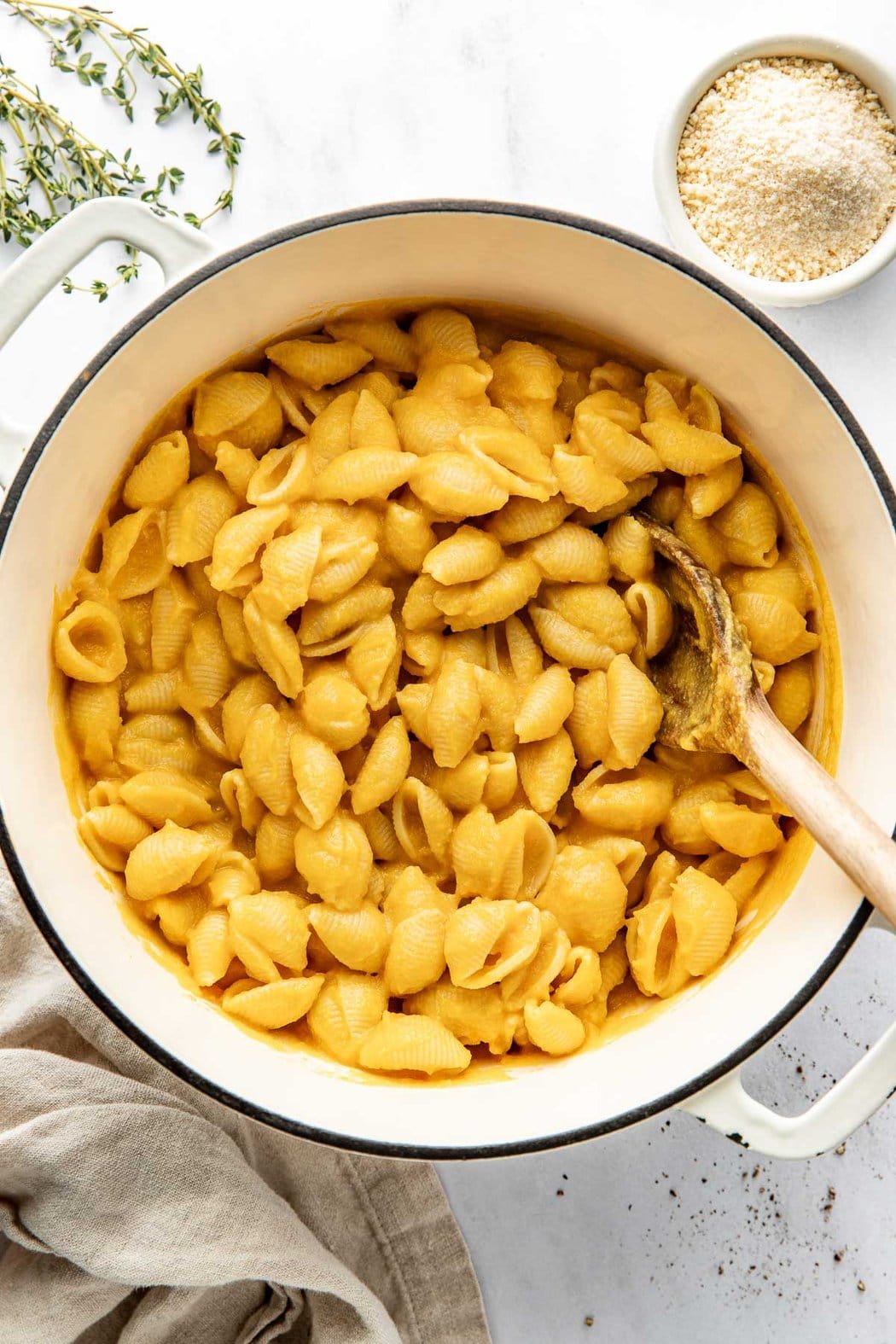
Once the mac and cheese is finished cooking, it’s best served right away while the sauce is warm and creamy. My kids dig in right away, but I typically like to take the time to add a sprinkle of freshly cracked black pepper and chopped fresh herbs, such as parsley or chives for a pop of bright, peppery flavor and a little extra color.
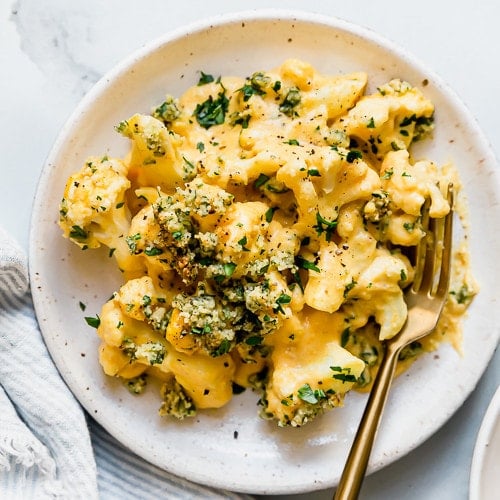
For holidays, I transfer the butternut squash mac and cheese to a baking dish and top it with a sprinkle of panko breadcrumbs. Then, I quickly pop it in the oven and broil it under high heat for a crispy, golden topping.
For potlucks and weeknight dinners alike, I serve my mac and cheese as a side dish with a variety of quick healthy dinner ideas. It’s great with these turkey burgers, these tuna cakes, my air fryer pork chops, or this blackened chicken. Sometimes, I simply mix cooked shredded chicken or cooked ground beef into this macaroni and cheese for a complete meal I can serve in a bowl.
Storage Instructions
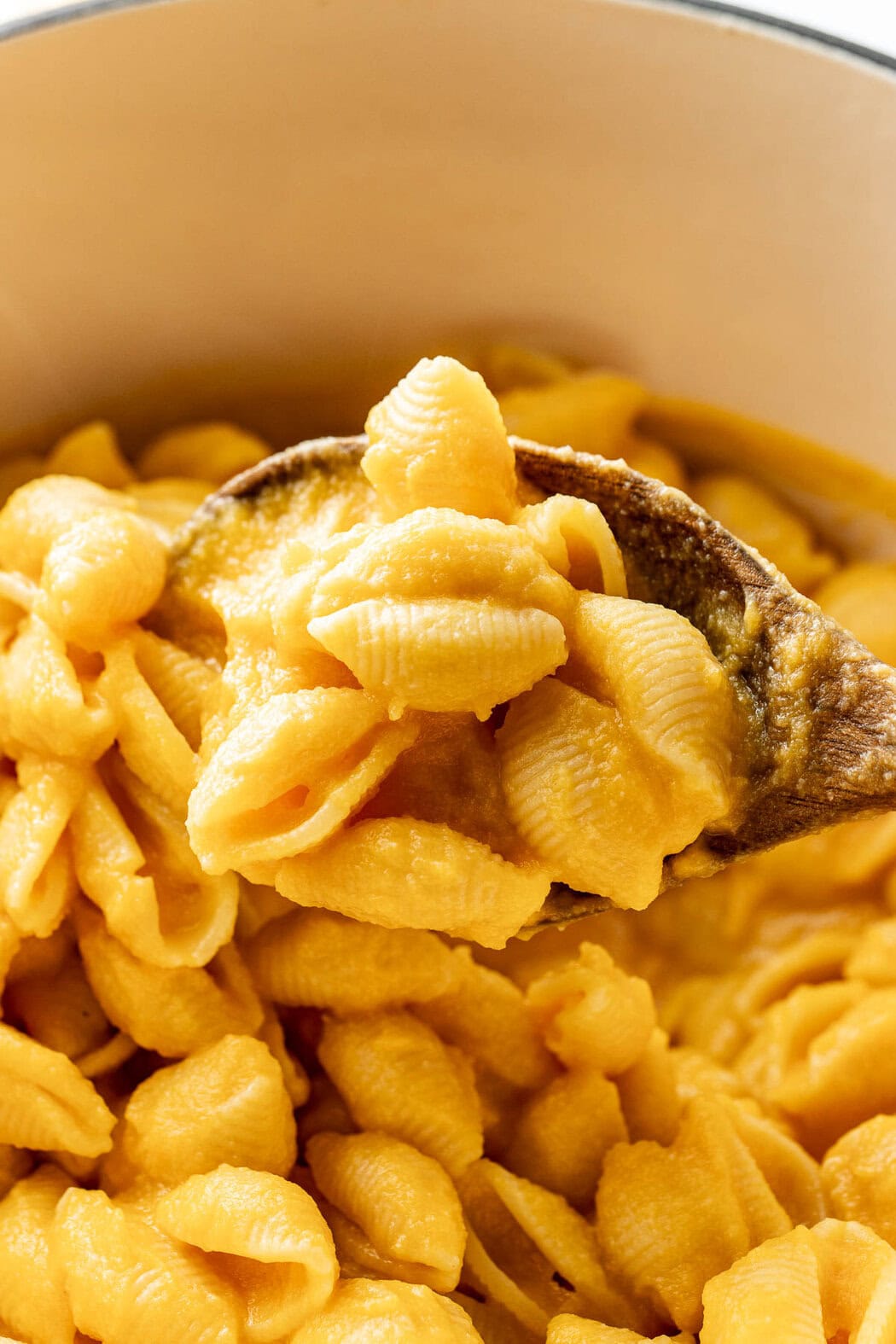
Once cool, I transfer leftovers to an airtight container and store them in the refrigerator for up to 4 days. To serve, I warm individual portions in 30-second increments in the microwave, adding a splash of broth as needed to loosen the cheese sauce. Or, I transfer larger batches to a greased baking dish, cover with foil, and bake at 350°F just until the dish is warmed through, about 10 minutes.
I don’t recommend freezing this recipe as a whole, as it will get watery when thawed and reheated. However, the cheese sauce alone freezes well for up to 2 months. To serve, I thaw it in the fridge, gently reheat it on the stovetop, and then toss it with fresh cooked pasta.
Want to save this recipe?
Enter your email below & we’ll send it straight to your inbox. Plus you’ll get great new recipes from us every week!
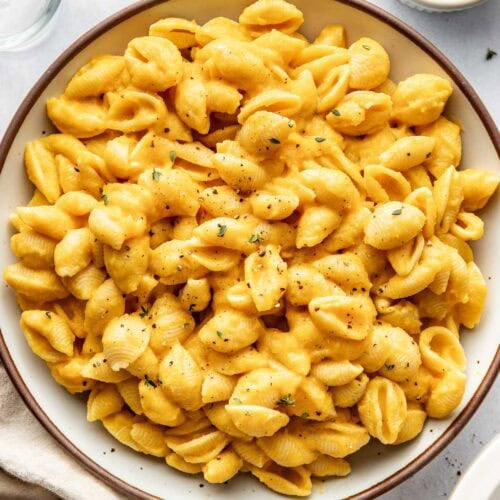
Butternut Squash Mac And Cheese Recipe
This dairy-free butternut squash mac and cheese recipe has all the soft textures and rich, cheesy flavors of traditional mac and cheese. It’s a veggie-filled side or main that’s loved by everyone and quick to make.
Ingredients
- 1 tablespoon avocado oil or olive oil
- 1 small yellow onion, diced (1 cup)
- 4 garlic cloves, minced
- 3 cups cubed butternut squash, fresh or frozen
- 3 cups cauliflower florets, fresh or frozen
- 2 cups low-sodium chicken broth*
- 3 tablespoons nutritional yeast
- 2 teaspoons fresh squeezed lemon juice
- 2 teaspoon Dijon mustard
- 1 ½ teaspoons fine salt
- ½ tsp teaspoon garlic powder
- ½ tsp teaspoon onion powder
- 16 ounces dry elbows, shells, or penne pasta, cooked al dente**
- Optional for garnish: black pepper, minced fresh herbs, breadcrumbs, and/or grated Parmesan cheese
Instructions
- In a medium saucepan with lid, heat the oil over medium heat.
- Add the onion and cook, stirring occasionally, until onions start to soften, 2-3 minutes.
- Add the garlic and cook, stirring often, until the garlic is fragrant, about another 30 seconds to 1 minute.
- Add the cubed squash, cauliflower, and broth. Then bring the mixture to a steady simmer.
- Once simmering, cover the pan with the lid and cook until the vegetables are very tender, 15-18 minutes. You may need to lower the heat slightly to maintain a steady simmer while preventing it from boiling over.
- When the veggies are very tender, transfer the veggies and liquid to a blender. Add the nutritional yeast, lemon juice, Dijon mustard, salt, garlic powder, and onion powder. Cover and puree until very smooth.
- Taste and adjust the seasonings as desired.
- Meanwhile, cook the pasta in the same saucepan or a pot according to package directions until al dente. Drain the pasta and return it to the pot.
- Pour the sauce over top of the cooked pasta. Toss until pasta is coated in the sauce and serve warm.
- If desired, top with optional garnishes.
- Store leftovers in an airtight container in the fridge for up to 4 days.
Last Step! Please leave a review and rating letting us know how you liked this recipe! This helps our business thrive so we can continue providing free recipes and high-quality content for you.
Notes
* For vegan, substitute vegetable broth for the chicken broth.
** For gluten free, use gluten-free pasta, such as gluten-free macaroni shells, penne, or elbow noodles.
Nutrition Information
- Serving Size: 1/6 of recipe (1 1/3 cups)
- Calories: 366
- Fat: 4 g
- (Sat Fat: 1 g)
- Sodium: 645 mg
- Carbohydrate: 60 g
- (Fiber: 4 g
- Sugar: 8 g)
- Protein: 14 g
- Cholesterol: 2 mg
Dietary
The photos in this post were taken by Megan McKeehan.
For ultimate success, we highly recommend reading the tips in the full blog post above. All photos and content are copyright protected. Please do not use our photos without prior written permission. If you wish to republish a recipe, please rewrite the recipe in your own unique words. Link back to the source recipe here on The Real Food Dietitians. Thank you!

I have never liked the smell or texture of Kraft Dinner and it always grossed me out to make it for my kids.
I just made your Butternut Squash Mac n cheese and it was delicious !!! My husband really enjoyed it too so the left over sauce will be poured over baked fish for tomorrows dinner 👍
Fantastic, Roberta!
made this recipe a couple times , I followed the recipe exactly,…it’s a tasty and flavorful noodle side dish , even a grab & go belly hummer.
Thanks, Dave!
This is so good! I used parm instead of nutritional yeast just because I didn’t have the patience to look for it at the grocery store. Everything else as is, will definitely put this into my regular rotation.
Awesome, Dawn! Thanks so much for the 5-star review!
My pickiest eater ate this. I was shook. Thanks for your recipes! I love them!
We LOVE this feedback, Brittany!! Thanks so much for the 5-star review!
Between my midwestern meat and potatoes preferring husband, my 5 year old, and my dairy-free almost 2-year-old, it’s hard to find new recipes that are a hit with the whole family. This was a winner with everyone! My husband and I may eat the sauce as a soup too.
I ended up doubling the amount of nutritional yeast because I felt it needed a bit of a cheesier flavor. As-written, I felt like I could taste the lemon juice, which doesn’t bother me but my husband isn’t big on lemon. The extra nutritional yeast helped! It’s not going to pass for actual cheese sauce, but that’s okay and truly nothing can be mistaken for real cheese. It’s a great dish without trying to be anything else. I served it over Banza chickpea pasta so we got a nutrient packed meal between the veggie sauce and legume-based pasta.
I’m curious if the sauce will freeze and thaw ok. I guess we’ll see, since I doubled the sauce and will need to freeze the extra.
Thanks for the great recipe! It’s so rare to find a new winner for our family and I’m thrilled.
Thank you for all the great feedback, Amelia! We appreciate the 5-star review!