
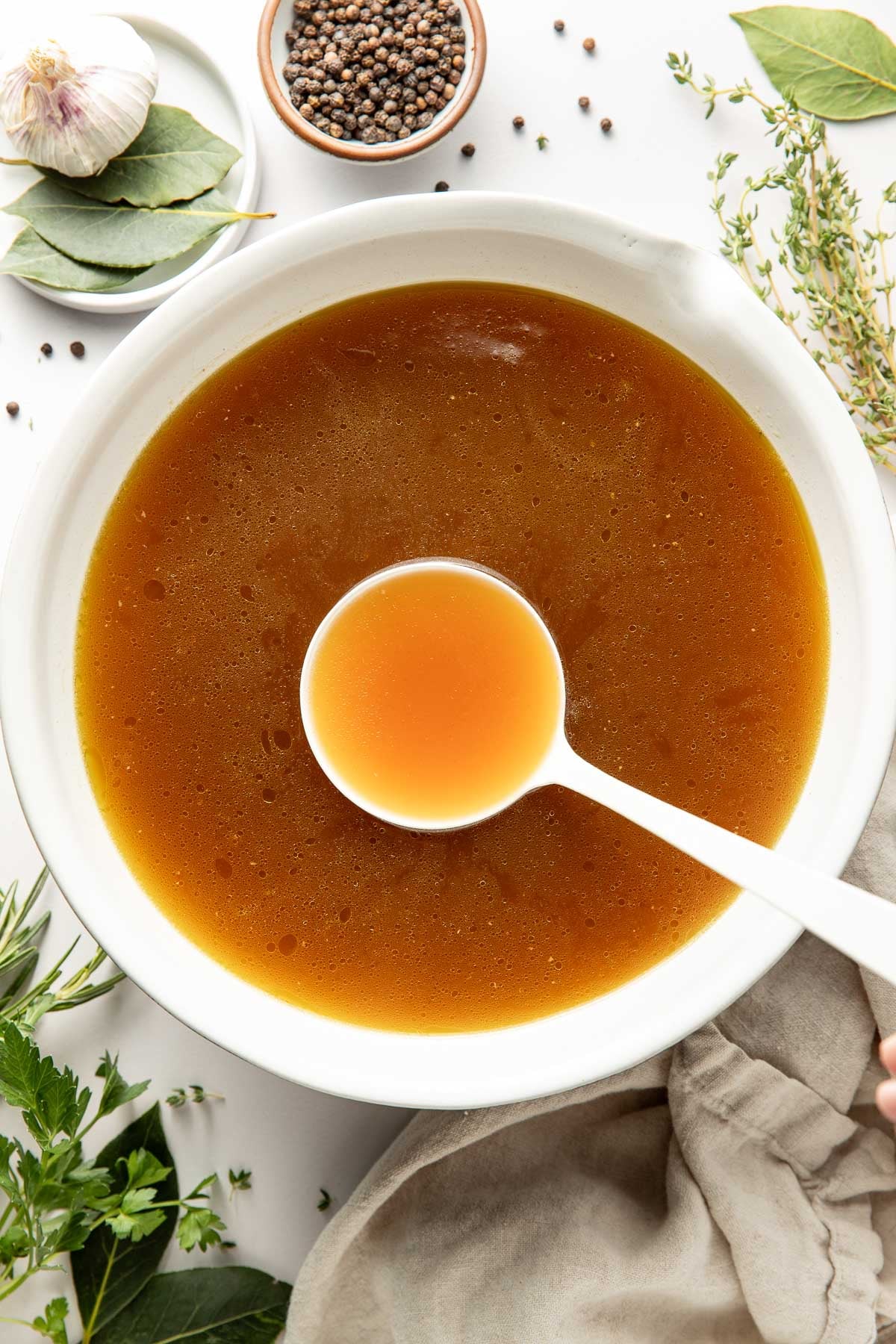
I’ve been making homemade bone broth for easily the last 20 years. I’ve just fallen into a pattern of saving the bones after I make roasted chicken or buy a rotisserie chicken. Once the chicken meat is picked off the chicken carcass, I store the bones in a large zip-top bag in my freezer. In a separate freezer-safe bag, I store carrot peels, ends of onions, leftover green onions, and celery that’s a little past its prime. When both bags are full, I know it’s time to make a batch of this delicious nutrient-dense chicken stock.
Why I Love This Recipe
So much flavor: In my opinion, there’s no easier way to make homemade soups and other recipes taste extra flavorful and good than by making them with this homemade broth.
Economical: It’s so budget friendly to create more than 2 quarts of broth simply from food scraps, water, simple seasonings – there’s nothing extra to purchase.
Nutritious: This homemade chicken bone broth recipe has more protein than store-bought chicken broth, thanks to the collagen and amino acids that leech from the bones. Research shows collagen has many benefits, including improved gut health, as well as improvements for joint pain, skin, and more.
Ingredients To Gather
The main thing required to make bone broth is bones. Those, plus a few other ingredients and some slow cooking time, provide the most flavorful, rich-tasting, collagen-filled broth. It’s really quite a magical recipe!
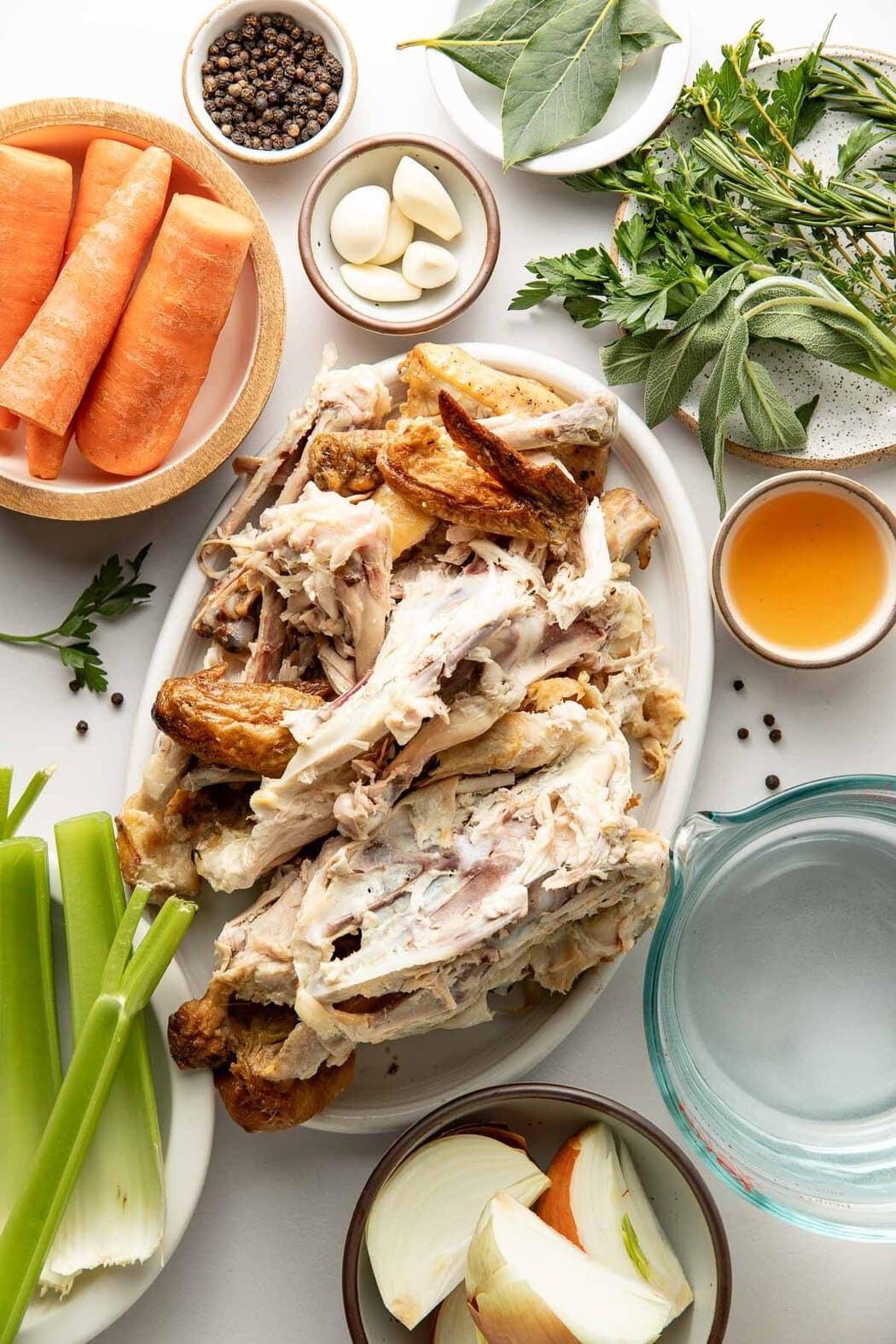
- Chicken bones – Once I have the bones from 2 whole chickens (or about 6 to 8 cups of bones, loosely measured), that’s enough to make bone broth. I’ve seen others add chicken feet, connective tissue, or other parts of leftover chicken, which is fine to do – it only increases the collagen. Other types of bones work too, such as lamb bones, beef bones, and turkey bones.
- Water – I start with 12 cups of cold water, which condenses down to about 10 to 10 ½ cups of broth in the end. I typically just use tap water, though feel free to use filtered water if worried about impurities.
- Apple cider vinegar – A bit of acid (in this case from vinegar) helps release amino acids out of the bones, including glutamine, proline, and glycine. It also helps leech out some of the minerals, like calcium, magnesium, and phosphorus.
- Veggies or vegetable scraps – This bone broth recipe can be made with veggie scraps, such as leftover carrot peels and the ends of onions, or start with a fresh yellow onion, a few carrots and celery stalks, and some garlic cloves.
- Seasonings – All I typically add for seasonings is some whole black peppercorns and a few bay leaves. If I have one around, I’ll also add a bundle of fresh poultry herbs (like thyme, rosemary, sage, and parsley), which are optional, but make the broth taste and smell so good. Also, I find that the broth is typically salty enough for me, but if not, I sometimes add a pinch of sea salt after tasting.
Find the ingredient list with exact measurements in the recipe card below.
Health Benefits Of Homemade Broth
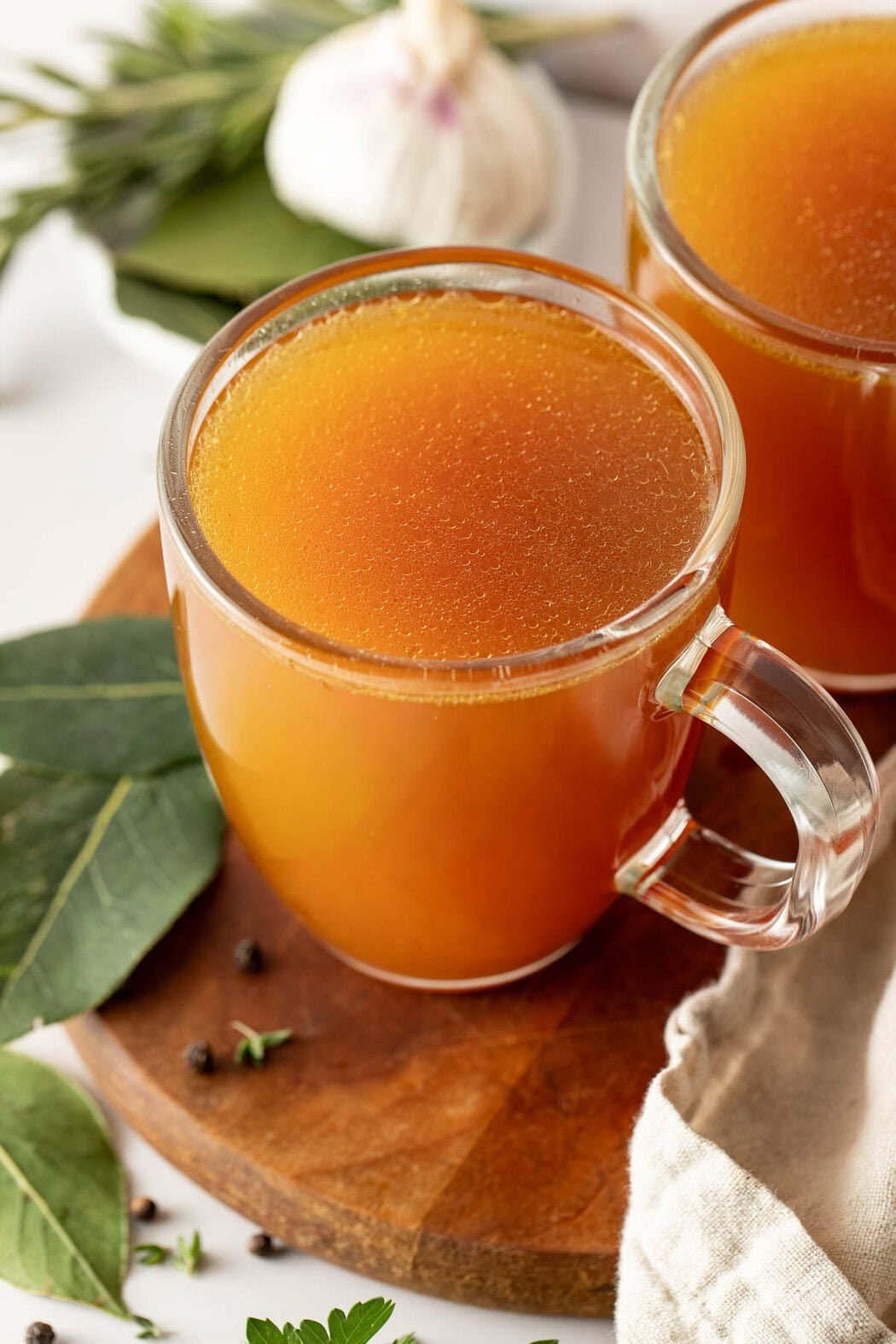
Mostly thanks to the protein and gelatin-like collagen—but also other nutrients like some potassium, phosphorus, calcium, and magnesium—sipping on bone broth and adding it to soups and stews could provide some health benefits, such as:
- Improving gut health – thanks to the amino acid glutamine in bone broth, which is the preferred fuel for the cells that line the small intestines. These cells turnover regularly, and glutamine may be especially helpful for repairing and rebuilding them. This could be especially beneficial for folks with leaky gut syndrome, celiac disease, colitis, or Crohn’s disease.
- Boosting the immune system – the amino acids glutamine, proline, and glycine (which are prevalent in bone broth) also support tissue repair and speed the healing of injuries, wounds, and burns. Also, these amino acids are linked to speedier recovery time after surgery and major illnesses.
- Speeding up detoxification – human bodies are continually detoxifying themselves from food, water, air, and other exposures. This detoxification process is primarily handled by the liver (and to a lesser extent, the kidneys). Glutamine, along with cysteine and proline, is necessary for the production of glutathione, which is the major antioxidant that supports the liver in its ability to keep up with our daily toxic burden.
- Delivering joint and skin benefits – the collagen in bone broth can help prevent skin from losing elasticity and help rebuild wear-and-tear to joints and cartilage.
A True Set-It-And-Forget-It Recipe
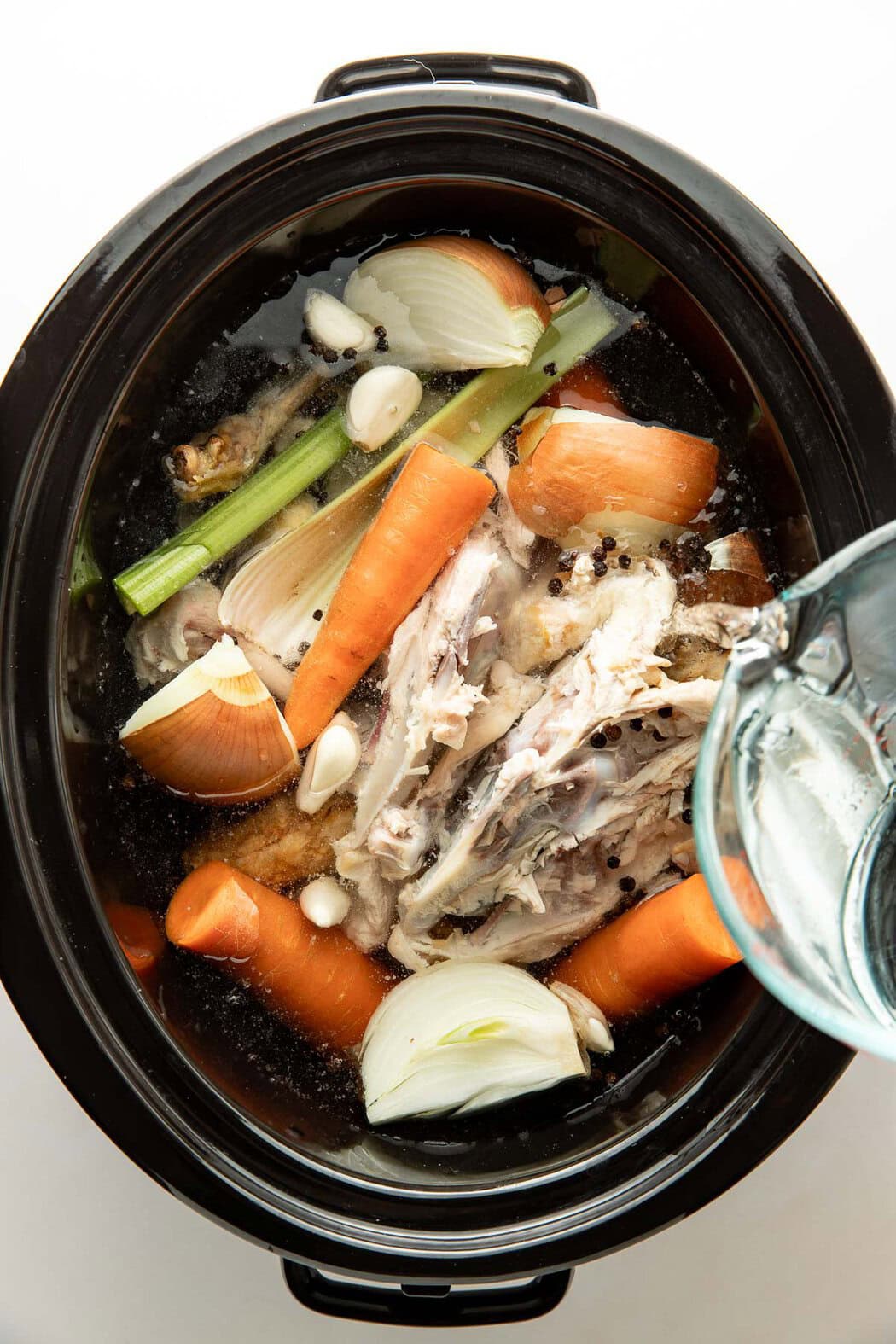
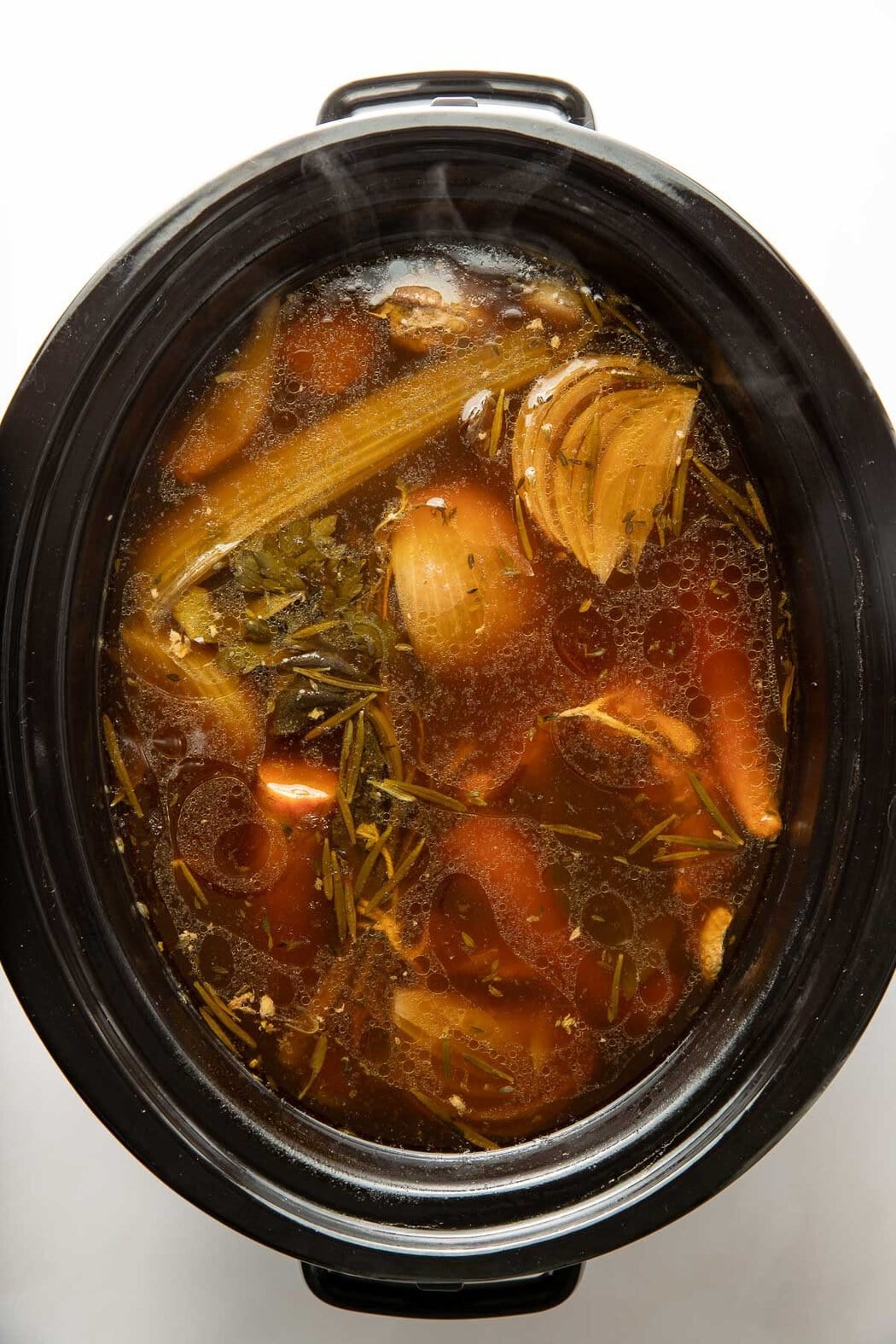
One of the things I love best about this homemade bone broth recipe is that the slow cooker really does all the work here. This is a true set-it-and-forget it (though the delicious aroma wafting from my kitchen never truly lets me “forget” that it’s simmering away) with few hands-on steps required. A few things to keep in mind:
- Make sure the crockpot is big enough. I recommend using a 6-quart or larger slow cooker with a Keep Warm setting.
- Submerge the bones and veggies. I start by adding 12 cups of water, but if the bones and vegetables aren’t completely submerged in the water, it may be necessary to add another ½ to 2 cups of water. The whole black pepper and bay leaves will float along the top, which is just fine.
- Cover and let it cook: Though it’s tempting to lift the lid off the slow cooker and peek at the bone broth, avoid the temptation. Just let everything cook low and slow, unbothered, for a full day.
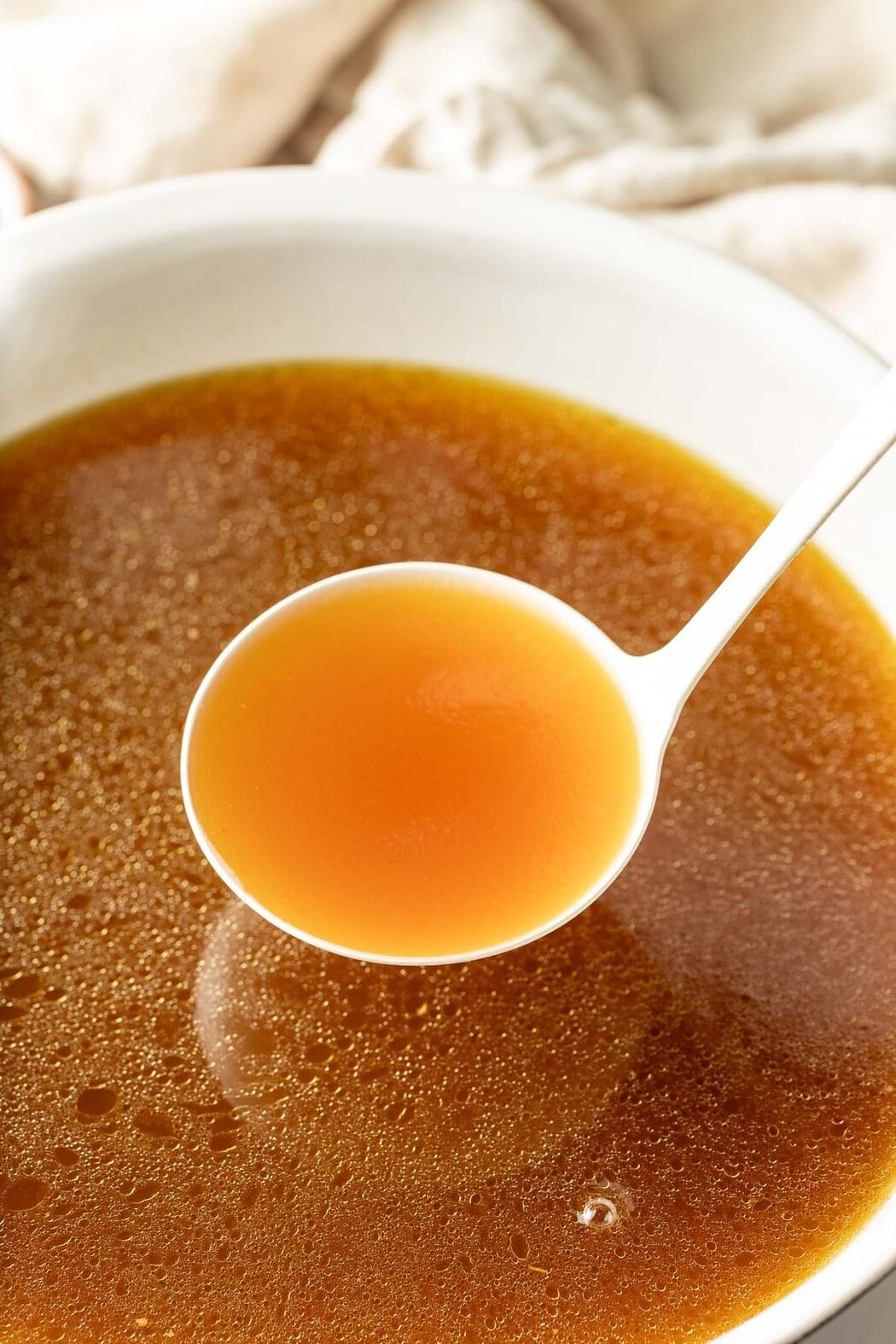
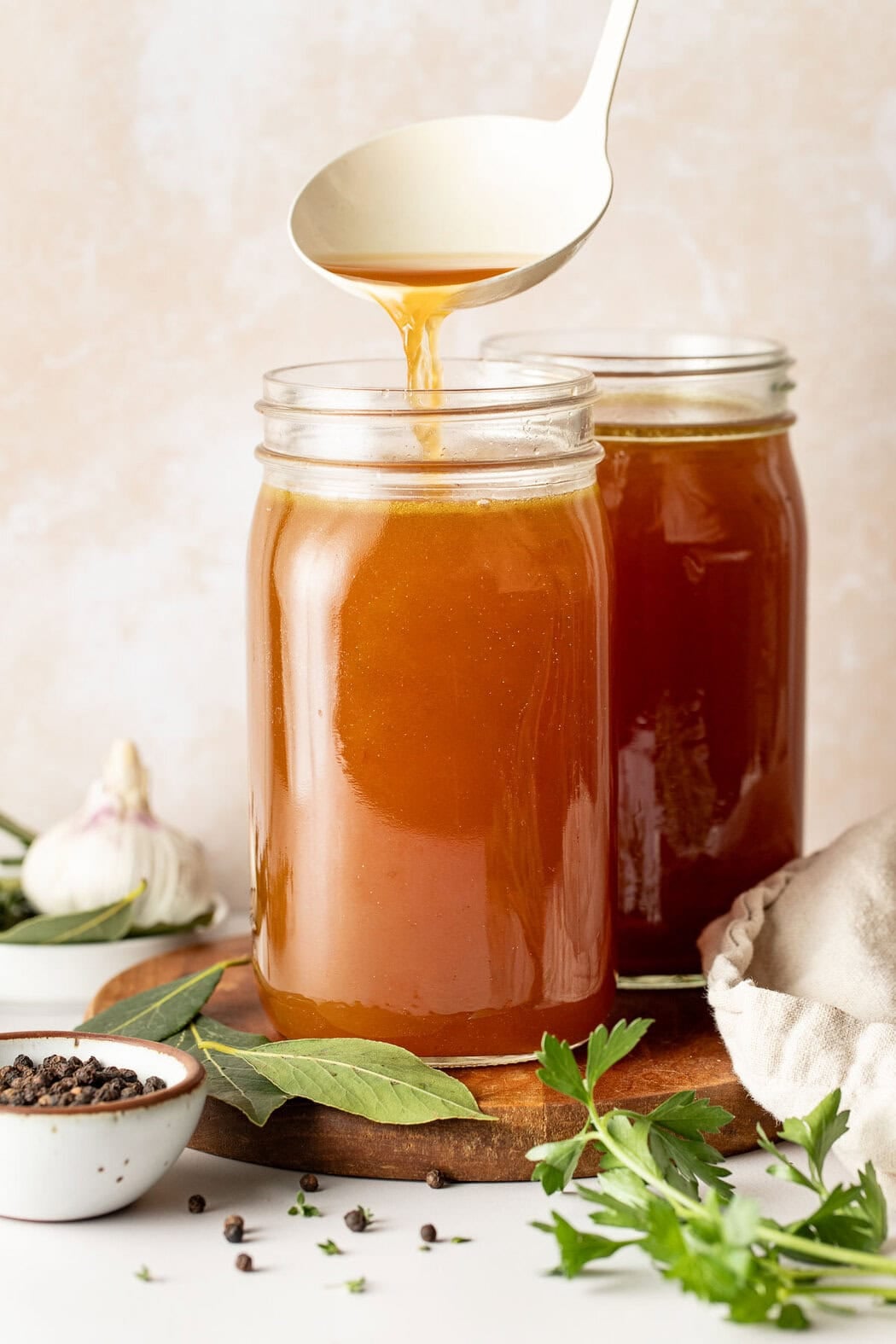
- Cool before freezing: I strain the golden liquid through a fine-mesh strainer or cheesecloth into glass mason jars. I let it cool to room temperature. Then I place the jars in my fridge for up to 5 days. Or I transfer the broth to portioned ½-cup and 1-cup silicone molds for freezing. Once completely cooled, a layer of fat may form at the top of the liquid in the jars. I spoon off and discard this saturated fat.
Stovetop option: Without a slow cooker, make this recipe in a large stockpot on the stovetop. Simmer the ingredients over low heat for 8 to 24 hours. Check in on it every few hours and add water if it’s getting so low whereas the roasted bones and veggies aren’t covered.
For serving size and the complete directions and ingredient amounts, scroll down to the recipe card below. All of our recipes include the nutrition analysis, listing calories (kcals), protein, carbohydrates/carb, fiber, sugar, sodium, cholesterol, and more per serving.
Avoid Adding Certain Vegetables
Not just any veggie scraps should be added to make homemade bone broth. Avoid adding vegetables like broccoli, cauliflower, or cabbage because their strong sulfur compounds will overpower and result in a less-than-tasty broth. Instead, stick to the basics: onion, carrot, celery, and garlic.
Make An Immune-Boosting Version
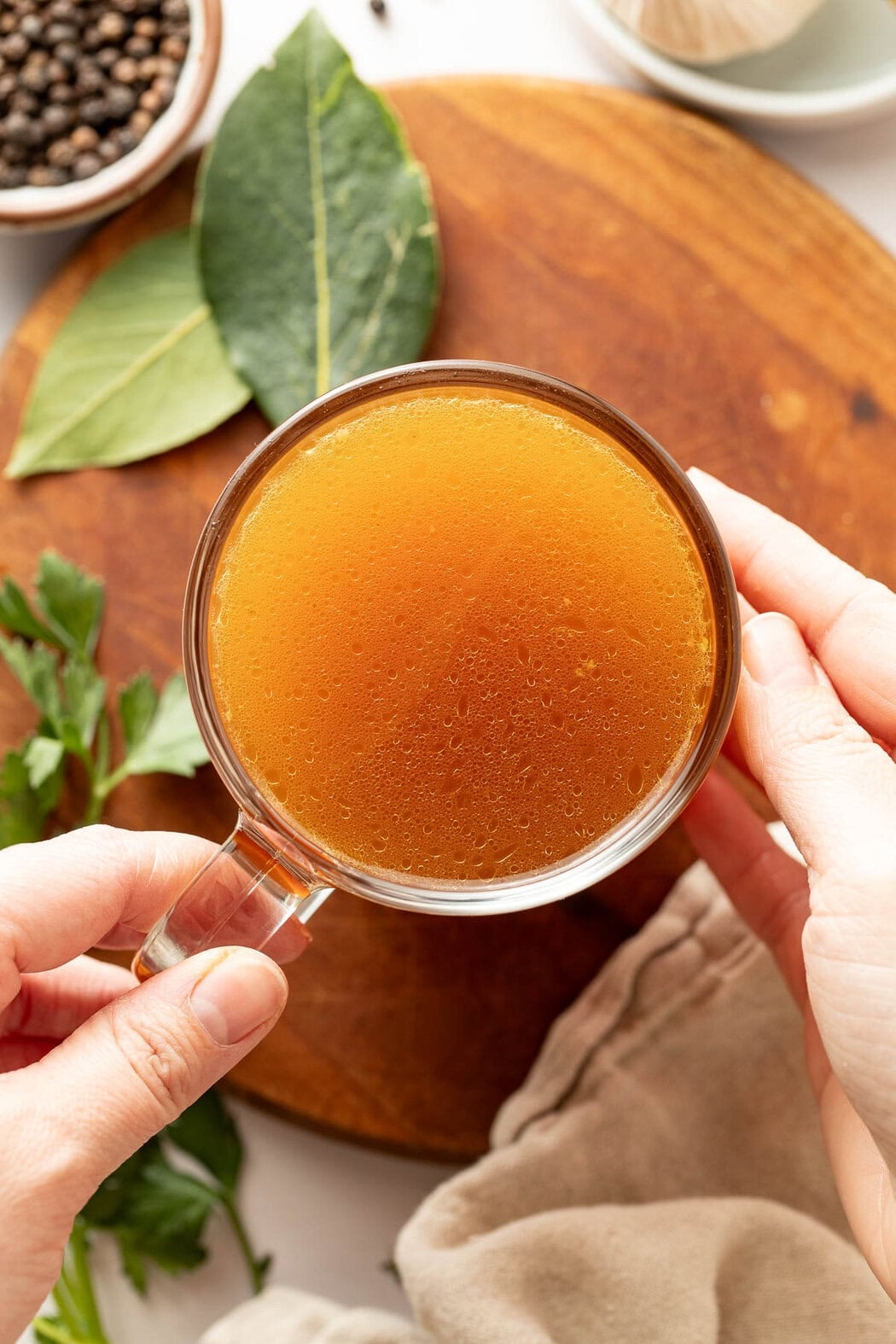
Bone broth makes a great addition to recipes but it can also be a healthy, healing drink. When I plan to enjoy this recipe as a sipping broth, I add a few slices of fresh ginger and a few teaspoons of fresh or dried turmeric. These adds more flavor notes, as well as immune-boosting properties. Then, when I need some comfort or feel sickness coming on, I simply reheat some strained broth in a mug and enjoy it warm.
Ways To Use This Broth
Most often, I make a batch of this bone broth to use in place of store-bought broth. That way I’m getting an extra boost of protein, nutrients, collagen, and flavor to add to recipes like turkey soup, the best chicken noodle soup, this favorite chicken pot pie casserole, or my popular white chicken chili.
It’s also good for using in place of the water when cooking rice, making quinoa, or mashing potatoes. Really, in almost any savory recipe that lists water or grocery store chicken broth, I use this homemade broth instead.
⭐⭐⭐⭐⭐
“Super easy recipe to follow. There’s room to add your own spices. Sometimes I reuse the veggies, bones, and seasonings and make a second, weaker batch. I freeze the bone broth in silicone cupcake pans to have on hand for recipes.” ~ Liz Y.
Storage Options And Tips
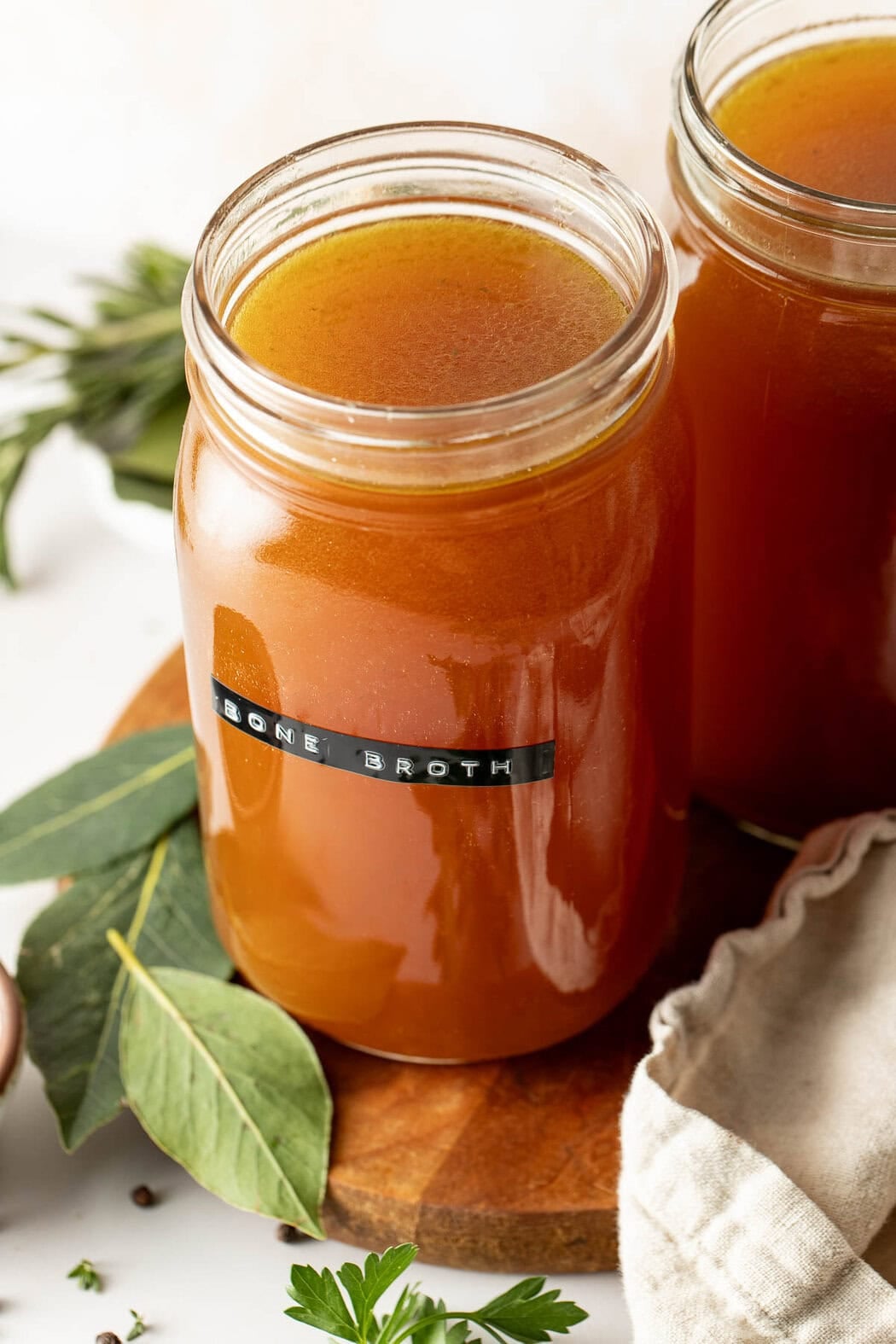
After the broth is done slow cooking, I strain it into glass mason jars and let it cool on the counter for 2 hours. If I plan to use up the broth within a few days, I simply refrigerate it in the glass jars or other airtight containers for up to 5 days.
Most often, though, I’m making this broth as part of a meal prep session to save time in the future. And that’s when it’s handy to freeze the broth in individual ½-cup, 1-cup, or 2-cup portions in silicone models (these Souper Cubes have been my favorites for years). Once frozen solid, I transfer the hard blocks to freezer-safe bags that take up less space in my freezer. Voila! Now I have easy-access, flavorful, and pre-portioned bone broth to use as needed.
The broth also can be canned in mason jars using a pressure cooker. It’s a lot of work, though, so I typically just freeze it instead.
Frequently Asked Questions
Yes, bone broth is safe to drink every day. And it can even provide health benefits, similar to other healing drinks, like herbal tea and matcha. Someone on a histamine-restricted diet, however, may not want to drink bone broth every day. The long cooking time can increase histamines.
Yes, this recipe can be used to make other types of bone broth. Simply use beef bones or turkey bones in place of the chicken bones. I often recommend beef marrow bones and knuckle bones as the best bones to make a rich beef bone broth.
More Of My Homemade Recipes
Want to save this recipe?
Enter your email below & we’ll send it straight to your inbox. Plus you’ll get great new recipes from us every week!
Slow Cooker Bone Broth Recipe
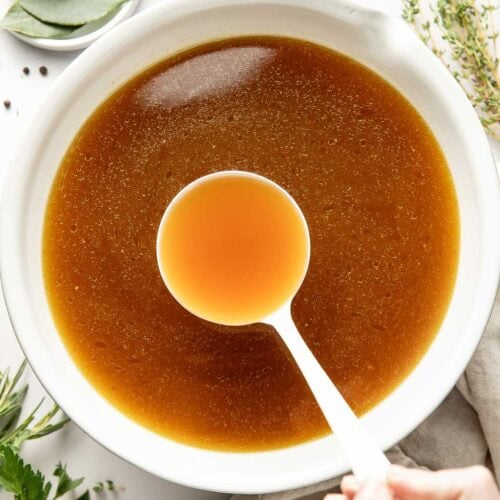
This homemade chicken bone broth is a flavorful, collagen-rich ingredient that can be used in soup recipes, sipped as a healing, comforting warm beverage, and used for replacing chicken broth or water in any savory recipe. This slow-cooking process is an easy, hands-off method to make delicious homemade bone broth.
Ingredients
- Bones from 2 whole chickens (roughly 6 to 8 cups of bones)
- 1 large yellow onion, quartered*
- 2 stalks celery, washed and cut in half
- 2 medium carrots, washed and cut in half
- 5 garlic cloves, peeled
- 2 tablespoons apple cider vinegar
- 1 tablespoon black peppercorns
- 2 bay leaves
- 12 cups water
- Optional: fresh poultry herbs (thyme, rosemary, sage, parsley)
Instructions
- In a 6-quart (or larger) slow cooker, place the bones, onion, celery, carrots, garlic cloves, apple cider vinegar, peppercorns, and bay leaves.
- If using fresh herbs, place the bundled sprigs on top of the bones and vegetables.
- Slowly pour the water over the bones and vegetables, adding more as needed to make sure they’re fully submerged.
- Cover the slow cooker and set it to cook on the LOW heat setting for 24 hours.
- When the cooking time is up, remove the bones and vegetables with a slotted spoon; discard.
- Strain the broth through a fine-mesh strainer into glass mason jars or other airtight glass containers and allow to cool for 1-2 hours on the counter before transferring to the refrigerator to store for up to 5 days.
- For longer storage, freeze the bone broth in freezer-safe containers or in individual portions in silicone molds, which makes it easy to add a certain amount of broth to recipes later on. Freeze for up to 6 months.
Last Step! Please leave a review and rating letting us know how you liked this recipe! This helps our business thrive so we can continue providing free recipes and high-quality content for you.
Notes
* May remove or leave the skin on the yellow onion. Leaving the skin on gives the broth a more rich golden color.
May also add stored veggie scraps (such as the ends of onions, carrot peels, green onions and celery that are a bit past their prime) either in addition to the veggies or in place of some of them. Avoid adding vegetables like broccoli, cauliflower, or cabbage because their strong sulfur compounds overpower the flavor. Stick to onions, celery, carrots, and garlic.
If making bone broth for sipping, consider adding a few slices of fresh ginger or a few teaspoons of ground turmeric for other flavor profiles and immune boosting properties.
Nutrition Information
- Serving Size: 1 cup
- Calories: 55
- Fat: 2 g
- (Sat Fat: 0 g)
- Sodium: 120 mg
- Carbohydrate: 1 g
- (Fiber: 0 g
- Sugar: 0 g)
- Protein: 8 g
- Cholesterol: 10 mg
Dietary
Recipe Changelog
- April 2026: We previously published a version of this recipe made with slightly different ingredient amounts and a different cooking method. Download the previous version here.
The photos in this post were taken by Megan McKeehan.
For ultimate success, we highly recommend reading the tips in the full blog post above. All photos and content are copyright protected. Please do not use our photos without prior written permission. If you wish to republish a recipe, please rewrite the recipe in your own unique words. Link back to the source recipe here on The Real Food Dietitians. Thank you!


So if I understand correctly, cooking the bones first in order to get the meat off, will not diminish and or deteriorate the nutrition that is still in the bone that seeped out when it’s slow cooked, correct? I asked this just because I like beef, short ribs, and so if I cook those Have my husband eat the meat off of them and then use those to make a beef broth I will still get the same amount of nutrition out of it or would taking the meat off of the bones while raw then cooking the bones and the meat separately be better thank you.
Hi Jane, your broth would have a higher protein amount if you did the later (take the meat off the bones while raw then cook the bones and meat separately). However, even if you use previously cooked bones to make broth, you will still be getting micronutrient and collagen benefits in the broth (as well as some protein).
why not just leave the meat on and make chicken soup?
Hi Sim – you could leave the meat and make chicken soup but the meat gets very overcooked if cooking for 2-3 hours under pressure. And the intent of the recipe is to be able to make something from the leftover bones rather than making chicken soup.
I just made this bone broth and it is amazing! I am sipping on it as I write this. So delicious, i can’t wait to have it again tomorrow and use it in a recipe! Thanks!
You are very welcome, Brenda!