
Lemon baked goods are some of my favorite treats, especially during spring. The fresh, light flavor is bright and cheerful and feels like the perfect way to welcome warmer weather. Recently, I found myself with an abundance of lemons on hand and wanted to create a few new recipes that really let that citrus flavor shine, and that’s how these easy lemon cookies came to life.

After testing a few batches, they quickly became a favorite in my kitchen. They’re soft and buttery with just the right balance of sweet and tart from the lemon zest and juice. Plus, they’re easy to customize to suit different flavor preferences and dietary needs. I’ve tested countless batches, and everyone in my family agrees that they’re just as good on their own as they are with a light glaze on top. One batch makes 16 cookies, which my boys always gobble up immediately. So, I always double the ingredients if baking for a gathering.
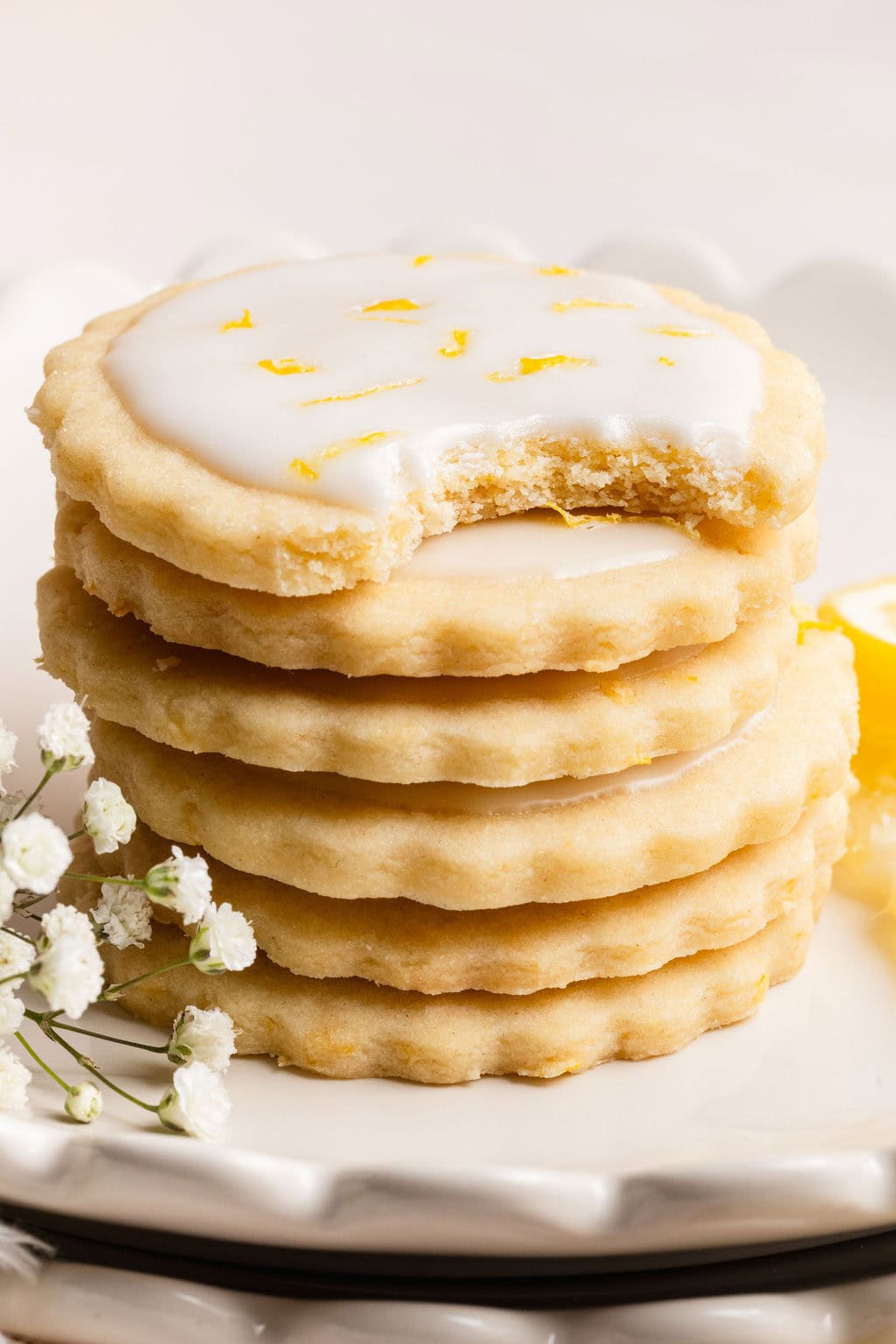
Recipe Highlights
Just a few ingredients: I keep the dough simple, starting with a rich shortbread base that pairs well with the light lemon flavor and really lets the citrus shine through while keeping saturated fat to a minimum.
Easy to make dietary-friendly: I’ve tested this lemon cookies recipe just about every way possible, making it gluten-free, dairy-free, and with and without the lemon glaze. Each batch is as delicious as the next.
Delicious year-round: These lemon cookies are a family favorite for Easter but are also great for baby showers, wedding showers, graduation parties, and backyard gatherings. I’ve even been known to bake a batch during the winter months to bring a little brightness to the cold Minnesota winter days.
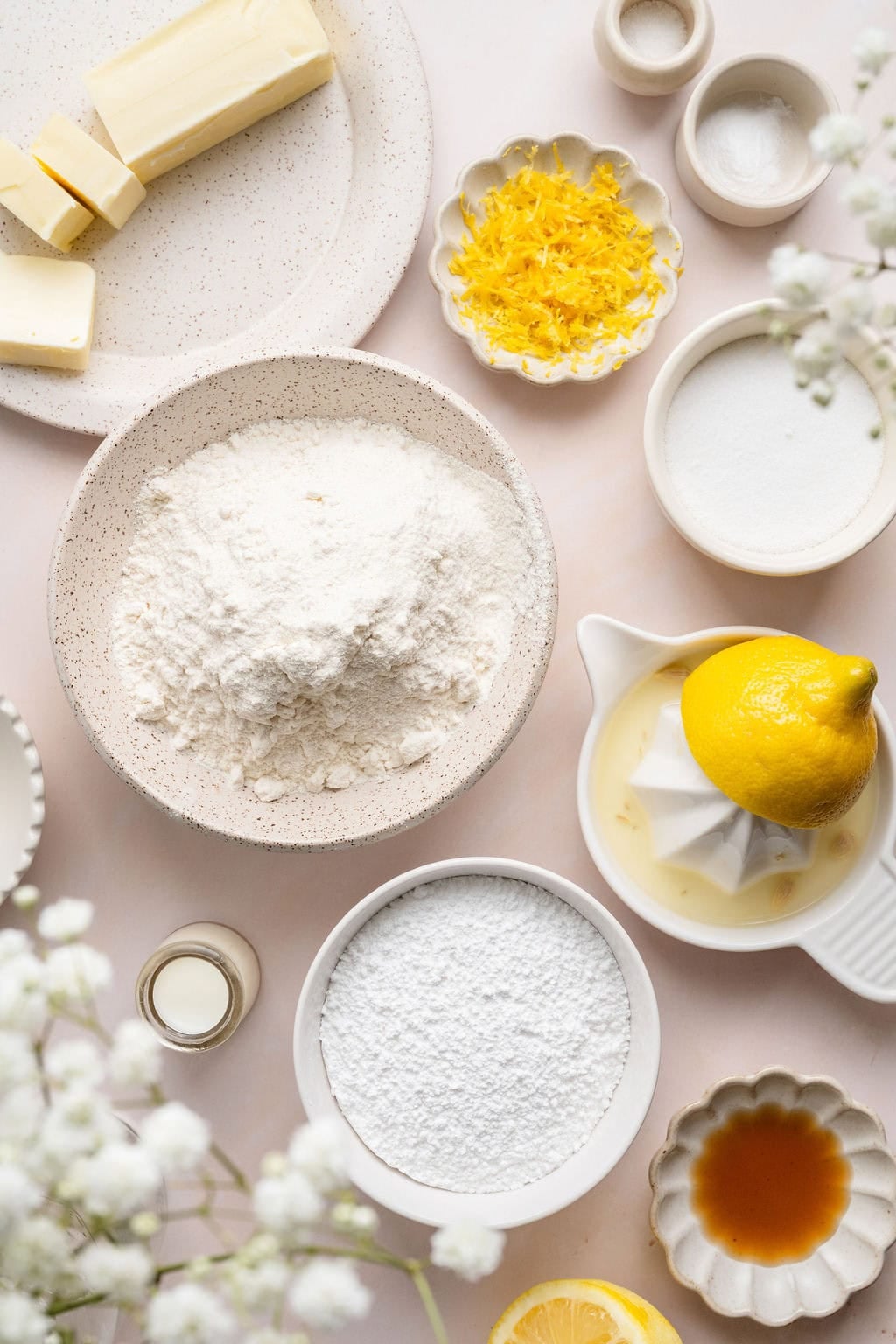
Featured Ingredients
These are the main ingredients to gather:
- Fresh lemon juice and lemon zest: These are the stars of the recipe, giving the cookies their bright, citrusy flavor. Lemon zest contains natural oils that provide a more concentrated lemon taste, while the juice adds a touch of acidity to balance the sweetness. Lemons are also a good source of vitamin C and antioxidants, and provide a tiny amount of vitamin A. I’ve tested the recipe with lemon extract as well, and I much prefer the taste of fresh lemon, finding it’s much brighter.
- Cane sugar: This sweetens the cookies, balancing some of the tart lemon taste. Cane sugar is less processed than some refined sugars, such as granulated sugar, and helps create slightly crisp edges while maintaining soft centers, which is the ideal texture for cookies if you ask me.
- Vanilla extract: A small amount enhances the overall flavor, adding warmth and depth that complements the lemon without overpowering it.
- Butter: Using softened butter helps the dough come together smoothly and contributes to the cookies’ soft, melt-in-your-mouth consistency. I always use unsalted butter, so I have more control over the flavor of the cookies. If using salted butter, reduce or omit the extra salt.
- Flour: All-purpose flour forms the base of the dough, giving the lemon cookies structure.
- Baking soda: This helps the cookies spread slightly and contributes to their soft texture. It also reacts with the acidity from the lemon juice to create a light, tender crumb. Do not substitute baking powder, or the taste and texture won’t be the same.
Find the ingredient list with exact measurements in the recipe card below.
Helpful Kitchen Tools
The cookies don’t require any speciality equipment. Here’s what I use:
- Large rimmed baking sheet (or two smaller baking sheets) with parchment paper: To bake and cool the cookies.
- A stand mixer fitted with a paddle attachment (or use a mixing bowl and a hand mixer): To combine the ingredients, creating a cohesive dough without overmixing.
- Large rolling pin: To roll the dough out evenly.
- Round cookie cutter (or another festive shape): To cut and shape the dough.
- Cooling rack: To cool the cookies, preventing them from becoming soggy.
- Small bowl: To whisk the lemon glaze.
Let’s Get Baking
My secret to the best lemon cookies is chilling the dough. Here’s how they come together with a few simple steps:
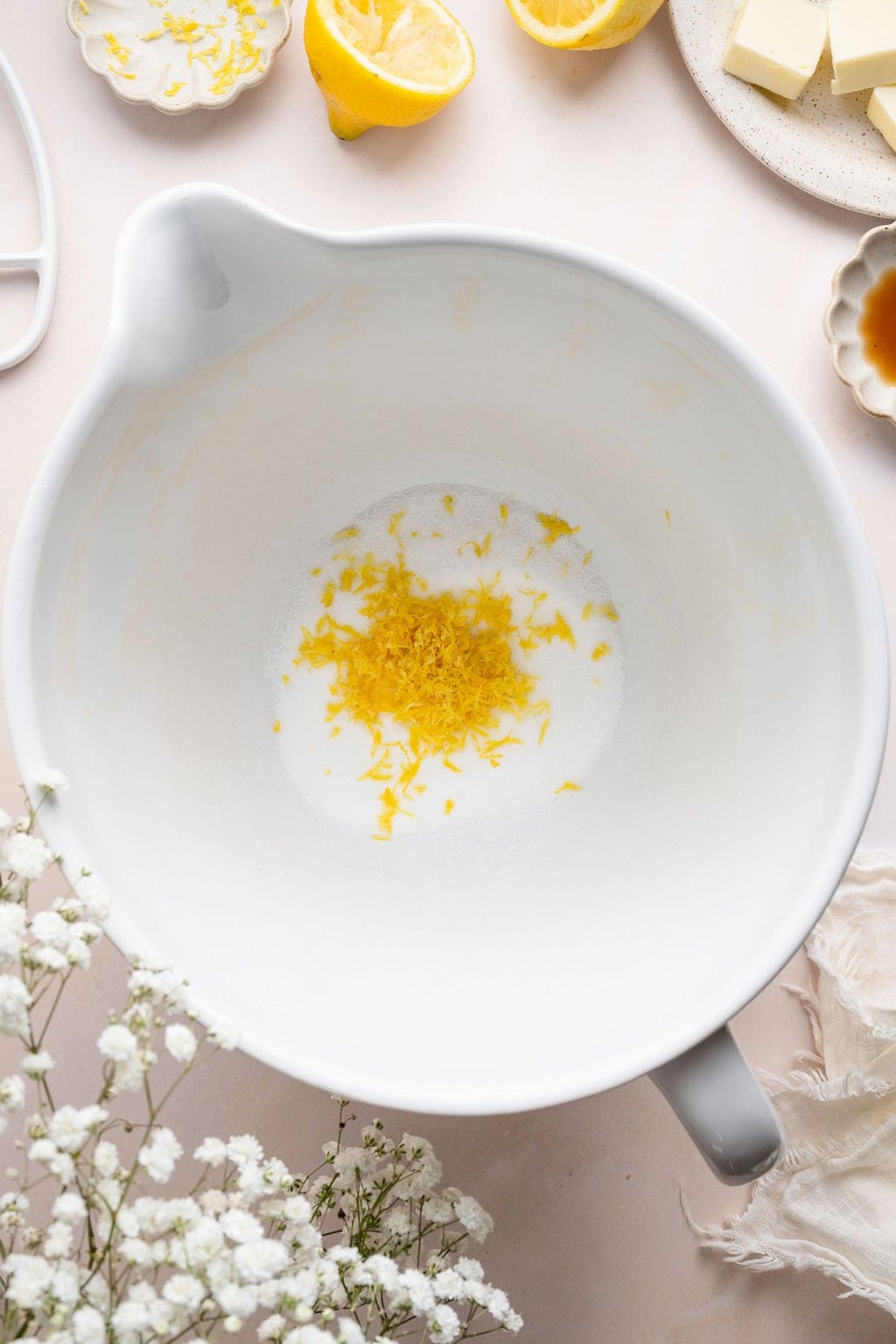
- Infuse the sugar: Mix the sugar and lemon zest in a stand mixer fitted with a paddle attachment or in a large bowl with a hand mixer. This extracts essential oils from the lemon zest, creating a stronger lemon taste.
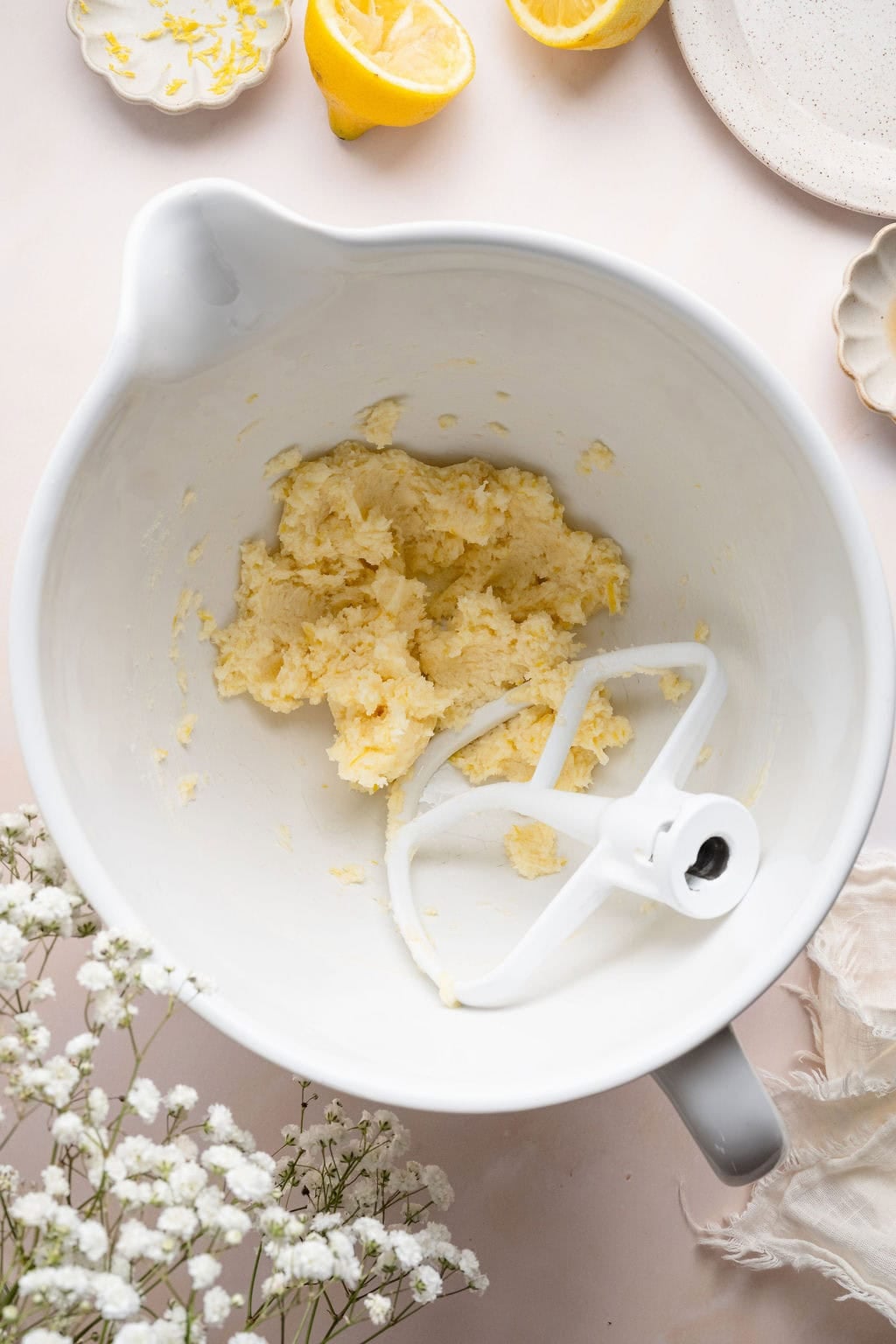
- Combine ingredients: Add the wet ingredients to the lemon sugar, and mix until they’re well combined and the butter is fluffy. Then, mix in the dry ingredients just until the dough comes together. This only takes about 1 minute. Mixing further will create dense, tough cookies.
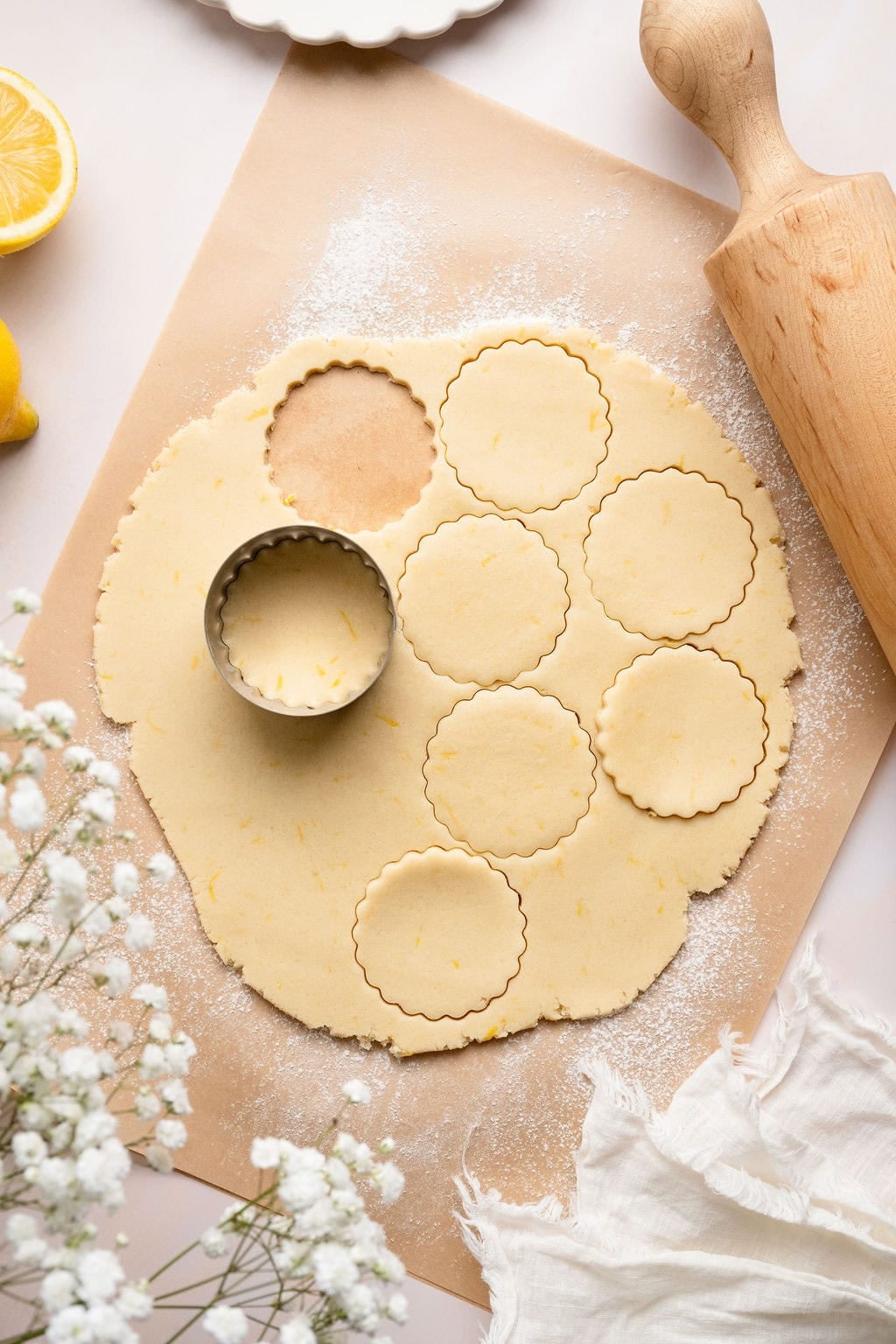
- Roll and cut the dough: Shape the flour mixture into a ball, and roll it out evenly on a lightly floured work surface. Then, use a 2 1/2 inch cookie cutter to cut the dough into even pieces, placing each cookie on a cookie sheet lined with parchment paper or a silicone baking mat. Rather than waste the scraps, I roll them into a ball, roll it back out to 1/4-inch thickness, and cut as many cookies as I can. I do not recommend using a cookie scoop to roll the dough into cookie dough balls before baking. They won’t spread in the oven and are likely to be left raw in the center if not rolled out evenly.
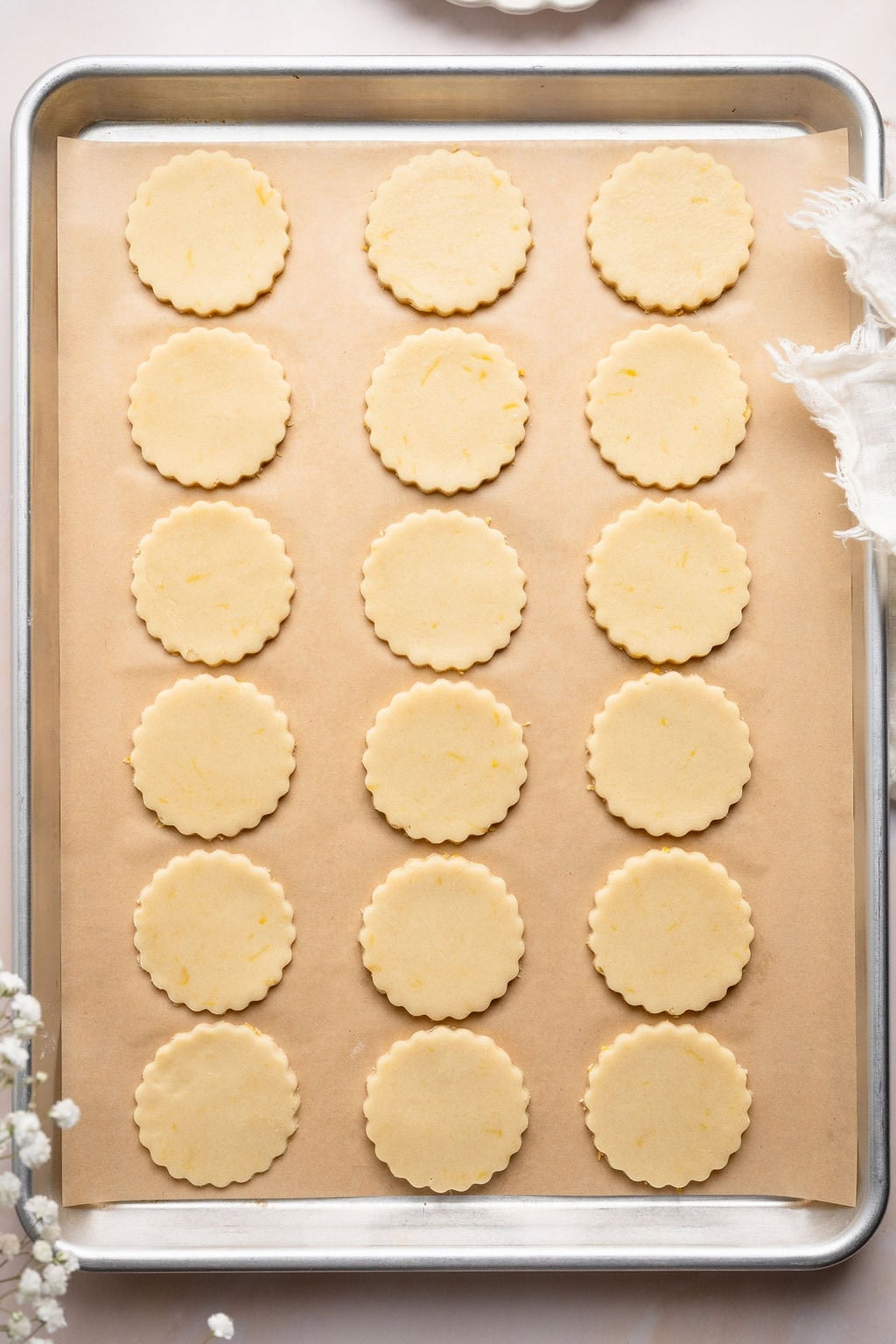
- Chill: Transfer the cookies to the fridge to chill. This helps the butter re-solidify, preventing excess spreading and deepening the lemon flavor.
- Bake: Working with one tray of cookies at a time, bake the first batch of cookies just until they’re lightly golden on the bottom. They won’t turn very deeply brown. So keep a close eye on the oven, and be careful not to let them burn. Once baked, swap trays, transferring the second batch of cookies to the oven.
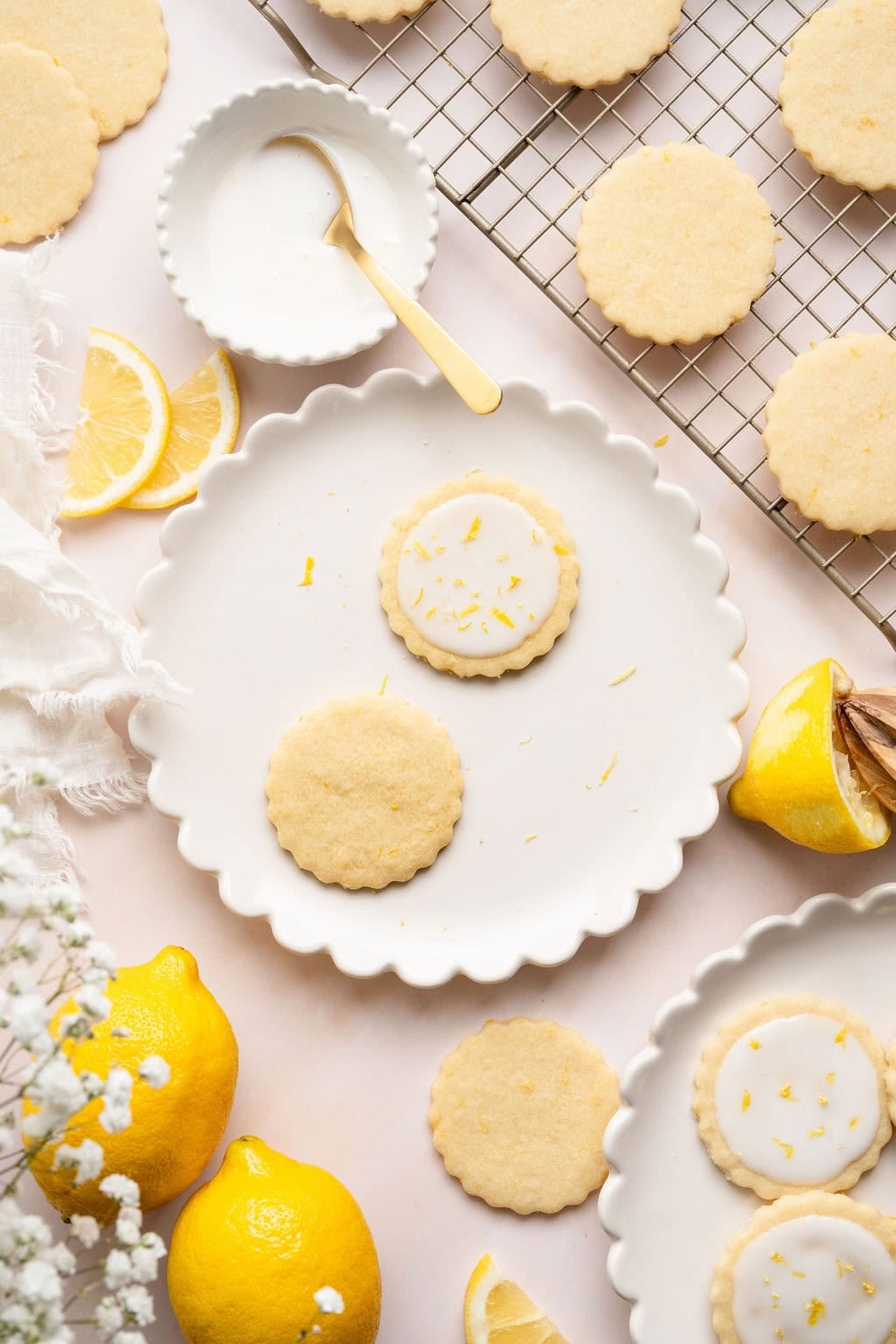
- Cool: Let the cookies cool on the baking pan slightly. Then, transfer them to a wire rack to cool completely.
For serving size and the complete directions and ingredient amounts, scroll down to the recipe card below. All of our recipes include the nutrition analysis, listing calories (kcals), protein, carbohydrates/carb, fiber, sugar, sodium, cholesterol, and more per serving.
Make These Gluten-Free
I often make these lemon cookies gluten-free, substituting the all-purpose flour with 170 grams of 1:1 gluten-free flour. Bob’s Red Mill Gluten-Free 1:1 Flour is my go-to gluten-free flour, but any brand should work. The result is similar to the taste and texture of my gluten-free sugar cookies, if I omitted the large egg and added lemon to them, that is.
Make Them Dairy-Free
For dairy-free cookies, swap the regular butter in the dough with unsalted plant-based butter. Also, use unsweetened dairy-free milk for the glaze, if including it.

Chill After Cutting For Best Results
I tested a few different methods when making these cookies, and chilling after cutting them into shape made the biggest difference. At first, I tried the classic approach of chilling the dough before rolling it out, but working with very cold dough was tough. It was hard to roll, difficult to cut clean shapes, and re-rolling the scraps became tricky as the butter started to warm up from handling.
What worked best was making the dough, rolling it out right away, and cutting the cookies while everything was still easy to handle. Then, I placed the cut cookie rounds on the baking sheet and chilled them in the refrigerator before baking. This simple switch made the process so much easier, preventing the cookies from spreading in the oven and enhancing the lemon flavor while creating the perfect soft, tender texture.
Don’t Forget The Icing
I enjoy these cookies on their own, but every once in a while, I like to add a simple lemon icing on top for a little extra sweetness. It’s incredibly easy to make. Just whisk together powdered sugar, fresh lemon juice, and a splash of milk in a medium bowl until smooth.
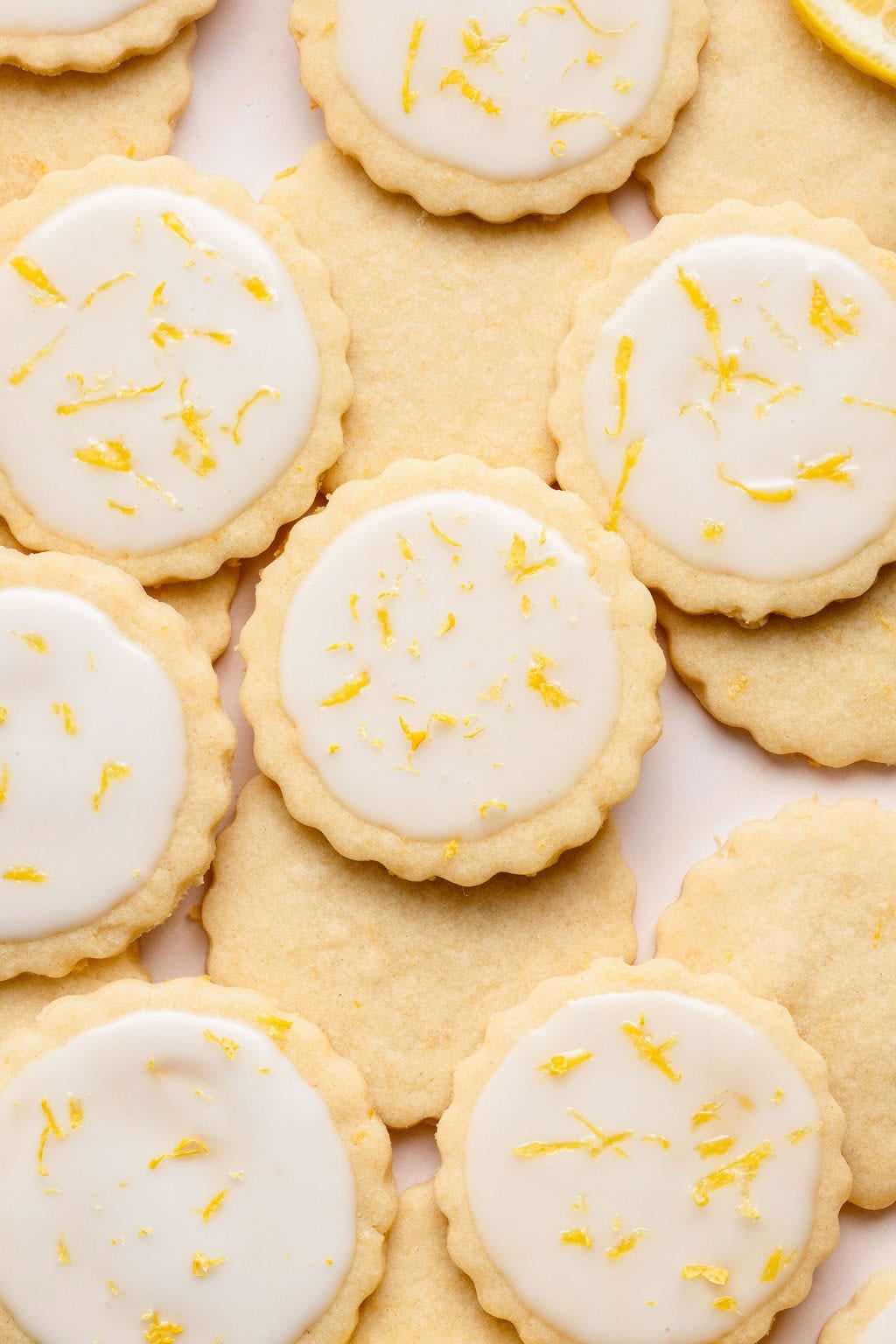
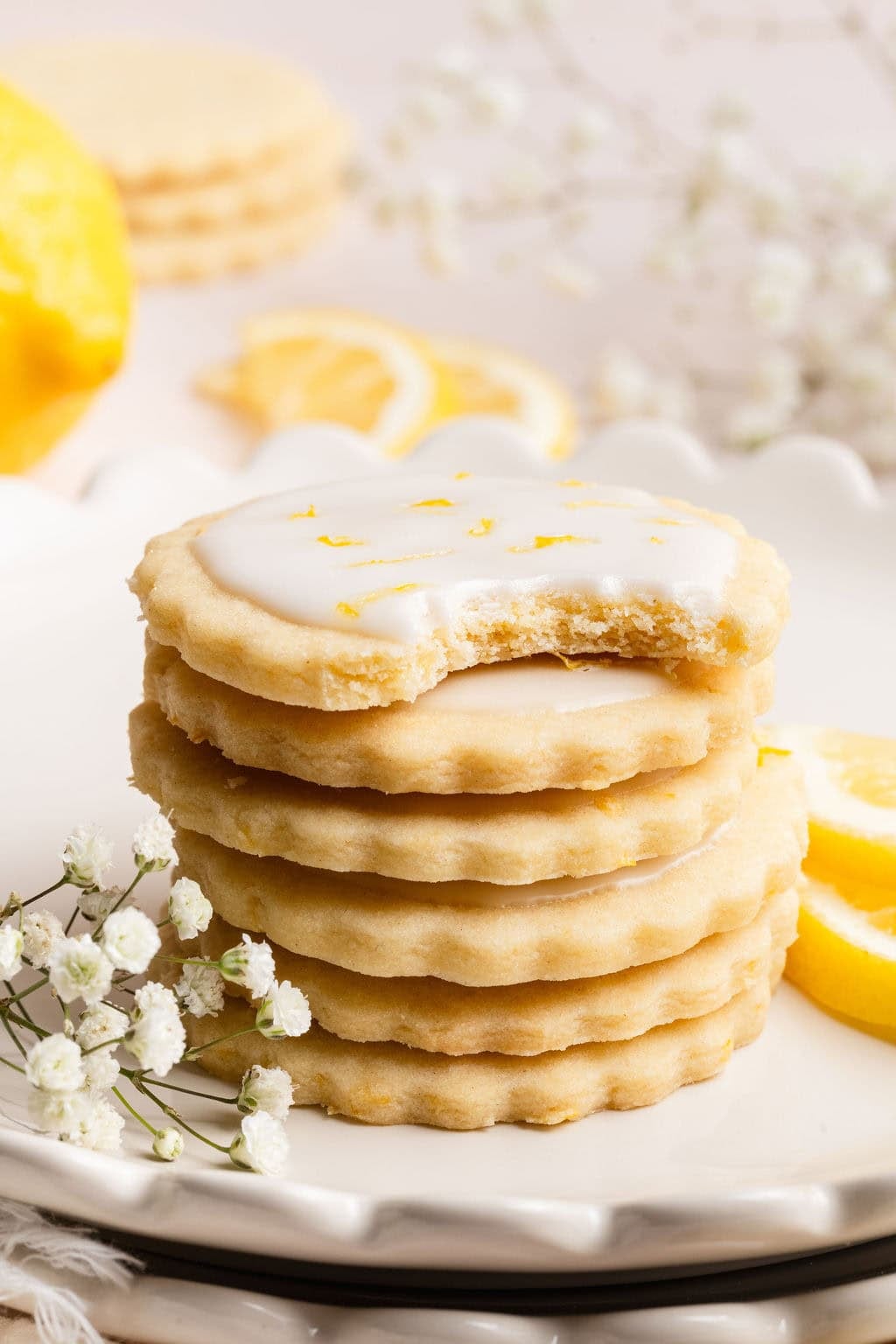
When I do add the icing, I like to spread a thin layer over each cooled cookie and finish them with a light sprinkle of fresh lemon zest or preserved lemon zest as garnish. It adds a pop of color and enhances that fresh lemon flavor even more.
Make sure the cookies are completely cool before adding the glaze. Otherwise, it will melt and slide right off. Then, let it set and harden at room temperature before serving.
If I Have Leftovers
On the rare occasion I have leftovers, I transfer baked cookies to an airtight container to keep them fresh. They store well at room temperature for up to 4 days and keep in the fridge for up to 7 days if I need them to last a bit longer.
Unfrosted lemon sugar cookies also freeze well for up to 3 months. To store, I place them in a freezer-safe container with a sheet of parchment paper between each cookie to prevent sticking. Then, I thaw them at room temperature or in the fridge and add fresh glaze just before serving.
Frequently Asked Questions
Refrigerating cookie dough helps solidify the fat (butter), which prevents the cookies from spreading too much in the oven. For this recipe, chilling the cookies after they’ve been cut is especially helpful because it keeps their shape intact and creates a more tender, soft texture. It also allows the flavors to meld together slightly, resulting in a better overall taste.
Self-rising flour already contains leavening agents and salt, so it can be used in place of all-purpose flour and baking soda. However, it may slightly change the texture and flavor of the cookies. If using self-rising flour, I would omit the baking soda and salt listed in the recipe, but keep in mind the cookies may turn out a bit softer and more cake-like rather than having a classic shortbread-style texture.
To ensure soft lemon cookies, I keep a close eye on them, pulling the cookies from the oven as soon as the bottoms are just lightly golden, even if the tops still look pale. They’ll continue to set as they cool. Chilling the dough after cutting also helps, since starting with cold butter creates a more tender texture.
I also store the cookies in an airtight container as soon as they’ve completely cooled, which keeps them from drying out. If I want to keep them extra soft, I’ll sometimes add a small piece of bread to the container. The cookies absorb the moisture from the bread and stay perfectly soft for days.
Yes, white chocolate chips or chopped nuts, such as walnuts or pecans, make tasty additions. Simply prepare the cookie dough as usual, and fold any mix-ins into the mixture just before rolling and shaping. Or, gently press a thumb or a cookie scoop into the tops of the cookies before baking to create a well, similar to my raspberry thumbprint cookies. Then, spoon lemon curd into the centers before serving.
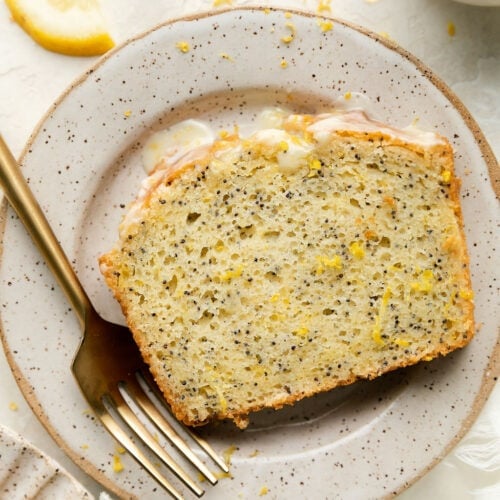



Want to save this recipe?
Enter your email below & we’ll send it straight to your inbox. Plus you’ll get great new recipes from us every week!
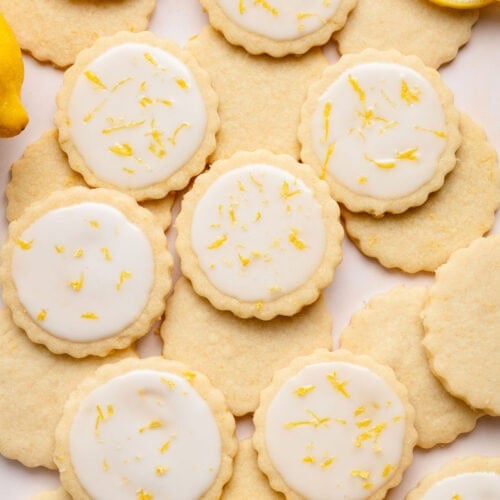
Lemon Cookies Recipe
Make these soft and buttery lemon cookies for a bright, fresh treat that’s perfect any time of year. With simple ingredients and a short chill time, this easy recipe comes together quickly and provides the perfect balance of sweet and citrusy flavors in each bite.
Ingredients
For the Cookies:
- ⅓ cup cane sugar
- 1 tablespoon fresh lemon zest (from 1-2 medium lemons)
- 7 tablespoons unsalted butter, softened to room temperature
- 1 ½ tablespoons fresh lemon juice
- ½ teaspoon pure vanilla extract
- 1 ¼ cups all-purpose flour (167g)
- ¼ teaspoon baking soda
- Pinch of fine salt
For the Optional Icing:
- ⅔ cup powdered sugar (80g)
- 2 teaspoons fresh lemon juice
- 1–2 teaspoons milk of choice
Instructions
- Line a large rimmed baking sheet (or two smaller baking sheets) with parchment paper and set aside.
- To a stand mixer fitted with the paddle attachment (or use a mixing bowl and a hand mixer), add the sugar and lemon zest. Mix together until the lemon zest is incorporated into the sugar.
- Add the butter, lemon juice, and vanilla; mix again until creamed together.
- Add the flour, baking soda, and salt. Mix until the dough comes together, about 1 minute.
- Scoop the dough from the mixing bowl and form into a ball with your hands. Place the dough ball on a lightly floured surface and, using a rolling pin, roll it out to about ¼-inch thickness.
- Use a 2 ½ inch cookie cutter to cut the dough into circles and place on the prepared baking sheet. Gather up the dough scraps and roll them into a ball before rolling the dough out to ¼-inch thickness again. Repeat until you have 16 cookies and all of the dough has been used.
- Place the baking sheet(s) with cookies in the refrigerator for 30 minutes to chill.
- Preheat the oven to 350°F while the cookies chill. Once the chill time is up, remove the baking sheet from the refrigerator. Place the baking sheet on the middle rack in the preheated oven. If using more than one pan, bake only one at a time, leaving the second pan in the fridge while the first one bakes.
- Bake until very lightly golden on the bottoms, 7 to 9 minutes. Remove from the oven and let the cookies cool on the baking sheet for 5 minutes before transferring to a cooling rack. Let cool completely before adding the icing.
To make the icing:
- To a small bowl, add the powdered sugar, 2 teaspoons lemon juice and 1 teaspoon milk; whisk until smooth. If too dry, add additional milk, ½ teaspoon at a time, until desired consistency is reached.
- Spread the icing on top of each cookie to within 1/8th inch to the edge. Sprinkle with additional fresh lemon zest, if desired.
- Store iced cookies in an airtight container at room temperature for up to 4 days or in the refrigerator for up to 7 days. To freeze, place the unfrosted cookies in a freezer-safe container or bag and freeze for up to 3 months.
Last Step! Please leave a review and rating letting us know how you liked this recipe! This helps our business thrive so we can continue providing free recipes and high-quality content for you.
Notes
For gluten free, use an equal amount (about 170 grams) or a 1:1 gluten free flour blend, such as Bob’s Red Mill Gluten-Free 1:1 Flour in place of the regular flour.
For dairy free, use plant-based vegan butter in the cookie batter, and plant-based milk to make the icing.
Nutrition Information
- Serving Size: 1 cookie without icing
- Calories: 94
- Fat: 5 g
- (Sat Fat: 3 g)
- Sodium: 37 mg
- Carbohydrate: 11 g
- (Fiber: 0 g
- Sugar: 4 g)
- Protein: 1 g
- Cholesterol: 13 mg
Dietary
Recipe Changelog
- April 2026: We previously published a version of lemon cookies that was a lemon shortbread recipe calling for only flour, sugar, lemon zest, salt, and unsalted butter. Download the previous version here.
- April 2026: We also published a previous version of lemon cookies that were paleo and nut-free lemon cookies made with cassava flour, coconut oil, maple sugar, an egg, lemon juice and zest, and poppyseeds. Download the previous version here.
The photos in this post were taken by Kaitlin of Creating Kaitlin.
For ultimate success, we highly recommend reading the tips in the full blog post above. All photos and content are copyright protected. Please do not use our photos without prior written permission. If you wish to republish a recipe, please rewrite the recipe in your own unique words. Link back to the source recipe here on The Real Food Dietitians. Thank you!


Can I use stevia to make these cookies? How much stevia would you recommend using?
Thanks.
Yes you could use stevia. I would recommend following the package instructions or tasting the dough to see if it’s the right sweetness for your liking.
Can I make these using Bob’s Red Mill paleo baking mix for grain free shortbread? Would I need to make any recipe modifications using that flour, or would it be an even substitution?
This recipe has not been tested with a grain-free flour. However, you could certainly try! If you do, we’d love to hear how they turn out! 😀