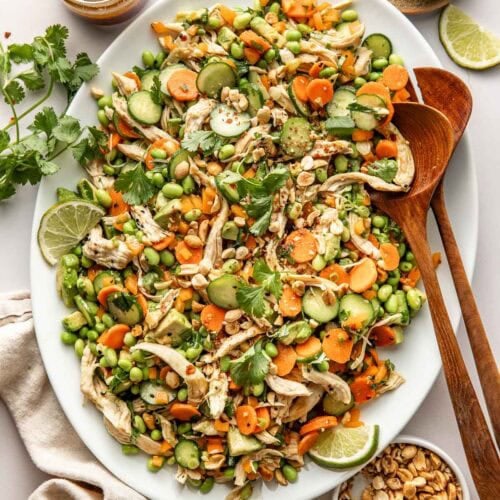
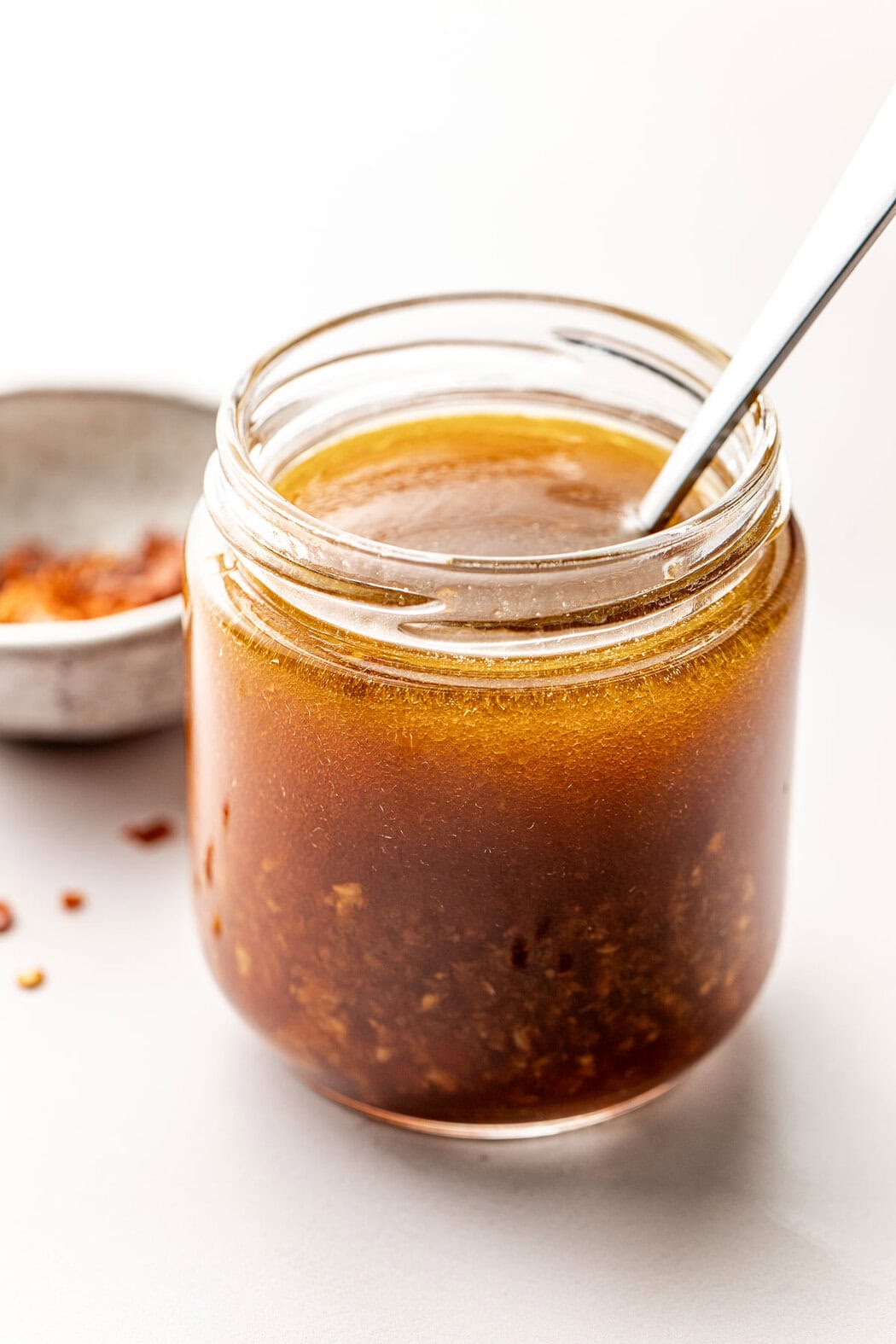
This Asian salad dressing first came about while recipe testing my Thai chicken salad, but it turned out to be so tasty that I knew I’d use it for so many other salads, too. The balance of tangy vinegar, savory soy sauce, flavorful sesame oil, fresh ginger, and garlic makes it incredibly tasty and versatile. And I discovered that this dressing also makes a good marinade and dipping sauce. Best of all, it comes together in just minutes, making it an easy way to add bold flavor to simple meals.
Recipe Highlights
Quick to make: From start to finish, this recipe is ready to use in just 5 minutes. Plus, everything combines in one measuring cup or jar, keeping dishes and clean-up minimal.
Customizable: Unlike pre-made dressings, this homemade Asian salad dressing is easy to adjust to suit different dietary needs and flavor preferences. For instance, I often make it a little spicier when cooking for myself and tone down the heat when preparing meals for my family. I also appreciate that it doesn’t have a lot of added sugar or processed ingredients, like most store-bought dressings.
Stores well: Once combined, the dressing keeps well in the fridge for days. So, I often make a large batch to keep on hand to use throughout the week.
Ingredients Needed
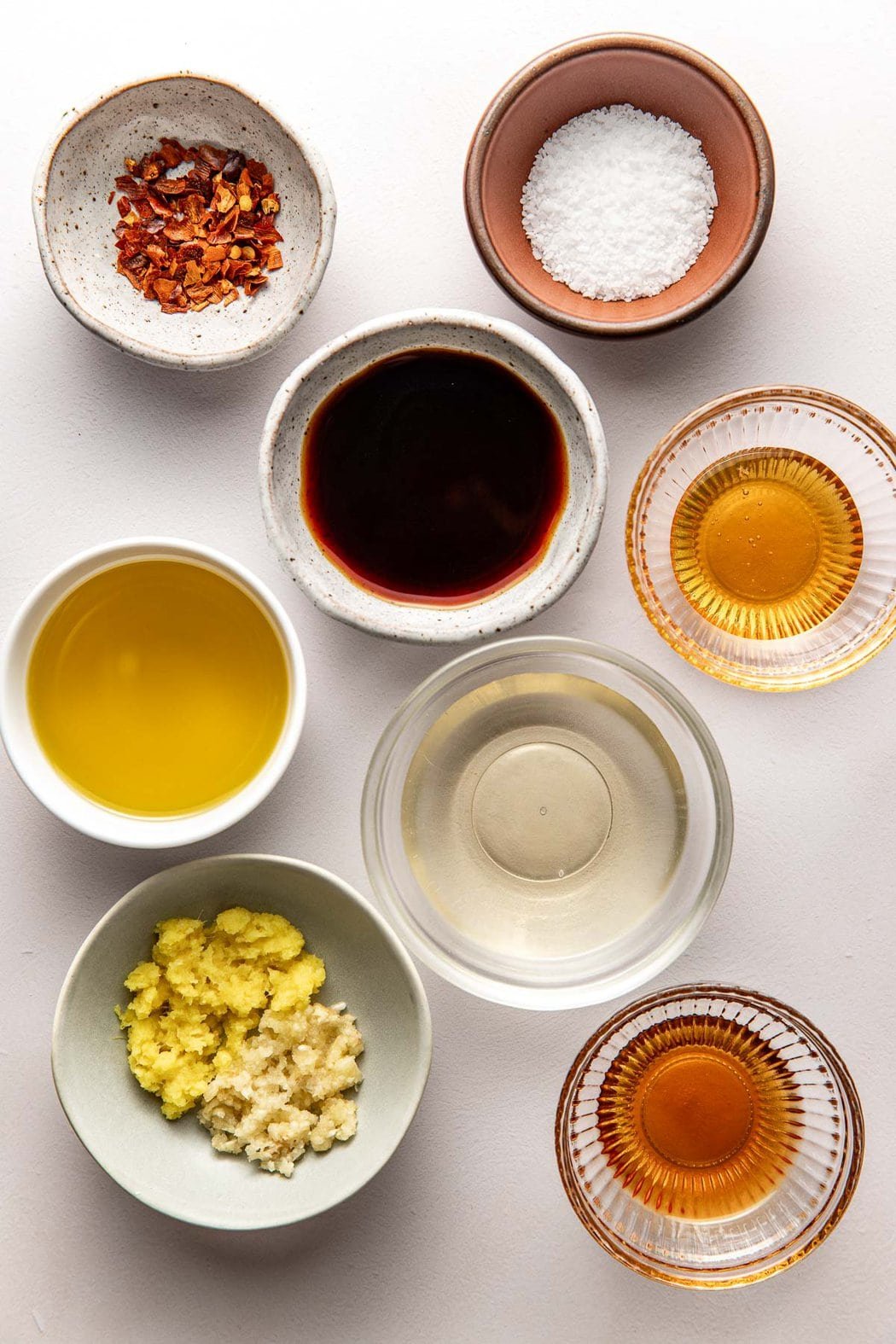
This isn’t the complete ingredient list, just a few of my notes about the key components:
- Rice vinegar (rice wine vinegar): An acidic ingredient, this forms the base of the dressing, creating a subtly sweet, tangy taste. I buy plain rice vinegar, not seasoned rice vinegar, which sometimes has added sweeteners and salt.
- Soy sauce: This adds salty, umami flavor to the dressing. To reduce the sodium, I use low-sodium soy sauce.
- Toasted sesame oil: This is a finishing oil (not a cooking oil) that’s made from sesame seeds. I never skip this ingredient, since just 1 tablespoon infuses the dressing with incredible depth and a nutty, sesame flavor while keeping it nut-free. A tablespoon of tahini can be used instead of the sesame oil, and it would give the dressing a creamer texture.
- Honey: I find that honey dissolves well and adds the perfect touch of sweetness to balance some of the savory, salty tastes. Maple syrup or brown sugar can be used as a sweetener instead.
- Fresh ginger: I buy a knob of ginger, peel off the edges, and use my microplane to grate it very finely. It can also be finely minced with a knife.
- Fresh garlic: I use two garlic cloves and grate them with my microplane. Or, I mince them finely with a knife. In a pinch, pre-minced garlic works, but the flavor isn’t quite as strong.
- Red pepper flakes: These add just a touch of heat and extra depth. Use more or less to taste.
Find the ingredient list with exact measurements in the recipe card below.
Make It Gluten Free
To make this Asian salad gluten-free, I use tamari or coconut aminos in place of the soy sauce. Or, I find a soy sauce that is certified gluten free, as many soy sauces are made with wheat.
Time To Mix It Up
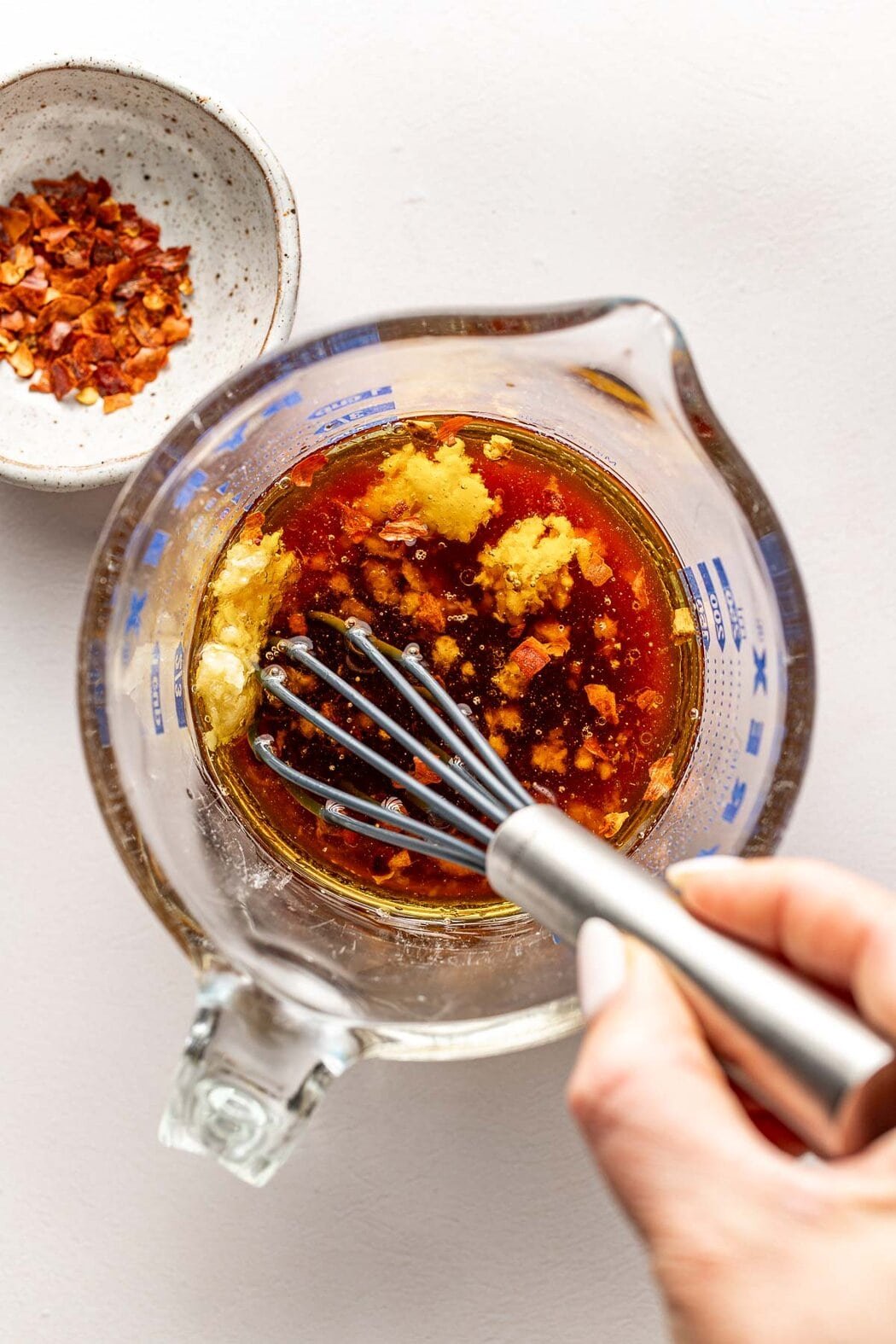
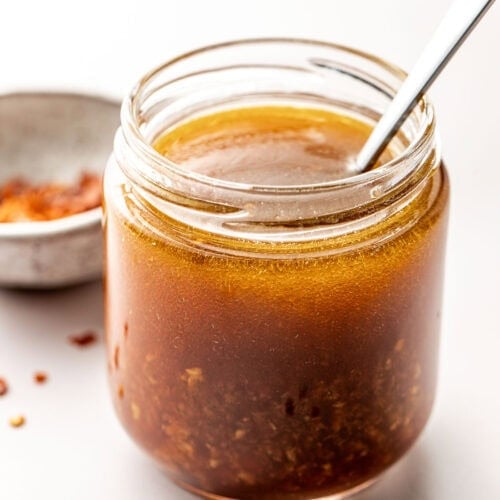
There’s no need to get out any fancy equipment, like a food processor or blender, to make this dressing. The ingredients just need to be whisked in a bowl. Most often, though, I just combine everything in a mason jar with a lid. Then, I can store it as is in the fridge without needing to dirty another dish. Here’s how this dressing comes together:
- Combine: Add all the ingredients to a measuring cup or a jar with a lid, and whisk or shake until mixed and emulsified.
- Season: Give the dressing a quick taste test, then season with additional salt if desired.
- Use or store: Use the dressing right away, or transfer it to the fridge for later.
For serving size and the complete directions and ingredient amounts, scroll down to the recipe card below. All of our recipes include the nutrition analysis, listing calories (kcals), protein, carbohydrates/carb, fiber, sugar, sodium, cholesterol, and more per serving.
My Favorite Ways To Use This Dressing
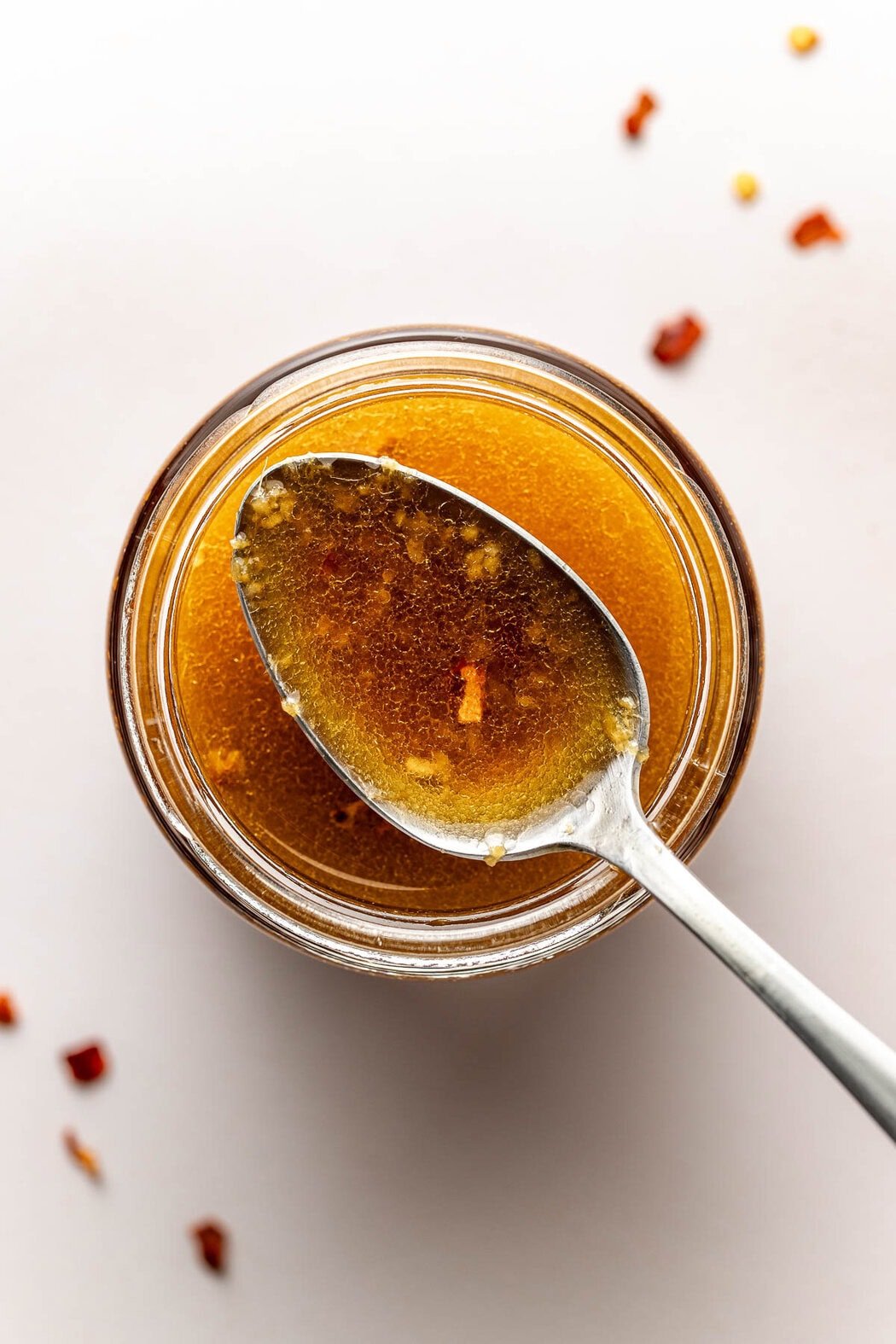
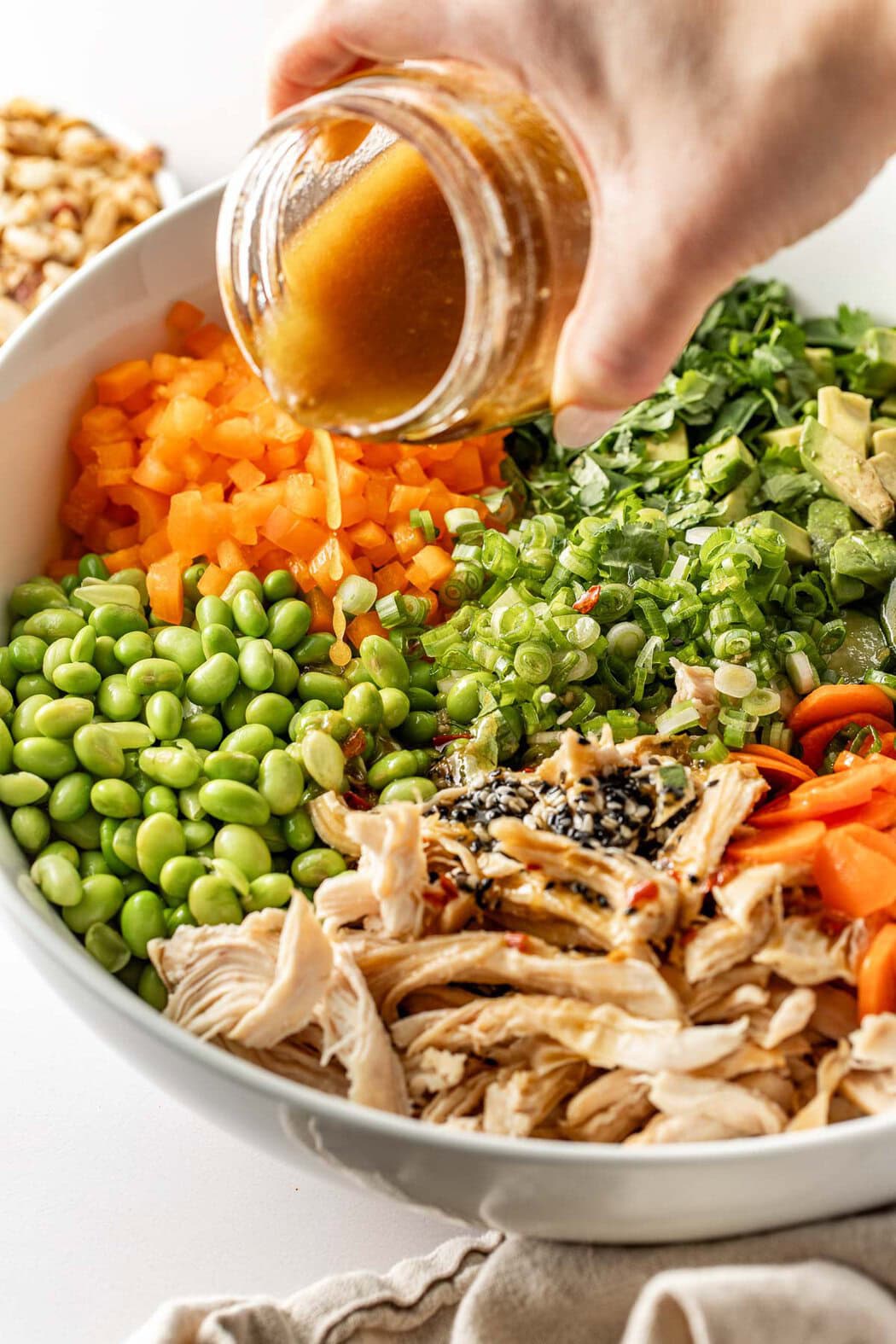
I most often use this Asian sesame dressing tossed with green salads, like this cucumber “noodle” salad, finishing with fresh herbs, lemon juice, or lime juice for a pop of brightness. It’s also a great way to add flavor to roasted veggies, Asian slaw, or a quick ramen noodle salad. And it makes for a great alternative to peanut butter-based dressings.
My kids enjoy using it as a dip with bell pepper slices, carrots, and cucumbers. I’ve found that this flavorful veggie snack is an easy way to add a little boost of nutrients to their days, such as vitamin A, vitamin C, and fiber.
That said, this dressing is so versatile and flavorful that it now has a permanent spot in my list of easy marinade recipes. I use it to marinate chicken and salmon, adding bold Asian flavor to new recipes with minimal effort. Due to the amount of vinegar, I marinate proteins for no longer than 4 hours.
Storage Instructions
Once combined, I either transfer leftover dressing to an airtight meal prep container or simply screw the lid onto the mason jar and store it in the fridge for up to 5 days. To serve, I give the dressing a quick whisk or shake before using.
More Homemade Dressings And Sauces

Want to save this recipe?
Enter your email below & we’ll send it straight to your inbox. Plus you’ll get great new recipes from us every week!
Asian Salad Dressing Recipe
This easy salad dressing recipe is a quick, foolproof option that can be paired with salads, used as a marinade with meat, or even served as a dipping sauce to add sweet, savory, tangy flavor to a variety of foods.
Ingredients
- 3 tablespoons rice vinegar
- 3 tablespoons extra-virgin olive oil
- 2 tablespoons low-sodium soy sauce
- 1 tablespoon toasted sesame oil
- 2 teaspoons pure honey
- 2 teaspoons fresh ginger, grated or minced
- 2 garlic cloves, grated or minced (~1½ teaspoons)
- ¼ teaspoon fine salt, plus more to taste
- Pinch of crushed red pepper flakes (optional)
Instructions
- In a 1-cup liquid measuring cup or a jar with a lid, whisk or shake together the vinegar, olive oil, soy sauce, sesame oil, honey, ginger, the grated 2 cloves garlic, salt, and red pepper flakes.
- Serve over salads (like this Thai chicken salad) or use as dipping sauce or a marinade for chicken or pork.
Last Step! Please leave a review and rating letting us know how you liked this recipe! This helps our business thrive so we can continue providing free recipes and high-quality content for you.
Notes
*For gluten-free, substitute tamari or coconut aminos in place of the soy sauce.
Nutrition Information
- Serving Size: 2 tablespoons
- Calories: 92
- Fat: 9 g
- (Sat Fat: 1 g)
- Sodium: 324 mg
- Carbohydrate: 3 g
- (Fiber: 0 g
- Sugar: 2 g)
- Protein: 1 g
- Cholesterol: 0 mg
Dietary
The photos in this post were taken by Megan McKeehan.
For ultimate success, we highly recommend reading the tips in the full blog post above. All photos and content are copyright protected. Please do not use our photos without prior written permission. If you wish to republish a recipe, please rewrite the recipe in your own unique words. Link back to the source recipe here on The Real Food Dietitians. Thank you!